H5PROJECT
  • Home
  • Tech Insights
  • Investment Focus
  • Technology
  • Search
  • Home
  • About Us
  • Tech Insights
  • Investment Focus
  • Technology
  • Contact

Recent Posts

Coronavirus: More, Faster Tests, & Re-Using Masks

Coronavirus: More, Faster Tests, & Re-Using Masks

Embarking on a Path to Wealth: Decoding the Strategies of the Prosperous 6079

Embarking on a Path to Wealth: Decoding the Strategies of the Prosperous 6079

Using Apps to Track the Spread of the Coronavirus

Using Apps to Track the Spread of the Coronavirus

Search

advertisement
Coronavirus: More, Faster Tests, & Re-Using Masks
Technology 2025-12-14 10:46:10

Coronavirus: More, Faster Tests, & Re-Using Masks

Coronavirus: More, Faster Tests, & Re-Using MasksNFK Editors - April 2, 2020This article is the second in a series about different ways people are working hard to help bring the challenges of the coronavirus pandemic under control.Companies around the world are working quickly to help solve problems created by the new coronavirus, COVID-19. Recently, two big problems have been that there aren’t enough tests and that there aren’t enough masks.It is very important to be able to test quickly whether someone has COVID-19. Test results can help doctors figure out how to treat a patient, and whether they need to be isolated.It’s very important to be able to test quickly whether someone has COVID-19. Test results can help doctors figure out how to treat a patient, and whether they need to be isolated. Above is a kit used to test for COVID-19 in the US.(Source: U.S. Centers for Disease Control [Public domain], via Wikimedia Commons.)More importantly, when health experts know that someone has the disease, they can try to trace back, to find and help other people that person came in contact with. This can help to limit the spread of the disease.Getting clear numbers of how many people have the disease also helps scientists predict how the virus might spread, and figure out the best ways to fight it.Around the world, most countries haven’t been prepared to do enough tests. Germany can now test 500,000 people a week. The US has only recently tested 1 million people in total. Above, a drive-through testing station in Germany.(Source: Henning Schlottmann [CC BY-SA], via Wikimedia Commons.)But around the world, most countries haven’t been prepared to do enough tests. Even when tests did become available, they had to be sent off to a laboratory. It can take days to get the results back. In the US, the average wait time is still four to five days.Many companies have been working hard to produce more tests. They’ve also been working to produce faster tests. A US company called Abbott Laboratories has been given permission to begin producing machines that can tell in about 15 minutes whether someone has the coronavirus or not.A US company called Abbott Laboratories has been given permission to begin producing machines that can tell in about 15 minutes whether someone has the coronavirus or not. The machines, called ID Now (above), are small enough that they can be moved easily.(Source: Abbott Laboratories.)The machines, called ID Now, are about the size of a toaster – small enough that they can be moved easily. And best of all, the test materials don’t have to be sent off to a lab. The whole test happens on the machine.Other companies in the US and Australia have created similar tests. One of the problems with these tests is that they only catch patients who have had the coronavirus for several days, and miss people who just got the disease.With Abbott’s new machine, the test materials don’t have to be sent off to a lab. The whole test happens on the machine. One problem with these tests is that they only catch patients who have had the coronavirus for several days.(Source: Abbott Laboratories.)Early testing in the US was slowed because of strict government rules about what tests were allowed. These rules were designed to protect people. Normally, medical equipment and methods must be very carefully tested.But the coronavirus crisis is so severe that governments are now agreeing to new ideas with less double-checking than usual. One area where this is true is in the re-using of protective gear like masks and gowns.Because so many people have the coronavirus, supplies of medical gear like masks are running very low. Masks are generally used once and thrown away.The US government has agreed to allow a special cleaning system made by a company called Battelle. The system can clean up to 80,000 masks a day so that they can be re-used. Each mask can be re-used up to 20 times. Above, masks ready to be cleaned.(Source: Battelle.)Now the US government has agreed to allow a special cleaning system made by a company called Battelle. The system can clean up to 80,000 masks a day so that they can be re-used. Each mask can be re-used up to 20 times. This will make the current supply of masks last a lot longer.Two of Battelle’s machines are in use in Ohio. More machines will be sent to New York, Seattle, and Washington, DC.NewsForKids.net has these COVID-19 resources:• Overview of COVID-19• Coronavirus Words Explained• Collection of our articles on COVID-19• Regular, detailed COVID-19 updatesCheck Yourself0/41. The article names two things that there aren’t enough of. What are they?2. Testing people quickly for COVID-19 helps health experts control the spread of the disease.True   False3. The new machine from Abbot Laboratories can give test results in 15 minutes. What's one problem with it?test materials need to be sent to a labit's too bigit's hard to moveit only works on people who've had COVID-19 for several days4. Battelle created a cleaning system that allows people to re-use masks up to _______________ times.How can early testing help prevent the spread of viruses like COVID-19?ResetSourceswww.theguardian.comwww.npr.orgwww.theverge.comwww.msn.comwww.news.com.auwww.vox.comwww.npr.orgwww.usatoday.comen.wikipedia.orgShare:Scientists have created the first gene-editing medicine made for a single patient. The patient – a young baby who was sick because of a problem with his DNA – is now greatly improved, and is expected to go home soon.Doctors Say Vaccines Key to Fighting US Measles OutbreakNFK Editors - Mar 18, 2025The US is facing a serious measles outbreak, with over 300 cases reported across 14 states so far this year. That’s more cases in the first three months of 2025 than in all of last year. The rise in measles cases is connected to a drop in vaccination rates.


Embarking on a Path to Wealth: Decoding the Strategies of the Prosperous 6079
Investment Focus 2026-01-09 21:17:17

Embarking on a Path to Wealth: Decoding the Strategies of the Prosperous 6079

The investment landscape is teeming with diverse strategies, but value investing emerges as a prominent and enduring method. It forms the cornerstone of the Rule One investment approach. In this comprehensive exploration, we delve into the core tenets of value investing and how it differs from Rule One. The Core of Value Investing Value investing is a technique aimed at acquiring companies with a lower price-to-earnings ratio. Originated by Ben Graham, who was also the mentor of Warren Buffett, this strategy is thoroughly explained in his influential book, ‘Security Analysis,’ first published in 1934 and still pertinent today. Graham named this method ‘value’ investing because the objective is to secure more value than the investment made. The fundamental idea is to get $10 worth of value for a $5 investment. Graham suggested investing in a broad portfolio of undervalued companies, often around 200, to reduce the risks associated with investing in companies that are cheap for legitimate reasons, such as the potential for bankruptcy. For Graham, a stock was considered undervalued and an investment opportunity if it could be bought for less than its liquidation value, which is calculated from the company's net assets per share. While the foundational principles of this timeless technique remain valid, they were particularly effective during the Great Depression and World War II, times when Graham was actively investing. The Progression of Value Investing As Warren Buffett entered the investment arena, the economic environment had shifted, making it more difficult to find companies that were significantly undervalued. What was the modification? To tackle this, Buffett adapted the theory, focusing on identifying not only undervalued companies but also those that were outstanding businesses with a foreseeable future. This necessitated a deep understanding of the business, which naturally limited the scope of investments to what Buffett called your ‘circle of competence.’ The Rule One strategy builds on this evolution, concentrating on exceptional businesses that exhibit specific traits. The Rule One perspective on value investing asserts that the most effective way to achieve significant returns is to identify a few companies that are inherently excellent, led by competent individuals, and are priced significantly below their actual worth. A business that meets these criteria is considered a Rule One stock. Defining Rule One Stocks A Rule One stock, essentially, is one that is priced below its intrinsic value. The challenge is in determining what the intrinsic value is. Intrinsic value is a term frequently used in value investing, and for good reason—it is crucial. While value investors often base decisions on the perceived low cost of a business, Rule One investors understand that it is preferable to invest in an exceptional business at a fair price rather than a mediocre business at a low price. This is why Rule One investors must have a comprehensive understanding of the companies they invest in. We must know the business well enough to recognize its excellence. I will later teach you how to identify outstanding companies and assess their intrinsic value. The Value Investing Mindset There is a value investing mindset that is essential to grasp. Understanding this mindset is a vital step in mastering value investing. Although it may seem straightforward, purchasing $10 bills for $5 can be emotionally challenging, but these mindset tips will aid you in mastering it. Fear as an Ally Buffett stated that the key to exceptional investment outcomes is to buy when fear is present. Fear is what causes the market price of an excellent business to be significantly lower than its value. In fact, fear is the only factor that makes the market price of a business incorrect. Without fear surrounding this business, industry, or economy, the business

Using Apps to Track the Spread of the Coronavirus
Technology 2025-12-19 13:13:29

Using Apps to Track the Spread of the Coronavirus

Using Apps to Track the Spread of the CoronavirusNFK Editors - April 30, 2020Governments and businesses worldwide are creating smartphone apps to help track the spread of the new coronavirus. The apps could be an important part of easing up on lockdowns, but they are also causing some worries.Tracking the spread of a disease is an important step in stopping an outbreak. By tracking down people who have been in contact with COVID-19 patients, health experts can warn them, and keep the virus from spreading further. This is called “contact tracing”.As governments remove coronavirus lockdown limits, they’ll need to be able to quickly identify and contain new outbreaks. Contact tracing will be an important part of that process.Tracking the spread of a disease is an important step in stopping an outbreak. By tracking down people who have been in contact with COVID-19 patients, health experts can warn them, and keep the virus from spreading further. This is called “contact tracing”.(Source: CFCF [CC BY-SA], via Wikimedia Commons.)But because the coronavirus spreads so quickly to so many people, it’s almost impossible to trace all contacts with phone calls and in-person visits. That’s why many people hope that digital contact tracing with smartphones will help.Most contact tracing apps collect information about where people have gone and the people they’ve had contact with. The apps use smartphone features like GPS (for the phone’s location) and Bluetooth (to learn about other nearby phones).Most contact tracing apps collect information about where people have gone and the people they’ve had contact with, using GPS and Bluetooth. This picture from Hong Kong in the early days of the coronavirus shows how phones might help keep track of contacts.(Source: 中国新闻网 [CC BY], via Wikimedia Commons.)The apps can notify users when one of their recent contacts has been found to have the coronavirus. Some systems also notify governments or health care workers.Currently, dozens of apps have been created or are being developed around the world. But there are concerns about privacy and security with these apps. Some people worry the apps are being made too quickly and may not protect people’s private information.Currently, dozens of apps have been created or are being developed around the world. But there are concerns about privacy and security with these apps. This screenshot is from an app made for Singapore which has been shared with other countries.(Source: Ben McLean [CC BY-SA], via Wikimedia Commons.)Others are afraid the apps will let governments track people in ways that could be used for much more than just controlling the coronavirus. They fear that once governments have the ability to track people, they won’t give it up, even if the threat of the coronavirus passes.Some app developers are working to protect user privacy. Apple and Google have recently teamed up to create an app for Apple and Android phones. Under Apple and Google’s system, information about contacts will stay on a user’s phone unless the user chooses to share it.Some app developers are working to protect user privacy. Apple and Google teamed up to create an app which keeps information about contacts on a user’s phone unless the user chooses to share it. The cartoon above shows how contact tracing can be made private.(Source: [CC0, Public Domain] (modified) Nicky Case.)For these apps to work, governments will need to make sure people are being tested for the coronavirus. Test results are what start the contact tracing process. In some systems, health care workers report results. In others, it’s up to the patient.About 60% of the people in an area need to use an app for it to be helpful in limiting the spread of the virus. That could be a problem. In places which already have apps, the numbers of users are far lower. Norway has one of the highest sign-up rates, but only 30% of people in Norway are using the app.About 60% of the people in an area need to use an app for it to be helpful in limiting the spread of the virus. There are also other challenges, like making sure apps don’t drain phone batteries too quickly. For many older phones, the apps may not work at all.(Source: Martin Abegglen, via Flickr.com.)There are also other challenges, like making sure apps don’t drain phone batteries too quickly. For many older phones, the apps may not work at all.Still, if smartphone apps can handle most contact tracing, they could help limit the spread of the coronavirus, and make it easier for health care workers to track the people that the apps don’t catch.Check Yourself0/41. Contact tracing is a way of tracking down people who have come into contact with a sick person.True   False2. Digital contact tracing with smartphone _______________ could help make contact tracing more automatic.3. Which of the following was NOT mentioned as a possible problem with contact tracing apps?the apps aren't games so they won't be popularthe apps might use too much batterythe apps might not protect private informationthe apps might give governments too much power4. In Apple and Google's system, the _______________ decides if they will share information.Think back to your life before the lockdown. List the places where you got together with people. Could you have remembered everyone you came into contact with during a two-week period?ResetSourceswww.nytimes.comwww.wired.comwww.bbc.comwww.nzherald.co.nzwww.abc.net.auwww.laht.comwww.dw.comwww.theguardian.comtheconversation.comShare:This week marks 25 years of humans living in space. On November 2, 2000, three astronauts became the first full-time workers at the International Space Station. Since then, the ISS has never been empty.Is Seeing Believing? AI Videos Look Extremely RealNFK Editors - Nov 5, 2025Over the last year or so, the quality of AI-generated videos has become so good that it’s extremely difficult to tell whether a video is real or not. An English TV channel recently ran a show about AI. At the end of the episode, the “woman” presenting the show announced that she wasn’t real.

How Artificial Intelligence is Transforming Healthcare
Tech Insights 2025-12-17 20:40:17

How Artificial Intelligence is Transforming Healthcare

Artificial Intelligence (AI) is no longer confined to science fiction movies. It’s making real-world impacts, especially in healthcare, where it’s revolutionizing diagnostics, treatment plans, and patient care. Let’s take a look at how AI is shaping the future of healthcare. 1. AI in Diagnostics AI algorithms are being used to assist doctors in diagnosing diseases more accurately and quickly. Machine learning models can analyze medical images, such as X-rays and MRIs, to detect anomalies that might be missed by the human eye. AI is also being used to predict diseases like cancer by analyzing patient data and genetic information. 2. Personalized Treatment Plans With AI, treatment plans can be tailored to an individual’s genetic makeup, lifestyle, and medical history. By processing vast amounts of data, AI can help doctors identify the most effective treatments for each patient, increasing the chances of successful outcomes and reducing unnecessary treatments. 3. Drug Discovery AI is speeding up the drug discovery process by analyzing biological data to identify potential drug candidates. Machine learning models can predict how different compounds will interact with the body, accelerating the development of new medications and treatments for various diseases. 4. Robotic Surgery AI-powered robots are already being used in surgeries to assist doctors in performing precise and minimally invasive procedures. These robots are capable of making real-time decisions based on the data they receive, improving the accuracy and safety of surgeries. Conclusion: AI is transforming healthcare by improving diagnostics, personalizing treatments, accelerating drug discovery, and enhancing surgical procedures. As AI technology continues to evolve, we can expect it to play an even bigger role in improving patient outcomes and healthcare efficiency.

Embarking on an investment adventure with a $10,000 budget is an admirable first step. Many wealthy investors, including Warren Buffett, have grown their wealth from even humble beginnings.
Investment Focus 2026-01-07 08:18:05

Embarking on an investment adventure with a $10,000 budget is an admirable first step. Many wealthy investors, including Warren Buffett, have grown their wealth from even humble beginnings.

However, venturing into the stock market without a well-thought-out strategy won't maximize your returns. To transform your initial investment into significant long-term gains, consider these top-tier investment strategies for your $10,000. 1. Maximize Your IRA Contributions IRAs provide substantial benefits, such as tax deferral on earnings, making them an attractive option for investors. Imagine contributing $5,000 to an IRA, which could grow to $40,000 by retirement. You're taxed only on the initial $5,000, not the final amount. This tax advantage is a significant benefit. There's an annual limit on IRA contributions. In 2017, it was $5,500 for individuals under 50 and $6,500 for those 50 and older. With $10,000 to invest, it's crucial to maximize your IRA contribution due to the unmatched flexibility and tax benefits it offers. 2. Increase Your 401(k) Contributions If your employer offers a 401(k) match, it's wise to contribute up to the matching limit. Not doing so is like turning down free money, as your contributions effectively double in value. After reaching the match limit, consider alternative investment options for the remaining $10,000. 401(k)s limit your investment choices, requiring diversification across a limited range of mutual funds. This broad diversification is more about betting on overall market growth rather than selecting specific companies. While the market generally trends upward over time, higher returns are achievable by carefully choosing companies based on their value and potential. 3. Explore Individual Stocks After maximizing IRA and 401(k) contributions, consider investing in individual stocks. Applying Rule #1 investing principles can help you identify top-tier companies, buy them at a discount, and potentially achieve annual returns of up to 15%. These returns are rare with broad market diversification but possible with individual stocks. Patient, knowledgeable, and rational investment in individual stocks can significantly increase your wealth. 4. Invest in Personal Development The most valuable investment is in oneself. Equipping yourself with the necessary knowledge and resources to thrive as an investor will yield the highest returns. After investing in an IRA, 401(k), and a few individual stocks, use the remaining funds to learn everything you can about investing. Education is the key to consistently selecting outstanding companies for investment. Are you ready to test your investment knowledge against seasoned investors? Take the Investing IQ Quiz! P.S. If you're seeking additional information before investing $10k, here are some resources you might find helpful. Interested in the best ways to invest $500? Explore our top picks for small-scale investments. Want to learn from Warren Buffett? Check out his renowned investing quotes. Looking to double your money every 7 years with compound interest?

Exploring the Power of Blockchain Beyond Cryptocurrencies
Tech Insights 2025-12-12 08:50:23

Exploring the Power of Blockchain Beyond Cryptocurrencies

Blockchain technology has gained widespread attention due to its association with cryptocurrencies like Bitcoin and Ethereum. However, its potential extends far beyond digital currencies. From improving supply chain management to enhancing data security, blockchain is poised to revolutionize multiple industries. Let’s explore some key applications of blockchain technology beyond cryptocurrencies. 1. Supply Chain Transparency Blockchain can provide an immutable, transparent ledger for tracking goods from production to delivery. This allows for greater visibility into the supply chain, helping companies track the origin of products, ensure authenticity, and reduce fraud. Consumers can also verify the ethical sourcing of goods, enhancing trust in the market. 2. Smart Contracts Smart contracts are self-executing contracts with the terms of the agreement directly written into code. By using blockchain, smart contracts can be executed automatically once conditions are met, reducing the need for intermediaries and speeding up transactions. These contracts are being explored for uses in areas like real estate, insurance, and legal agreements. 3. Data Security and Privacy Blockchain’s decentralized nature makes it highly secure. Each block of data is encrypted and linked to the previous one, creating an unbreakable chain. This can be used for storing sensitive data, such as medical records or financial transactions, ensuring they are tamper-proof and only accessible by authorized individuals. 4. Voting Systems Blockchain could transform voting systems by providing secure, transparent, and tamper-proof elections. Voter identities would be verified using blockchain, ensuring that every vote is counted and protected from fraud. This could enhance trust in democratic processes and reduce the risks of election tampering. Conclusion: Blockchain technology has the potential to revolutionize many industries, offering benefits such as enhanced security, transparency, and efficiency. As the technology matures, expect to see it used in an increasing variety of fields beyond cryptocurrencies.

How ChatGPT Keeps My Kids Engaged and Entertained, Now and Into 2025
Tech Insights 2025-12-20 13:27:31

How ChatGPT Keeps My Kids Engaged and Entertained, Now and Into 2025

The holidays are full of joy, but let’s be honest: keeping young kids and a handful of lively nieces and nephews entertained during those long winter breaks can feel like a real challenge. That’s where ChatGPT comes in. Though primarily designed for adults, this AI-powered chatbot offers a touch of magic, much like a digital Mary Poppins. I was pleasantly surprised to discover how effective ChatGPT is at keeping kids engaged and sparking their creativity, not just over the holidays, but throughout the year. Here are some of my favorite ways to use ChatGPT to elevate playtime with my toddler and his older cousins, along with plans to keep the fun going well into 2025. AI-Powered Tales Kids are naturally drawn to stories, and ChatGPT makes it easy to create exciting characters and endless adventures. We started with a magical snowman who shared thrilling tales, but we’ve since branched out to time-traveling princesses visiting dinosaurs and superhero astronauts exploring distant planets. A simple prompt like, “Pretend you’re a time-traveling princess and tell us about your latest trip to the Jurassic period,” results in endless storytelling fun. The best part? If the kids ask questions I don’t know the answers to, the AI princess is happy to step in with more details. I plan to make 2025 even more exciting by developing a long-term interactive story with new chapters and returning characters for the kids to enjoy. Creative Art Projects ChatGPT’s image generator, DALL-E, adds a creative twist to our holiday activities. Sometimes the images tie into our stories, while other times, they’re just for fun. We’ve generated images based on prompts like “A friendly dragon playing in a magical forest” or “A futuristic city on Mars with flying cars.” One of the kids’ favorite activities is to print these images as outlines for them to color in. Looking ahead to next year, I’m envisioning a family art gallery where the kids can showcase their AI-assisted creations. We’ll have seasonal themes and I’ll encourage them to expand on the stories behind their artwork. Personalized Storybooks Sometimes, kids want to be the hero of their own story. With ChatGPT, I can quickly create personalized tales starring my child and my nieces and nephews. These stories are perfect for quiet moments, like naptime or bedtime, when I want them to stay calm but still entertained. As they grow older, I might even compile full chapter books featuring their favorite things and making them the main characters of the story. Learning Through Play Kids are eager learners when you make it fun. Even a one-year-old can feel proud when they recognize two matching shapes. ChatGPT can create trivia games and quizzes at different levels of difficulty, and with DALL-E’s help, I can include visual questions too. For example, I once asked ChatGPT to create a trivia quiz about dinosaurs, complete with drawings for the kids to identify. It was a big hit! I also tailored one specifically to the area of New York where we live, making it even more personal for them. The quiz even ended with a small prize for everyone, which was my idea, but ChatGPT helped liven up the activity. Next year, I’m hoping to turn this into a full family event with a kids-focused trivia night, where the kids could even come up with their own topics to quiz us. Musical Fun Music is another way to keep the kids entertained, and ChatGPT’s creative skills can help us compose custom songs for any occasion. By using prompts like, “Write a fun, rhyming song about cleaning your room, with a catchy chorus,” we’ve turned everyday chores into musical games. With a little tweaking, I’ve even had ChatGPT come up with lyrics that match the tunes of their favorite songs. For example, I asked the AI to write lyrics for “Yankee Doodle” about getting ready for bed. While they’re still too young for more complicated music, I dream of one day creating a full album of songs with the kids, using ChatGPT to assist with rhymes, lyrics, and melody ideas. With ChatGPT by our side, it’s been easier than ever to keep my kids engaged, entertained, and learning—both over the holidays and in the year ahead. It’s a magical tool that combines creativity, fun, and education, helping to make each day special.

What is Artificial General Intelligence? Is AI Capable of Human-Like Thinking?
Tech Insights 2025-12-24 02:00:49

What is Artificial General Intelligence? Is AI Capable of Human-Like Thinking?

Artificial General Intelligence (AGI) refers to AI systems that demonstrate human-level general intelligence and possess the ability to perform a wide array of cognitive tasks. At its core, AGI aims to create an AI that mimics human capabilities, potentially operating autonomously and learning to perform a variety of functions. Paul Ferguson, an AI consultant and founder of Clearlead AI Consulting, emphasizes that AGI would have the capacity to comprehend, learn, and apply knowledge across multiple fields. "The key advantage of AGI would be its ability to transfer knowledge from one domain to another, solve new challenges, and exhibit creativity and reasoning on par with human intellect," Ferguson explains. In simpler terms, Ghazenfer Monsoor, founder and CEO of Technology Rivers, contrasts AGI with current AI. Unlike today’s AI, which excels at specific tasks such as facial recognition or voice translation, AGI could tackle nearly any task. Monsoor elaborates, “Our healthcare software, for instance, leverages AI to assist doctors in diagnosing diseases based on medical data, but AGI would transcend that. It could recommend new treatments, analyze studies, and forecast health issues in ways we've never thought possible.” The Current State of AI Before diving into AGI, it's important to first grasp the concept of intelligence itself, says Sertac Karaman, an Associate Professor of Aeronautics and Astronautics at MIT. Karaman explains that intelligence is what sets humans apart from other species. It includes several traits, notably the ability to reason, link thoughts together, and draw conclusions that are not immediately obvious. Although glimpses of such intelligence have been evident since the 1960s, these early examples typically demonstrated intelligence within narrow domains and couldn't generalize across diverse human interactions. “AGI, in contrast, would be an intelligence that is artificially created, rather than naturally evolved, and it would apply to all human endeavors,” Karaman notes. “An AGI system would be able to reason and link thoughts in ways similar to human thinking.” He adds that current AI tasks are usually non-autonomous. While AI systems today are proficient at processing large datasets and presenting information in a more intuitive manner, they still lack the autonomy and broad capabilities of AGI. AI can correlate data across different areas, such as suggesting recipes based on the contents of your fridge, but its capabilities remain constrained. Sarah Hoffman, an AI advocate at AlphaSense, points out that while AI can excel in specific tasks, such as playing chess, it cannot transfer knowledge to unrelated fields. She gives the example of DeepMind’s AlphaGo, which, while successful in Go, was unable to perform well in other games. How Does AGI Differ from AI? Karaman asserts that AGI will possess reasoning and the ability to chain thoughts, which will allow it to operate autonomously. Unlike today's AI, which only provides information, AGI will have the capacity to complete tasks from start to finish. This autonomy is the key distinction between AGI and the AI we currently use. Ferguson agrees, stressing the importance of distinguishing between true AGI and the AI systems of today. He explains that AI, including large language models (LLMs), are sophisticated pattern-matching tools trained on vast amounts of data. While they are increasingly flexible, they are still far from achieving true general intelligence. AI's Role in Advancing AGI Karaman envisions AGI not as a singular milestone, but rather as a gradual evolution in reasoning capabilities. He believes that advancements in AI will continue to shape industries and transform economies at an accelerating pace. Ferguson concurs, noting that the push for more adaptable AI systems is already providing considerable commercial value. In his work with businesses, Ferguson has observed that the real impact of AI is in its integration into existing workflows and decision-making. “The advancements we’re seeing in AI, especially in making systems more flexible and general, are opening up new possibilities for businesses,” Ferguson explains. For example, LLMs are already being employed beyond content creation. Hoffman attributes this progress to increased investment and research, which is leading to more powerful AI systems. Though AGI may still be a distant goal, the innovations driven by current AI are already transforming industries. How Close Are We to True AGI? Despite some tech companies claiming they’re on the verge of AGI, Ferguson believes we’re still a long way from achieving it. “I estimate we are decades away from true AGI,” he states. “Although we’ve made substantial progress in narrow AI applications and seen impressive developments in the flexibility of AI systems, the leap to general intelligence comes with many technical and conceptual hurdles.” Hoffman also shares the view that true AGI is still a long way off. She acknowledges that today’s generative tools are more advanced and useful than their predecessors, but the gap between AI capabilities and human intelligence remains vast and will likely persist for the foreseeable future. That said, she notes that the progress made by current AI systems is already driving innovation in sectors like healthcare and finance. AGI, however, holds the potential to unlock even greater advances across multiple industries. Ferguson highlights that the road to AGI involves tackling challenges in areas such as common-sense reasoning, transfer learning, and simulating consciousness. In the near future, he believes businesses should focus on making AI systems more logical, reliable, and seamlessly integrated into human workflows. "Right now, I see AI having the greatest impact in its current form rather than as a fully realized AGI," Ferguson concludes. "For now, AGI remains an academic pursuit and a long-term research goal rather than an immediate reality."

Why You’re Better Off Without a Financial Advisor
Investment Focus 2025-12-21 13:58:42

Why You’re Better Off Without a Financial Advisor

A widespread belief in the realm of finance is that success in investing requires the guidance of a financial advisor. This misconception may have been perpetuated by the aggressive marketing tactics of financial advisory firms. However, it's important to recognize that investors who take control of their own finances often outperform those who rely on advisors, especially when considering the fees that can erode their profits. If you're undecided about the necessity of a financial advisor for successful investing, here are some points to ponder. 1. Financial Advisors Don’t Aim to Outperform the Market Financial advisors aren't tasked with outperforming the market. Their role is more akin to that of a coach or counselor, assisting in setting financial objectives, providing support during challenging times, and encouraging rational decision-making. It's up to you to decide if their coaching is worth the annual 1% fee based on your portfolio. 2. Fees Are Unavoidable Regardless of Performance Financial advisors charge fees that are not tied to the performance of your investments but rather on the amount you invest. This means that even if they fail to grow your assets, you're still obligated to pay for their services. This arrangement introduces unnecessary risk and costs to your investment strategy and offers little incentive for advisors to strive for market-beating results. Their primary concern is maintaining your assets under management. Although they earn more if they increase your wealth, they are compensated regardless of the outcome. 3. Investing in the S&P 500 Yields Higher Returns Investing in the S&P 500 index ETF, SPY, without active management often results in higher returns than what you'd get from a financial advisor. The S&P 500 frequently outperforms portfolios managed by financial advisors. Why is this the case? The answer lies in the limited investment strategies that financial advisors can employ, as well as the percentage-based fees they charge. Advisors must pass the Series 65 exam to be SEC-licensed, which is grounded in the Efficient Market Hypothesis – the belief that no one can consistently beat the market. Recommending high-risk strategies, such as those advocated by Warren Buffett, could jeopardize their license. As a result, they typically avoid such strategies. Moreover, to justify their fees, advisors must outperform the S&P 500 by the amount of their fee. Given their tendency to diversify portfolios, after deducting their fees, your returns are often lower than they would be with an index ETF. 4. Better Returns with Selective Long-Term Investments While the S&P 500 may be a more profitable option than hiring a financial advisor, some of the world's top investors suggest an even superior approach. Free from SEC regulations and without the risk of losing a license, you can select a few individual companies and purchase them at a discount during market fluctuations. Identifying high-quality companies and waiting for the right moment to buy them is the most effective investment strategy available. This strategy has created more millionaires and billionaires than any other. Master the Art of Investing Individual investors, unencumbered by fees and SEC regulations, have the potential to outperform the market, unlike financial advisors. Buffett has stated that if he were managing only $1 million, he could achieve a 50% return in today's market. As long as you're willing to invest time in selecting outstanding companies and have the patience to wait for market sales, you can achieve double-digit returns that surpass the market annually, without the need for a financial advisor.

The Smartest Ways to Invest $10,000 in 2025 for Maximum Returns
Investment Focus 2026-01-03 20:39:25

The Smartest Ways to Invest $10,000 in 2025 for Maximum Returns

Having $10,000 to invest is an excellent beginning. Many wealthy investors, including Warren Buffett, started with less. However, simply throwing your money into the stock market without a proper investment strategy won't yield the best results. To transform your initial investment into long-term gains, consider the following top investment strategies for your $10,000. 1. Fully Fund an IRA IRAs provide significant benefits, such as tax deferral on earnings, enhancing their appeal to investors. Imagine investing $5,000 in an IRA, which grows to $40,000 at retirement. You only pay taxes on the initial $5,000, not the final amount. This tax advantage is a significant advantage. There is an annual contribution limit for IRAs. In 2017, it was $5,500 for individuals under 50 and $6,500 for those 50 and older. Given $10,000 to invest, maximizing your IRA contribution should be your priority due to the unmatched freedom and tax benefits it offers. 2. Maximize Your 401(k) Contributions If your employer offers a 401(k) match, it's wise to contribute up to the match limit. Failing to do so means leaving free money on the table, as your contributions are effectively doubled. After reaching the match limit, consider other investment options for the remainder of your $10,000. 401(k)s limit your investment choices, requiring you to diversify across a limited selection of mutual funds. This broad diversification is more about betting on market growth than selecting individual companies. While the market generally rises over time, higher returns are possible by carefully selecting companies based on their value and potential. 3. Diversify into Individual Stocks After maximizing IRA and 401(k) contributions, consider investing in individual stocks. Adopting Rule #1 investing principles can help you identify quality companies, purchase them at a discount, and potentially achieve annual returns of up to 15%. These returns are rare with broad market diversification but are achievable with individual stocks. Patient, knowledgeable, and rational investment in individual stocks can significantly grow your wealth. 4. Invest in Personal Development The most valuable investment is in oneself. Equipping yourself with the necessary knowledge and resources to succeed as an investor will yield the best returns. After investing in an IRA, 401(k), and a few individual stocks, use the remaining funds to learn all you can about investing. Education is the key to consistently selecting great companies for investment. Want to test your investment knowledge against experienced investors? Take the Investing IQ Quiz! P.S. If you're looking for more information before investing $10k, here are some resources you might find useful. Interested in the best ways to invest $500? Explore our top picks for small-scale investments. Want to learn from Warren Buffett? Check out his renowned investing quotes. Looking to double your money every 7 years with compound interest?

Shock at Powerful Facial Recognition Program
Technology 2025-12-31 14:16:24

Shock at Powerful Facial Recognition Program

Shock at Powerful Facial Recognition ProgramNFK Editors - February 12, 2020In January, the New York Times reported on a company which claimed its computer program could identify almost anyone from a picture. The news that a small company had secretly done this shocked many people.When a computer system identifies a person from their face in a picture, it’s called “facial recognition”. Usually, the program compares one photo to a computerized library, or “database”, of known photos.Typically, a facial recognition program takes measurements based on important parts of the face and uses those measurements to create a math formula that describes the face. Then it searches the database for faces with similar formulas.(Source: IBM Research, via Flickr.com.)Typically, a facial recognition program takes measurements based on important parts of the face and uses those measurements to create a math formula that describes the face. Then it searches the database for faces with similar formulas.Many police departments use facial recognition. It can be helpful when police just have a picture of a suspect, but no other information. In some cases, facial recognition has helped identify criminals and solve cases.For companies like Amazon, Microsoft, and NEC, facial recognition is big business. These companies often sell their programs to police departments or to prisons. But until recently, these programs mainly used databases filled with pictures of criminals and pictures from driver’s licenses.For companies like Amazon, Microsoft, and NEC, facial recognition is big business. These companies often sell their programs to police departments or to prisons. Above, Brad Smith, President of Microsoft, gives a talk on facial recognition.(Source: Brookings Institution, via Flickr.com.)But in January, the New York Times (NYT) reported on a small company called Clearview AI. Using a collection of 3 billion pictures of ordinary people, Clearview claimed it could identify almost anyone, tell where they lived, and provide links to images of them on the internet – whether they were a criminal or not.Many companies could have done this, but they didn’t because of worries about privacy. Clearview didn’t share those worries.The New York Times reported that a small company called Clearview AI was using a collection of 3 billion pictures of ordinary people to identify almost anyone, whether they were a criminal or not. The screenshot is from Clearview AI’s website.(Source: Screenshot, Clearview AI.)Clearview’s library of images is based on pictures of ordinary people that the company took from websites like Facebook, Instagram, Twitter, and YouTube – all without permission.The NYT reported that Clearview was selling its program to over 600 police departments in the US. Clearview’s program is reported to work well, and it has helped solve several crimes very quickly.Clearview’s library of images is based on pictures of ordinary people that the company took from websites like Facebook, Instagram, Twitter, and YouTube – all without permission.(Source: Alex O, via Flickr.com.)But what Clearview is doing bothers many people, and not just because the company doesn’t have permission to use the photos.Many people find it scary that a private company is able to secretly identify just about anyone walking down the street. They point out that the technology could be misused in many ways. They also worry that when Clearview makes mistakes, it could make innocent people look like criminals.Clearview is selling its program to over 600 police departments in the US. Many people find it scary that a private company has the power to identify almost anyone from just a picture. The app shown above is by NEC, not Clearview.(Source: NEC Corporation of America, via Flickr.com.)Many of the websites have now demanded that Clearview stop taking photos from their sites. Clearview says that it did nothing wrong and doesn’t have any plans to remove the photos it has stored. Even if the photos were erased, Clearview still has the math formulas that describe the faces.Currently, Clearview is mainly used in the US and Canada, but the company has had talks about selling its technology to 22 different countries.Though some cities and towns in the United States have banned facial recognition, the US doesn’t currently have laws limiting facial recognition. It also doesn’t have laws that prevent collecting information from the internet for the purpose of identifying people.(Source: Marco Vanoli, via Flickr.com.)Though some cities and towns in the United States have banned facial recognition, the US doesn’t currently have laws limiting facial recognition. It also doesn’t have laws that prevent collecting information from the internet for the purpose of identifying people.This is one of many areas where technology is moving far more quickly than lawmakers are.Sourceswww.nytimes.comwww.abc.net.auwww.nytimes.comwww.buzzfeednews.comwww.buzzfeednews.comwww.buzzfeednews.comwww.vox.comwww.cnn.comwww.axios.comShare:Scientists at Loughborough University in the United Kingdom have created what they call “the world’s smallest violin”. The violin is made of metal and is so tiny that it can only be seen with a powerful microscope. The project was designed to test new technology for building extremely small things.

Mastering the Art of Mindful Financial Management
Investment Focus 2026-01-01 13:31:08

Mastering the Art of Mindful Financial Management

Often, financial difficulties arise not from insufficient income but from overspending. In my early investment career, I worked as a Grand Canyon river guide with an annual salary of just $4000. Yet, I was able to live comfortably for a decade, residing in my VW bus and occasionally on the floor of the Transcendental Meditation Center in Flagstaff during the coldest nights. While you might not want to emulate my extreme frugality, it's possible to live within your means and even save for investments by mastering a few simple strategies. 1. Mastering Expense Tracking To manage your finances effectively, it's essential to know where your money goes. Instead of the tedious task of budgeting and tracking every cent, consider a more intuitive approach that's as enjoyable as a summer's day. Collect several envelopes and a black marker. Label each envelope with a spending category, such as "fuel," "dining out," or "groceries." After receiving your paycheck, allocate a portion of cash to each envelope based on your projected expenses for that period. If you plan to spend $200 on fuel, place that amount in the "fuel" envelope. Continue this process until you've either run out of envelopes or cash. If you find empty envelopes before your cash runs out, rearrange the funds to cover your essentials. Spend only the cash from the designated envelopes, avoiding credit cards and other payment methods. If the "groceries" envelope is empty, it's time to get creative with your meals. By following this method for a few pay periods, you'll gain insight into your spending habits and identify areas where you can cut back. 2.抑制冲动消费 I must admit, I have a tendency for impulsive purchases. However, when funds are limited, such as in my early days, this habit is naturally subdued. To control your impulses, question the necessity of any purchase over $50. Consider its impact on your life and whether it's worth the cost. Apply this discipline especially to food purchases. You may find that not only do you spend less, but you also eat healthier, potentially even losing weight in the process. Ask yourself: How long will the item last? Will it put you in debt? Is the value it provides over time worth the expense? 3. Credit Card Usage: Pay in Full Each Month Credit cards are not inherently bad, but they often represent a trade-off between discipline and convenience, which is usually not a favorable exchange. As you work on financial discipline, keep those cards in your wallet and use cash for your transactions. If you must use a credit card, ensure you pay off the balance in full each month. This practice will help you track your spending without incurring interest charges, effectively making it similar to paying with cash. 4. Ditch the Need to Impress Let go of the desire to impress others; no one is truly concerned with your choices. People are more focused on their own image and what others think of them. Embrace individuality and avoid the common trap of spending to maintain a certain image. This often leads to unnecessary expenses on cars, clothing, and other superficial items. I've always been good at this; I didn't care about impressing others. My possessions were minimal, and I focused on buying what I truly enjoyed rather than what others might think. 5. Identify and Eliminate Budget-Draining Habits Living on a shoestring budget for over a decade taught me the importance of avoiding bad spending habits. If you have any, it's a sign that you likely have more money than necessary. Examine your habits for leaks in your

NASA Scientists Control Spacecraft From Home
Technology 2025-12-18 12:25:40

NASA Scientists Control Spacecraft From Home

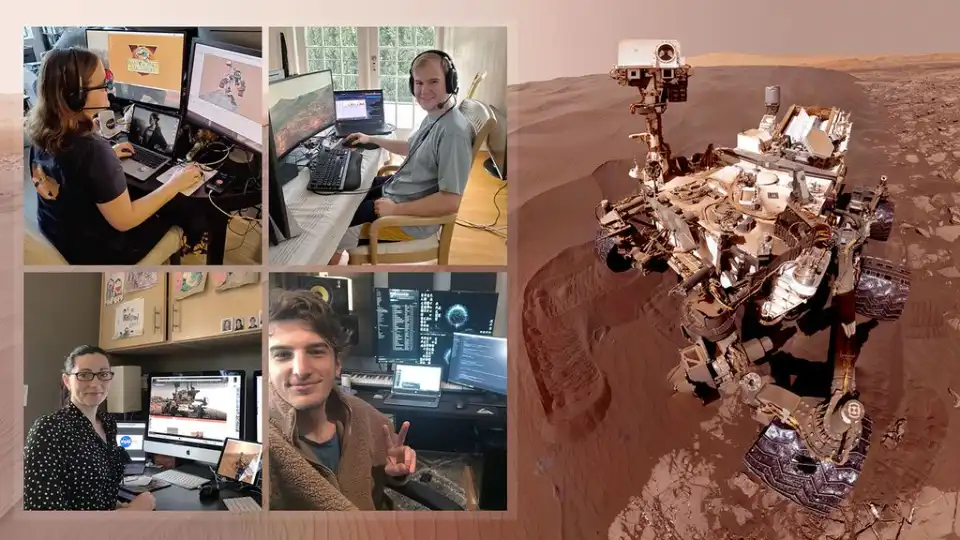
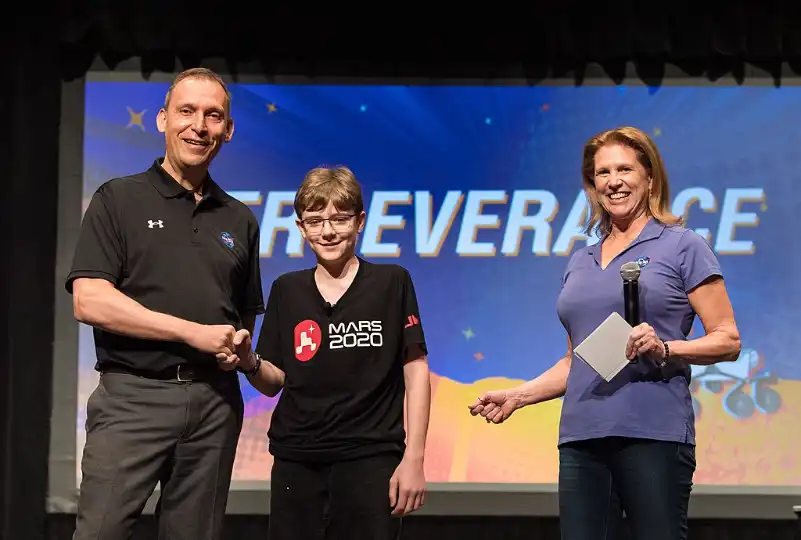
NASA Scientists Control Spacecraft From HomeNFK Editors - April 27, 2020Around the world, millions of people on lockdown are having to work from home. Among them are NASA’s scientists – including those controlling spacecraft, and even Curiosity, one of NASA’s Mars rovers.Since March 20, all NASA workers who don’t absolutely have to be in NASA’s buildings have had to work from home. Like many people working from home, NASA’s scientists are facing the challenges of turning their living spaces into work spaces, in spite of the distractions of pets, children, and other family members.Around the world, millions of people on lockdown are having to work from home. Among them are NASA’s scientists – including those controlling spacecraft, and even Curiosity, one of NASA’s Mars rovers (above).(Source: NASA/JPL-Caltech/Malin Space Science Systems, Julian Herzog [Public domain], via Wikimedia Commons.)Alicia Allbaugh is in charge of the team that plans and carries out the actions of NASA’s Mars rover, Curiosity. Since Curiosity is a complicated robot moving around on a distant planet, it’s very important that its movements be planned and put into action carefully.Ms. Allbaugh says the situation is a classic NASA challenge. “We’re presented with a problem and we figure out how to make things work. Mars isn’t standing still for us. We’re still exploring,” she says.Alicia Allbaugh (above) is in charge of the team that plans and carries out the actions of NASA’s Mars rover, Curiosity. She says the situation is a classic NASA challenge. “We’re presented with a problem and we figure out how to make things work.”(Source: NASA.)But that doesn’t mean it’s easy. Creating each series of actions that a rover takes can require the efforts of 20 or more people working together. When it became clear that a lockdown was likely, NASA’s teams began making plans that would allow them to keep working together, even from home.The teams are usually all in the same room at NASA. Now, at home, they are holding several video and chat sessions at once. “I probably monitor [keep track of] about 15 chat channels at all times,” said Ms. Allbaugh.Controlling a rover’s actions requires the efforts of 20 or more people working together. The teams are usually in the same room at NASA. Now, at home, they are holding several video and chat sessions at once. Above, the Curiosity rover team working from home.(Source: NASA/JPL-Caltech .)Still, the teams aren’t able to do everything at home that they can do from work. For example, in NASA’s lab in Pasadena, there are some very powerful 3D goggles that allow the scientists to carefully study the land around the rover.But the 3D goggles require a very powerful computer, so the team has come up with a simpler solution: they are wearing old-style 3D glasses with red and blue lenses.Usually the Curiosity team uses powerful 3D goggles to study the land around the rover. Since the 3D goggles require a very powerful computer, the team has come up with a simpler solution: wearing old-style 3D glasses with red and blue lenses.(Source: NASA/JPL-Caltech .)In spite of the challenges, the scientists seem to be successful in their work. Just two days after they began working from home, the team was able to send commands to Curiosity that caused it to drill for a rock sample in an area on Mars known as Edinburgh.Curiosity is far from the only project that NASA’s scientists are running from home. One of the biggest challenges is getting ready to launch a new Mars rover called Perseverance by July 17. About 90% of the Perseverance team (above) is working from home.(Source: NASA/JPL-Caltech .)Curiosity is far from the only project that NASA’s scientists are running from home.One of the biggest challenges is continuing to get ready to launch a new Mars rover called Perseverance on July 17. Because of the way the planets line up, if the team can’t send Perseverance on or near the planned launch date, they will have to wait until 2022.All NASA workers who don’t absolutely have to be in NASA’s buildings are working from home. Above, a NASA worker walks by the countdown clock for the Perseverance rover. If the Perseverance isn’t launched on time, NASA will have to wait until 2022.(Source: NASA/JPL-Caltech .)NASA’s workers are also controlling several other spacecraft and satellites. The challenges of working aren’t always connected to technology.Ryan Martineau, who’s helping operate a spacecraft from home, has a three year old and a three-month old baby. He told the news websiteThe Verge, “There have been a couple of cases where I had to hurry up with a diaper change real quick before I needed to send some commands to the spacecraft.”Check Yourself0/41. For the last month, most people who work for NASA have been going in to work as they normally do.True   False2. Creating the actions that control a rover on Mars takes the efforts of _________.five peoplejust one person20 or more people10 people3. When is the launch planned for the Perseverance rover?July 17June 17March 20April 274. If NASA misses the launch date for Perseverance, when is the next time it could be sent?Alicia Allbaugh described the current situation as classic NASA challenge. How is working from home similar to some of the challenges NASA workers normally face?ResetSourceswww.theverge.comwww.space.comwww.voanews.comgizmodo.comtechcrunch.comwww.nasa.govmars.nasa.govShare:When NASA sends its new rover blasting off to Mars in July, it will carry the name “Perseverance”. The name was suggested by Virginia middle-school student Alexander Mather, who won NASA’s “Name the Rover” contest.You might be interested in…ISS Celebrates 25 Years of People Living in SpaceNFK Editors - Nov 6, 2025This week marks 25 years of humans living in space. On November 2, 2000, three astronauts became the first full-time workers at the International Space Station. Since then, the ISS has never been empty.Meteorite That Hit House Is Older Than EarthNFK Editors - Aug 14, 2025When a fireball fell through the sky in the southeastern United States on June 26, it caught the attention of people across seven states. It was a meteor breaking up as it fell through the Earth’s atmosphere. A small part of the space rock tore through a house in Georgia. Scientists now say the meteorite is older than the Earth.Blue Origin Sends Six Women Into SpaceNFK Editors - Apr 16, 2025On Monday, the aerospace company Blue Origin launched its spacecraft RSS Kármán Line on a ten minute trip into space. The spaceship carried the first all-female crew to go into space since Russian astronaut Valentina Tereshkova’s solo mission in 1963.Private Company Makes Perfect Moon LandingNFK Editors - Mar 5, 2025On Sunday, a company called Firefly Aerospace became the first private company to make a perfect landing on the moon. Firefly is working with NASA, and its spacecraft, Blue Ghost, is carrying out several experiments for the space agency.

Strategic Investment of $10,000 in 2025 for Optimal Profits
Investment Focus 2025-12-26 18:59:56

Strategic Investment of $10,000 in 2025 for Optimal Profits

Possessing $10,000 to invest marks a promising start. Numerous affluent investors, including Warren Buffett, began with even less. However, blindly investing in the stock market without a strategic approach will not maximize your returns. To convert your initial capital into substantial long-term profits, consider these premier investment strategies for your $10,000. 1. Fully Capitalize an IRA IRAs offer considerable advantages, such as tax deferral on earnings, which makes them appealing to investors. Visualize investing $5,000 in an IRA, which could膨胀 to $40,000 by retirement. You are taxed only on the initial $5,000, not the final sum. This tax benefit is a substantial advantage. There is an annual contribution cap for IRAs. In 2017, it was $5,500 for individuals under 50 and $6,500 for those 50 and above. With $10,000 to invest, maximizing your IRA contribution should be your top priority due to the unparalleled flexibility and tax advantages it provides. 2. Optimize Your 401(k) Contributions If your employer offers a 401(k) match, it's prudent to contribute up to the matching limit. Not doing so equates to leaving free money on the table, as your contributions effectively double. After reaching the match limit, consider other investment avenues for the remaining $10,000. 401(k)s restrict your investment options, necessitating diversification across a limited range of mutual funds. This broad diversification is more about betting on overall market growth rather than selecting specific companies. While the market generally increases over time, higher returns are possible by meticulously selecting companies based on their value and potential. 3. Diversify into Individual Stocks After maximizing IRA and 401(k) contributions, consider investing in individual stocks. Employing Rule #1 investing principles can assist you in identifying high-quality companies, purchasing them at a discount, and potentially achieving annual returns of up to 15%. These returns are uncommon with broad market diversification but are feasible with individual stocks. Patient, knowledgeable, and rational investment in individual stocks can significantly amplify your wealth. 4. Invest in Personal Growth The most valuable investment is in oneself. Equipping yourself with the necessary knowledge and resources to succeed as an investor will yield the highest returns. After investing in an IRA, 401(k), and a few individual stocks, use the remaining funds to learn everything you can about investing. Education is the key to consistently selecting excellent companies for investment. Are you eager to test your investment knowledge against seasoned investors? Take the Investing IQ Quiz! P.S. If you're seeking more information before investing $10k, here are some resources you might find beneficial. Interested in the best ways to invest $500? Explore our top picks for small-scale investments. Want to learn from Warren Buffett? Check out his renowned investing quotes. Looking to double your money every 7 years with compound interest?

How Jack Sinclair Transformed Sprouts Farmers Market Through Leadership: In-Depth Case Study
Investment Focus 2025-12-30 18:48:48

How Jack Sinclair Transformed Sprouts Farmers Market Through Leadership: In-Depth Case Study

At Rule One Investing, we are convinced that exceptional leadership is the cornerstone of long-term investment success. An outstanding CEO is not just about achieving financial milestones; they embody integrity, have a proven track record, and possess a clear vision for the future. In the realm of business, leadership can either uplift or undermine a company. Jack Sinclair, CEO of Sprouts Farmers Market, exemplifies how integrity, vision, and experience can transform a struggling business into a prosperous one. His management approach and strategic emphasis on core values have established Sprouts Farmers Market as a frontrunner in the health-conscious grocery segment. The Significance of Integrity in Leadership Jack Sinclair is renowned for his steadfast integrity. In his communications with shareholders and during earnings calls, he exhibits openness and honesty regarding the company's performance. He openly discusses mistakes and areas for improvement, a level of transparency that is both rare and essential for fostering investor trust. For investors, Sinclair's integrity signals dependability. His forthright acknowledgment of setbacks reassures shareholders that he is dedicated to addressing challenges as well as celebrating achievements. This is a key attribute for a guardian of investor capital—a leader who values sustainable growth over superficial success. Operational Prowess: Jack Sinclair's Track Record Jack Sinclair's extensive experience in the grocery sector is a significant factor in his success at Sprouts Farmers Market. With over three decades of industry knowledge, including his tenure as Vice President of Walmart's grocery division, Sinclair brought a wealth of expertise to Sprouts when he joined in 2019. Upon his arrival at Sprouts Farmers Market, the company was grappling with maintaining its competitive advantage. Drawing from his experience at Walmart, renowned for its cost leadership, Sinclair recognized that competing directly with retail behemoths like Walmart was impractical. Instead, he steered Sprouts towards a differentiated strategy. Strategic Shift: Prioritizing Core Strengths Instead of following Walmart's focus on low pricing, Sinclair highlighted Sprouts' unique selling proposition: fresh, healthy food and specialized products. He reoriented the company's priorities to better cater to its core demographic—health-conscious consumers seeking high-quality, niche products. Under Sinclair's guidance, Sprouts has carved out a distinctive position in the grocery industry. This strategic shift has enabled the company to grow steadily while remaining true to its mission. By concentrating on its areas of expertise, Sprouts has become a leading name in the health-oriented grocery sector. Accolades and Achievements Sinclair's contributions were recognized in 2020 when he was named CEO of the Year by Grocery Dive. This accolade underscored his transformative influence on Sprouts Farmers Market. The article detailing his achievements highlighted how he refocused the company during a tumultuous period. He not only stabilized the business but also outlined a clear path for expansion. Sinclair's vision includes increasing the store count from approximately 400 to 800–1,000 locations over the next decade to two decades. This ambitious yet feasible plan reflects his adeptness at combining operational acumen with long-term strategic planning. Insights from Jack Sinclair's Leadership Jack Sinclair's narrative provides valuable lessons for investors and business leaders: Integrity Fosters Trust: A CEO who is candid about challenges instills confidence among shareholders. Capitalize on Your Strengths: Rather than imitating competitors, concentrate on what distinguishes your business. Vision for the Future: Sustainable growth necessitates a well-defined plan and the discipline to execute it. As Sinclair continues to guide Sprouts Farmers Market toward its objectives, his leadership serves as a case study in how authenticity and expertise can bolster both investor confidence and business prosperity. Closing Thoughts Jack Sinclair's tenure at Sprouts Farmers Market illustrates the impact of transformative leadership. By emphasizing transparency, leveraging his decades of experience, and focusing on a niche market, he has turned the company into a formidable competitor in the health-focused grocery arena. Investors seeking promising enterprises should take heed: a great company is built on the foundation of great leadership. Sinclair's vision for Sprouts Farmers Market reminds us that with

Brain Implant Brings Simple Vision to Blind Man
Technology 2025-12-24 14:34:55

Brain Implant Brings Simple Vision to Blind Man

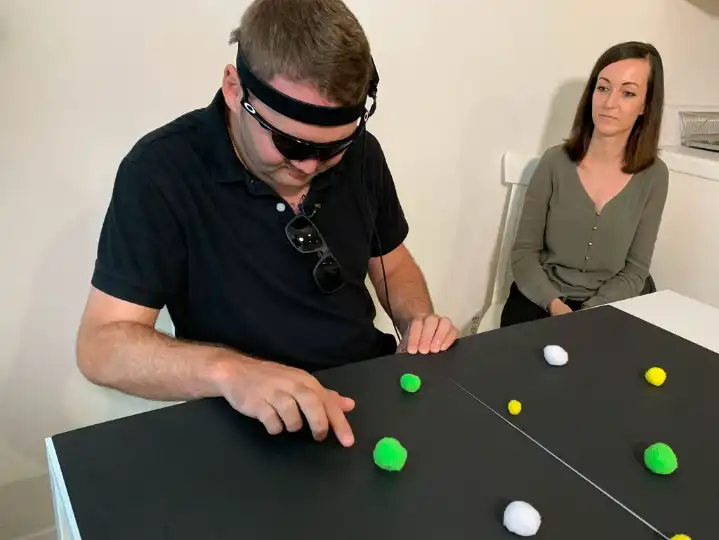
Brain Implant Brings Simple Vision to Blind ManNFK Editors - November 28, 2019Los Angeles, California —(Map)When Jason Esterhuizen was 23, an accident left him blind. Now, eight years later, special glasses and a device inside his brain are allowing him to make out some details of the world around him.When Mr. Esterhuizen had his accident in 2011, he was studying to be a pilot. But he had to give that up and focus instead on learning to deal with a world he couldn’t see.When Jason Esterhuizen was 23, an accident left him blind. Now special glasses and a device inside his brain are allowing him to make out some details of the world around him. The picture shows UCLA scientists checking Mr. Esterhuizen’s brain activity.(Source: UCLA.)He learned to read and write Braille – a system of writing created for blind people. He learned how to use a computer without seeing. And he learned how to get around as a blind person.Mr. Esterhuizen is from South Africa. In 2018, he and his wife moved to California in order to take part in a study that offered the possibility of helping him with his vision.After his accident, Mr. Esterhuizen had to learn how to get around as a blind person. In 2018, he and his wife (above) moved to California in order to take part in a study that offered the possibility of helping him with his vision.(Source: UCLA.)The study was being run by UCLA (University of California, Los Angeles) and a company called Second Sight. The goal of the study was to test an unusual medical product called Orion.There are three important pieces to Orion. One part looks like a pair of glasses. But the glasses are really for holding a camera on the person’s head. They also send wireless signals. The second part of Orion is a tiny computer that processes the video from the camera.There are three important pieces to Orion. The glasses hold a camera and can send wireless signals. A tiny computer processes the camera’s video. And the brain implant receives signals from the glasses. Mr. Esterhuizen is shown practicing finding objects.(Source: UCLA.)So that’s where the “sight” comes from. But how does it get to the brain? The third part is a tiny device – an implant – that is inserted directly into the patient’s brain. That’s what’s new and different about Orion.For years, Second Sight and other companies have been working on ways to get visual information into the brains of blind people. Most of the efforts have focused on connecting to the retina – a layer at the back of the eye that turns light into electrical signals for the brain.Most efforts to bring sight to blind people have focused on connecting to the retina – a layer at the back of the eye that turns light into electrical signals (above). The light circle to the right is where the optic nerve leaves the retina, taking vision information to the brain.(Source: Alexander Churkin [CC BY 3.0], via Wikimedia Commons.)By sending electrical signals to the retina, some visual information can be sent to the brain. So far Second Sight has given about 350 people retinal implants.But a retinal implant wasn’t possible for Mr. Esterhuizen. That’s why Orion’s direct connection to the brain was especially interesting to him. As Dr. Nader Pouratian, the surgeon who gave Mr. Esterhuizen his implant, said, “With the current system we’re testing, you don’t even need to have eyes for the device to work.”A retinal implant wasn’t possible for Mr. Esterhuizen. That’s why Orion’s direct connection to the brain interested him. Dr. Nader Pouratian, the surgeon who gave Mr. Esterhuizen his implant, said, “With the current system we’re testing, you don’t even need to have eyes for the device to work.” Above, Dr. Pouratian points to the location of the device.(Source: UCLA.)Mr. Esterhuizen’s vision isn’t “fixed”. He can’t see normally. But he can tell dark from light. He says he sees “little white dots on a black background, like looking up at the stars at night.”There are six people in the world trying out the Orion. Mr. Esterhuizen is one of two in the US.Mr. Esterhuizen’s vision isn’t “fixed”. He can’t see normally. But he can tell dark from light. “Now I can do things that I couldn’t do before,” he says. “I can sort the laundry, find my way in lighted hallways…and cross the street more safely. It’s making my life much easier.”(Source: UCLA.)“Now I can do things that I couldn’t do before,” Mr. Esterhuizen said. “I can sort the laundry, find my way in lighted hallways without using a cane, and cross the street more safely. It’s making my life much easier.”Sourceswww.voanews.comwww.uclahealth.orgonezero.medium.comwww.insideedition.comucla.multimedia-newsroom.comLos Angeles, CaliforniaView Larger MapShare:In April, Lego announced a new project with its famous bricks: the company is making Braille bricks to help blind students learn to read, write, and do math.Blind Sailor Sails Non-Stop Across the PacificNFK Editors - Apr 28, 2019Mitsuhiro Iwamoto has been blind since he was 16. He wanted to prove that his blindness didn’t limit what he can do. Last week Mr. Iwamoto became the first blind person to sail non-stop across the Pacific Ocean.You might be interested in…Scientists Surprised by Clever Fishing WolfNFK Editors - Dec 3, 2025In 2021, the Heiltsuk Nation in Canada set traps to catch invasive European green crabs. The traps kept getting destroyed, and no one knew how. When scientists set up a camera to learn what was going on, they got a surprise: a clever wolf had used a series of complicated steps to get food from the trap.Pig Kidney Transplant Trial Begins in USNFK Editors - Nov 12, 2025Doctors at a hospital in New York have begun a program that will test whether specially designed pig kidneys can be used to replace human kidneys. The results of the trial program could help thousands of people who are waiting for a new kidney.ISS Celebrates 25 Years of People Living in SpaceNFK Editors - Nov 6, 2025This week marks 25 years of humans living in space. On November 2, 2000, three astronauts became the first full-time workers at the International Space Station. Since then, the ISS has never been empty.Is Seeing Believing? AI Videos Look Extremely RealNFK Editors - Nov 5, 2025Over the last year or so, the quality of AI-generated videos has become so good that it’s extremely difficult to tell whether a video is real or not. An English TV channel recently ran a show about AI. At the end of the episode, the “woman” presenting the show announced that she wasn’t real.

Record-Setting Astronaut Christina Koch Returns to Earth
Technology 2025-12-25 02:58:05

Record-Setting Astronaut Christina Koch Returns to Earth

Record-Setting Astronaut Christina Koch Returns to EarthNFK Editors - February 11, 2020Dzhezkazgan, Kazakhstan —(Map)Last Thursday, American astronaut Christina Koch arrived back on Earth after 328 days in space. That’s the longest spaceflight ever made by a woman, and just one of the many things Ms. Koch achieved in space.Ms. Koch, who is 41, took off from Earth for the International Space Station (ISS) on March 12, 2019. While Ms. Koch was in space, she made 5,248 trips around the Earth. She traveled 139 million miles (223.7 million kilometers), which NASA says is roughly the same as 291 trips to the Moon and back.Last Thursday, American astronaut Christina Koch arrived back on Earth after 328 days in space and 5,248 trips around the Earth. That’s the longest spaceflight ever made by a woman, and just one of the many things Ms. Koch achieved in space.(Source: NASA Johnson, via Flickr.com.)On Thursday, Ms. Koch landed safely in Kazakhstan, along with Italian astronaut Luca Parmitano and Russian cosmonaut (astronaut) Alexander Skvortsov.Her time in space is just one of the records set by Ms. Koch. In October of last year, Ms. Koch led the first everall-female spacewalk with NASA astronaut Jessica Meir.During her 11 months on the ISS, Ms. Koch took part in six spacewalks, including three all-female spacewalks. In all, she spent over 42 hours outside the station.In October, Ms. Koch (left) led the first ever all-female spacewalk with NASA astronaut Jessica Meir. The two are shown preparing their spacesuits for a spacewalk. While on the ISS, Ms. Koch took part in six spacewalks, spending over 42 hours outside the station.(Source: NASA Johnson, via Flickr.com.)But for most astronauts, space travel isn’t about setting records. It’s about doing science. Ms. Koch took part in a wide variety of special experiments while she was on the ISS. Her work included studying how crystals grow in space, how fire behaves in space, and how atoms behave in extreme cold.She did many experiments aimed at learning more about growing plants in low gravity. Growing plants in space could be an important way to provide food on future trips.Ms. Koch took part in a wide variety of special experiments while she was on the ISS, including many experiments aimed at learning more about growing plants in low gravity.(Source: NASA Johnson, via Flickr.com.)Ms. Koch also worked on an experiment which tested a new way of separating liquids from gases. This experiment could lead to simple methods of cleaning water and air in space, which could be very important for future space travel.Ms. Koch isn’t just a scientist and an astronaut. She is also being studied. She’s part of a NASA program studying how astronauts are affected by being in space for long periods of time. Ms. Koch’s 328-day trip was only 12 days shorter than the American record set by NASA astronaut Scott Kelly in 2016.Ms. Koch is being studied as part of a NASA program looking into how astronauts are affected by being in space for long periods of time.(Source: Bill Ingalls/NASANASA Johnson, via Flickr.com.)As they did with Mr. Kelly, NASA scientists will be looking carefully at ways Ms. Koch’s body has been affected by her time in space. That research is important for the longer space trips NASA hopes to make in the future, such as for a base on the moon or a trip to Mars.Ms. Koch says she will miss the amazing views of Earth, and being able to float around in very low gravity. She will also miss her friends from the ISS. But she said she was looking forward to many simple Earth experiences that are impossible in space, such as “the feeling of wind on my face.”On Thursday, Ms. Koch landed safely in Kazakhstan. She says she is looking forward to many simple Earth experiences that are impossible in space, such as “the feeling of wind on my face.”(Source: Bill Ingalls/NASA [Public domain], via Wikimedia Commons.)Sourceswww.nytimes.comwww.theguardian.comwww.abc.net.auwww.dw.comwww.theverge.comwww.nasa.govwww.nasa.govDzhezkazgan, KazakhstanView Larger MapShare:This week marks 25 years of humans living in space. On November 2, 2000, three astronauts became the first full-time workers at the International Space Station. Since then, the ISS has never been empty.Meteorite That Hit House Is Older Than EarthNFK Editors - Aug 14, 2025When a fireball fell through the sky in the southeastern United States on June 26, it caught the attention of people across seven states. It was a meteor breaking up as it fell through the Earth’s atmosphere. A small part of the space rock tore through a house in Georgia. Scientists now say the meteorite is older than the Earth.Blue Origin Sends Six Women Into SpaceNFK Editors - Apr 16, 2025On Monday, the aerospace company Blue Origin launched its spacecraft RSS Kármán Line on a ten minute trip into space. The spaceship carried the first all-female crew to go into space since Russian astronaut Valentina Tereshkova’s solo mission in 1963.Private Company Makes Perfect Moon LandingNFK Editors - Mar 5, 2025On Sunday, a company called Firefly Aerospace became the first private company to make a perfect landing on the moon. Firefly is working with NASA, and its spacecraft, Blue Ghost, is carrying out several experiments for the space agency.

Microsoft Rejects Proposal to Add Bitcoin to Its Corporate Reserves
Tech Insights 2025-12-14 17:58:34

Microsoft Rejects Proposal to Add Bitcoin to Its Corporate Reserves

In recent years, an increasing number of companies have adopted the "BTC standard," which means regularly adding Bitcoin to their balance sheets. However, none of these companies are large enough to shift the global perception of Bitcoin as a reserve asset. Tesla remains the most notable Bitcoin holder among large corporations, but Elon Musk's company lacks an active Bitcoin purchase strategy. Microsoft had the opportunity to become a major player in the cryptocurrency market. Its shareholders recently voted on a proposal from the National Center for Public Policy Research (NCPPR) to include Bitcoin in the company’s reserves. NCPPR urged Microsoft's board to evaluate whether adding Bitcoin to its balance sheet would benefit the company’s long-term interests. The company’s board of directors, after conducting an analysis, recommended rejecting the proposal. Shareholders followed this recommendation, and the idea was overwhelmingly rejected, with just 0.55% of votes in favor of adding Bitcoin as a reserve asset. Microsoft’s largest investors—institutional giants like Vanguard and BlackRock (the firm behind the successful Bitcoin spot ETF)—voted against the proposal. According to Microsoft’s board, the decision was based on their thorough review of Bitcoin, concluding that it doesn’t meet the company’s criteria for balance sheet assets. They argued that corporate reserves should consist of stable, predictable investments that support liquidity and operational funding. Bitcoin’s volatility makes it unsuitable as a stable investment, like cash. If Bitcoin behaved like cash—losing value over time—it wouldn’t be in demand. Investors typically buy Bitcoin to preserve and grow their wealth, not to guarantee a set amount of capital for future use. Bitcoin is not designed to ensure that a specific amount of money will be available at a future date in its dollar equivalent. Future proposals to include Bitcoin in corporate reserves are likely to face similar opposition from institutional investors, who will continue to align with company boards' recommendations. However, Bitcoin advocates will likely learn from their initial push for corporate adoption and adjust their strategy. Rather than presenting Bitcoin as a replacement for traditional liquidity sources, activists should focus on advocating for Bitcoin as a part of long-term corporate investments, alongside other assets like factories, equipment, and intellectual property. This shift in approach would reduce the emphasis on Bitcoin’s volatility, removing one of the major objections to its inclusion in corporate portfolios. As major investors in large companies, including financial giants that have already launched Bitcoin spot ETFs, the chances of overcoming resistance from traditional finance will significantly improve.

Nvidia's Next Frontier: Empowering the Rise of Humanoid Robots
Tech Insights 2025-12-15 01:32:28

Nvidia's Next Frontier: Empowering the Rise of Humanoid Robots

Nvidia, the leading chipmaker, is set to deepen its focus on robotics in 2025. According to the Financial Times, the company will introduce Jetson Thor, a new generation of compact computers specifically designed for humanoid robots, during the first half of the year. This initiative aligns with Nvidia's long-term strategy of supporting the robotics industry without directly competing with manufacturers like Tesla. Instead, Nvidia aims to serve as a key OEM partner for the "hundreds of thousands" of robot makers worldwide, as noted by Deepu Talla, Nvidia's vice president of robotics, during a recent press briefing in Tokyo. The timing of this move is driven by two pivotal advancements, Talla explained to the FT: the rapid growth of generative AI models and the ability to train robots effectively in simulated environments. Unstated but equally significant is the broader context of Nvidia's strategy. With major clients like Amazon and Google actively developing their own AI chips to reduce reliance on Nvidia's products, the company’s expansion into AI-driven robotics reflects its effort to adapt to an evolving tech landscape.

Unlocking the True Value of a Company: A Guide to Understanding Sticker Price
Investment Focus 2026-01-09 04:43:46

Unlocking the True Value of a Company: A Guide to Understanding Sticker Price

Investment decisions are often guided by a fundamental question: What is the actual value of a company? This is where the term "sticker price," synonymous with intrinsic value, becomes pivotal. Mastering the concept of sticker price is essential for value investors, enabling you to make wiser investment choices regarding where to allocate your capital. In this article, we will delve into the definition of sticker price, its distinction from stock price, and the process of calculating it to decide when to invest in a company's shares. By the conclusion, you will possess a clear insight into determining a company's authentic worth and investing with assurance. The Essence of Sticker Price Sticker price is the genuine worth of a company, taking into account its historical performance and current financial standing. It reflects the intrinsic value of an enterprise, offering a reference point for the company's current valuation. However, grasping sticker price is just the first step. The ultimate aim is to purchase the company at a reduced price, a strategy known as the "margin of safety" among investors. The Margin of Safety: Investing at a Discount While sticker price indicates a company's intrinsic value, the margin of safety is about buying at a substantial discount to safeguard your investment. A typical guideline is to aim for a margin of safety of no less than 50%, meaning you would only consider purchasing the stock if its market price is at least half of its sticker price. This method minimizes risk and enhances potential profit. Sticker Price vs. Stock Price: Understanding the Contrast Recognizing the contrast between sticker price and stock price is vital for making enlightened investment decisions: Sticker Price: This refers to the intrinsic value of a company, derived from its historical performance, current profits, and anticipated growth. Stock Price: This is the market's assessment of a company's value at any given time, influenced by supply and demand. Stock prices are volatile and do not always represent the company's genuine worth. For instance, a company might have a sticker price of $100 per share, yet its stock price could be trading at $60. This gap presents a potential investment opportunity if your research indicates that the stock price is below your calculated margin of safety. Calculating Sticker Price: A Step-by-Step Approach Determining the sticker price necessitates an in-depth analysis of a company's financial performance. Here’s how to go about it: 1. Evaluate the Company’s Earnings Begin by reviewing the company’s earnings over the last 12 months. Focus on earnings per share (EPS), which is the net income divided by the total number of shares outstanding. Ensure the EPS reflects typical operating conditions, excluding anomalies like unusually poor or exceptional years. 2. Forecast Future Growth Then, predict the company’s earnings growth over the next decade. This involves examining: Historical growth rates. Industry trends. The company’s competitive positioning and future strategies. Select a reasonable and conservative growth rate based on your findings. 3. Discount Future Earnings to Present Value Using your projected growth rate, estimate the company’s earnings 10 years from now. Afterward, discount this future value back to the present using an appropriate discount rate. This will give you the present value of the company’s earnings, which is the foundation of its sticker price. Tools and Resources for Sticker Price Calculation Numerous platforms offer sticker price estimates based on analyst projections and expectations. For example, the Rule One Toolbox provides valuable resources for calculating sticker price. However, conducting your own analysis is always recommended to ensure accuracy and alignment with your investment philosophy. The Significance of Sticker Price Understanding sticker price empowers investors to differentiate

Embarking on a Voyage to Financial Prosperity: Crafting a Fortune
Investment Focus 2026-01-07 00:58:01

Embarking on a Voyage to Financial Prosperity: Crafting a Fortune

Venturing into the realm of investments is akin to embarking on a voyage that promises to uncover significant value and the opportunity to generate wealth for generations. Even the most experienced investors, such as Warren Buffett, began their financial odyssey with limited knowledge. The key to investment success lies in adopting the right strategy, remaining dedicated to financial independence, and persistently committing to learning. Equipped with these tools, anyone, including you, can gradually build wealth over time. While the first steps might seem intimidating, I am here to offer a clear guide to wealth that has been followed by many successful investors. Buffett emphasizes two fundamental investment principles: Rule #1 – Protect your capital, and Rule #2 – Always remember Rule #1. Embrace the simple investment wisdom imparted by Buffett, Ben Graham, and Charlie Munger, who are giants in the investment world. You can acquire the necessary knowledge to become an investor and, more importantly, accumulate wealth that will support you and your family for years to come. Drawing from my personal experience, having walked this path, if I was able to achieve success, so can you. Join me on this remarkable adventure. Setting Sail on the Investment Odyssey in 8 Stages The investment journey can be broken down into 8 manageable stages that are accessible to anyone, regardless of their current financial knowledge or status, even if you started without any capital, as I did. What is necessary is an understanding of the strategies used by successful investors, and soon, you too can relax and watch your wealth grow. You will not be alone on this quest. I will be your guide throughout your investment journey, sharing the invaluable insights I have gathered from my own experiences and those of the distinguished investors who have blazed the trail for us. After all, if you aspire to become an investor, why not learn from the masters? 1. Acquire High-Quality Investment Materials Let's start with the first step: securing the right investment materials, as finding reliable educational resources is crucial to your investment success. The challenge in finding credible resources is the lack of an official curriculum for Rule #1. This means that the barrier to entry for educators is low—virtually anyone can teach 'investing', including those from prestigious universities. As a result, there is an abundance of misinformation in circulation. In fact, Charlie Munger once stated that he believes 95% of financial professionals make witch doctors seem respectable. To assist you, I have compiled a virtual library filled with tools and resources that I consider to be beneficial. You may eventually use every resource in that library, as being an investor involves continuous learning. For example, I was invited to Japan to meet Wahei Takeda, an 84-year-old billionaire, often referred to as Japan's 'Warren Buffett'. He had read my book, Rule #1, and was eager to discuss it with me. He exemplifies someone who never stopped learning. Even as an octogenarian billionaire, he remained curious and open to new investment materials. Use these resources to establish a foundational understanding of Rule #1 investing and refer back to them when needed. 2. Grasp the Fundamentals of Investing With the right resources at your disposal, you can begin learning the basics of investing. Investing, primarily in stocks, is genuinely straightforward. Stocks represent ownership in a company, and to be a successful investor, you must first understand the business. Then, ensure it has inherent quality that protects it from competition. Afterward, have confidence in the CEO's integrity and ability. Lastly, understand the value and purchase it with a substantial margin of safety.

Embarking on a Journey to Affluence: Unraveling the Elite's Investment Techniques
Investment Focus 2025-12-29 21:02:44

Embarking on a Journey to Affluence: Unraveling the Elite's Investment Techniques

Within the vast array of investment strategies present in the current market, value investing stands out as a distinguished and long-lasting approach. It serves as the foundation of the Rule One investment philosophy. In this in-depth analysis, we will uncover the fundamental principles of value investing and its distinction from Rule One. The Essence of Value Investing Value investing is a method that seeks to purchase companies with a lower price-to-earnings ratio. Pioneered by Ben Graham, the mentor of Warren Buffett, this strategy is detailed in his seminal work, ‘Security Analysis,’ first published in 1934 and still highly relevant today. Graham termed this approach ‘value’ investing because the goal is to acquire more value than the amount invested. The core concept revolves around obtaining $10 worth of value for a $5 investment. Graham recommended investing in a diverse portfolio of undervalued companies, often around 200, to mitigate the risks associated with investing in companies that are cheap for valid reasons, such as potential bankruptcy. For Graham, a stock was deemed undervalued and investment-worthy if it could be purchased for less than its liquidation value, which is derived from the company's net assets per share. While the foundational principles of this ageless technique remain valid, they were especially effective during the Great Depression and World War II, periods when Graham was actively engaged in investing. The Evolution of Value Investing As Warren Buffett entered the investment scene, the economic landscape had changed, making it more challenging to find companies that were significantly undervalued. What was the adaptation? To address this, Buffett refined the theory, focusing on identifying not only undervalued companies but also those that were exceptional businesses with a predictable future. This required a deep understanding of the business, which naturally narrowed the scope of investments to what Buffett referred to as your ‘circle of competence.’ The Rule One strategy builds upon this evolution, concentrating on exceptional businesses that display specific characteristics. The Rule One perspective on value investing posits that the most effective way to achieve substantial returns is to identify a few companies that are inherently excellent, led by capable individuals, and are priced significantly below their actual worth. A business that meets these criteria is considered a Rule One stock. Defining Rule One Stocks Essentially, a Rule One stock is one that is priced below its intrinsic value. The challenge lies in determining what the intrinsic value is. Intrinsic value is a term frequently used in value investing, and for good reason—it is crucial. While value investors often base decisions on the perceived low cost of a business, Rule One investors understand that it is preferable to invest in an exceptional business at a fair price rather than a mediocre business at a low price. This is why Rule One investors must have a comprehensive understanding of the companies they invest in. We must know the business well enough to recognize its excellence. I will later teach you how to identify outstanding companies and assess their intrinsic value. The Value Investing Mindset There is a value investing mindset that is essential to understand. Grasping this mindset is a vital step in mastering value investing. Although it may seem straightforward, purchasing $10 bills for $5 can be emotionally challenging, but these mindset tips will aid you in mastering it. Fear as an Ally Buffett stated that the key to outstanding investment outcomes is to buy when fear is present. Fear is what causes the market price of an excellent business to be significantly lower than its value. In fact, fear is the sole factor that makes the market price of a business incorrect. Without fear surrounding this business, industry, or economy, the business

For Real? Huge Dinner, Sore Fingers, & Smelly Buses
Technology 2025-12-27 16:37:14

For Real? Huge Dinner, Sore Fingers, & Smelly Buses

For Real? Huge Dinner, Sore Fingers, & Smelly BusesNFK Editors - July 4, 2020Prague Holds a Massive Dinner to Celebrate SummerThe city of Prague in the Czech Republic held a huge open-air dinner last Tuesday to celebrate summer and the relaxing of coronavirus lockdown rules. A group called Pianos in the Streets organized the meal.The group set up a 550-yard (500 meter) table crossing the city’s famous Charles Bridge and invited people to reserve their seats online. In less than 40 seconds, all of the seats had been reserved. People were asked to bring their own food and drinks, and hundreds of people did.Embed from Getty ImagesThe city of Prague in the Czech Republic held a huge open-air dinner last Tuesday to celebrate summer and the relaxing of coronavirus lockdown rules. A 550-yard (500 meter) table was set up. Hundreds came, bringing their own food and drinks.The Czech Republic is eager to encourage tourists to visit the country now that travel rules have been relaxed. Prague’s mayor said, “We need to send the world a symbol that we live again.”Though the number of coronavirus cases in the Czech Republic has gone up in recent days, during its lockdown, the country did a good job of getting the virus under control.“Finger on the App” Contest Ends Early With Four WinnersA company called MSCHF teamed up with a YouTube star to create an unusual contest called “Finger on the App”.YouTube star Jimmy Donaldson, also known as “MrBeast”, worked with MSCHF to create a game as simple as it was challenging. All users had to do was download the app, wait for the game to begin, and then keep their finger on the app longer than anyone else.The game was set up to handle millions of players and designed so that people had to pay attention to the app. Every few minutes the app would tell users to move their fingers to a new location on the screen.An unusual contest called “Finger on the App” required players to do exactly that for as long as possible. After over 70 hours, the contest was ended early with four winners instead of one. Above, a screenshot of the Finger on the App website.(Source: Website screenshot, Finger on the App.)The prize for winning the contest was $25,000 – or possibly nothing. That’s because of a special contest rule: everyone who lost the contest was allowed to vote for how much money the winner should get. The winner would only earn the average of the amounts chosen by the people who lost.The game began on June 30 and didn’t end until more than 70 hours later, when Mr. Donaldson ended the contest early, giving each of the four remaining players a reward of $20,000. He also gave the winners a bit of advice: “Go to sleep!”Berlin Transportation Company Wants Smelly RidersBecause of the coronavirus, riders on public transportation in Germany are required to wear face masks. Though most people follow the rules, some people aren’t wearing their masks correctly. They’re only covering their mouths, but leaving their noses uncovered.Now the Berlin transportation company BVG thinks it may have found a solution for that problem – smelly riders. On Wednesday, BVG made posts on social media sites encouraging riders NOT to use deodorant under their arms. The company is hoping that if the body smells on the bus are strong enough, even lazy mask wearers will have a good reason to cover their noses.The Berlin transportation company BVG thinks it may have found a solution to sloppy mask wearers – smelly riders. On Wednesday, BVG made the post below on social media sites, encouraging riders NOT to use deodorant under their arms.Though the posts were made partly as a joke, it could have an effect. Over 10,000 people have seen and “liked” the posts, which helps spread the word about how important it is to correctly wear a mask to limit the spread of the coronavirus.Sourceswww.laht.comwww.cnn.comwww.cnbc.comwww.theverge.comwww.forbes.comtechcrunch.comwww.dw.comwww.thelocal.deShare:Scientists from Japan and Taiwan may have solved an old mystery: how did ancient people with simple tools and little scientific knowledge make long, dangerous ocean trips to new places? To test their ideas, the researchers made a trip of their own in a canoe they built from a tree using stone tools.

Using Sewage to Track the Spread of the Coronavirus
Technology 2025-12-28 13:00:45

Using Sewage to Track the Spread of the Coronavirus

Using Sewage to Track the Spread of the CoronavirusNFK Editors - May 7, 2020Worldwide, many efforts are being made to test people for the new coronavirus. But scientists are also looking at an unusual way of testing for the virus – studying water that’s been flushed down toilets.When you pour something down the drain or flush it down a toilet in most cities, it goes into a sewer. This “sewage” or wastewater is then cleaned and treated so that the clean water can be used again.But sewage also carries important information about what’s going on with the people who create it. Many diseases leave traces which show up in human poop and pee. In fact, signs that a person is fighting a virus or harmful bacteria can show up in their poop before the person even realizes they are sick.Sewage carries important information about what’s going on with the people who create it. Many diseases leave traces which show up in human poop and pee. Above, a wastewater treatment plant in Yakima, Washington.(Source: Steve Groom [CC BY-SA], via Wikimedia Commons.)Scientists have known for years that they can learn a lot about a city’s diseases by studying its wastewater. As scientists have developed new ways of testing for diseases, that process has gotten simpler and more accurate.In 2013, the Israeli government was able to respond to an outbreak of poliovirus after discovering it in wastewater. Recently, signs of a hepatitis A outbreak appeared in Detroit’s sewage almost a week before any cases were reported.“Sewage is a source of information on human health,” says Newsha Ghaeli. Above, Mariana Matus (left) and Newsha Ghaeli (right), the people who started Biobot, a company that studies wastewater..(Source: Biobot.)“Sewage is a source of information on human health,” says Newsha Ghaeli. She’s one of the creators of Biobot, a company that studies wastewater. Biobot has now teamed up with several other organizations to use wastewater to study the spread of the coronavirus.Tracking the spread of the coronavirus has been tricky. Because people can carry the virus without showing any signs of it, it’s hard to know how widely it’s spread. Often, by the time health experts realized there was a case or two in an area, the disease had already spread widely.Imagine if health experts could tell that the virus was spreading in an area before any cases were reported. Teams in the Netherlands, Australia, Sweden, and the US are studying wastewater to make this happen.(Source: Biobot.)Imagine if health experts could tell that the virus was spreading in an area before any cases were reported. Teams in the Netherlands, Australia, Sweden, and the US are working to make this happen.To get a clear picture of how many people have COVID-19, lots of people need to be tested, including many who feel just fine. But because so many places don’t have enough tests, often the only people who get tested are those who appear to have the disease.To get a clear picture of how many people have COVID-19, lots of people need to be tested, including many who feel fine. So far most tests have been given to people who appear to have the disease. Above, a sailor gets tested for the coronavirus.(Source: US Navy Medicine [Public domain], via Wikimedia Commons.)That’s where testing wastewater can be useful. Sewage can’t give exact numbers, but based on the virus-related material they collect, scientists can make a good guess about roughly how many people have the virus.For example, based on Biobot’s testing in Massachusetts, the company believes that many more people have the virus than are currently reported. Biobot is working with water companies in 40 states to collect more information.With more detailed information, not just in the US, but around the world, scientists should be able to make more accurate estimates about the spread of the coronavirus.(Source: Biobot.)With more detailed information, not just in the US, but around the world, scientists should be able to make more accurate estimates about the spread of the coronavirus.This could be especially useful as cities, states, and countries begin relaxing lockdown rules. Keeping a careful eye on wastewater could give governments an early warning signal for outbreaks, which could save many lives.Check Yourself0/41. Signs that a person has a disease can show up in their poop before they even know they are sick.True   False2. Studying sewage helped scientists in _______________ deal with an outbreak of poliovirus.3. Studying wastewater can help scientists _______________.tell exactly how many people have the coronavirusget a rough idea how many people have the coronavirus4. Testing wastewater for the coronavirus could be especially useful as governments relax their _______________.Unusual methods often help scientists come up with new information. What else do you think scientists might be able to learn from studying sewage?ResetSourceswww.nature.comwww.nytimes.comwww.abc.net.auwww.theverge.comwww.voanews.comtheconversation.commedium.comShare:This week marks 25 years of humans living in space. On November 2, 2000, three astronauts became the first full-time workers at the International Space Station. Since then, the ISS has never been empty.Massive “Fatberg” Cleared From London SewerNFK Editors - Oct 9, 2025A water company in England has removed a massive “fatberg” which was blocking pipes in a London sewer. The fatberg was a hardened mess of grease, oil, wet wipes, and other items that had been put down toilets and sinks instead of into trash cans.Egypt, Sudan Worried as Ethiopia Opens Massive DamNFK Editors - Sep 10, 2025On Tuesday, Ethiopia held a special event to officially open Africa’s largest dam. The $5 billion Grand Ethiopian Renaissance Dam is expected to bring electricity to millions of people in Ethiopia. But the dam has upset Egypt and Sudan, which rely heavily on the Nile River for its water.

Understanding Market Capitalization: A Key Investment Metric 1504
Investment Focus 2025-12-28 20:42:09

Understanding Market Capitalization: A Key Investment Metric 1504

Market capitalization, commonly referred to as "market cap," is a foundational yet nuanced concept in the realm of finance that is pivotal for assessing the value of publicly traded companies. While it may seem intricate, it's important to remember that market cap should not be the exclusive factor when making investment decisions. This piece aims to clarify the concept of market capitalization, its significance, the method of calculation, and its application within investment strategies. We will also explore the spectrum of market cap categories, including large-cap, mid-cap, and small-cap firms. The Essence of Market Capitalization Market capitalization essentially reflects the stock market's assessment of a company's value. This assessment is derived by multiplying a company's total outstanding shares by its current share price. An increase in either the number of shares or their market value results in a higher market cap. It can also be viewed as the theoretical cost of purchasing the entire company in a single transaction. Market Capitalization vs. Intrinsic Value There is a widespread misconception that equates market cap with a company's actual worth. Even some scholars have mistakenly assumed that market prices accurately represent a business's intrinsic value. However, as Warren Buffett has highlighted, this is often not the case. A company's market cap is based on its share price, which, as we know, does not consistently align with its fundamental value. Consider the volatile stock prices of meme stocks like GameStop and Dogecoin, which are more influenced by social media buzz than the companies' underlying values. It is crucial to acknowledge that a stock's price does not always represent a company's value, making market cap just one piece of the investment puzzle. The Significance of Market Capitalization If market cap is merely an indicator of price, why is it important? A company's market cap signifies its size, helping investors to estimate the company's scale and growth potential. While market caps can vary significantly, investors typically categorize them into small-cap, mid-cap, and large-cap companies. These categories can assist individual investors, but they are more frequently used by fund managers to diversify their clients' portfolios with a mix of smaller and larger companies. Large-Cap Stocks Companies with a market cap above $10 billion are classified as large-cap. Large-cap companies are generally stable, with a solid track record and significant market share, although they are not without risk. The potential drawback of large-cap stocks is their slower growth due to their established market position. An example of a large-cap company is Walmart, with a market cap of approximately $370 billion. Mid-Cap Stocks Mid-cap companies have a market cap ranging from $2 billion to $10 billion. They may serve niche markets or face competition that prevents them from becoming large-cap companies. Alternatively, they could be newer companies in a high-growth phase. Examples include Robinhood, Hyatt Hotels, and Docusign. Small-Cap Stocks Small-cap companies have a market cap between $300 million and $2 billion. Companies below $300 million are considered micro-cap. Unlike large-cap companies, small-caps carry higher risk but also offer substantial growth potential with significant returns. Small-cap stocks include Coursera, SmileDirectClub, and Health Catalyst. Calculating Market Capitalization Calculating market capitalization is a straightforward process that can quickly determine the market caps of potential investments. Market Cap Formula Market capitalization

Everyone’s at Home, the Earth is Shaking Less
Technology 2026-01-07 01:22:36

Everyone’s at Home, the Earth is Shaking Less

Everyone’s at Home, the Earth is Shaking LessNFK Editors - April 20, 2020Billions of people around the world are now on lockdown. That means there’s a whole lot less action on the planet’s surface. One result of that is that the earth is shaking less. And scientists can tell.Seismologists are scientists who study earthquakes and other vibrations inside the earth. They use special tools, including seismometers, to measure shaking in the ground. Though earthquakes can be huge and powerful, seismometers can measure much smaller vibrations, too.Seismologists are scientists who study earthquakes and other vibrations inside the earth. They use special tools, including seismometers, to measure shaking in the ground. Above, a seismograph, which measures and records earthquakes.(Source: Yamaguchi先生 [CC BY-SA 3.0], WikimediaCommons.org.)Seismic stations – special research stations with seismometers and other tools for measuring earthquakes – are usually set up far away from cities. Often seismometers are buried deep underground, away from human-created noise. That’s because cities shake too much.Think about it: trucks, buses, trains, subways, hundreds of thousands of cars, machinery like jackhammers and cement mixers – even the pounding of millions of pairs of feet. Ordinary human life, especially in cities, has a lot of noise, and that noise winds up vibrating in the ground.Seismic stations – special research stations with seismometers and other tools for measuring earthquakes – are usually set up far away from cities. That’s because cities shake too much. This seismic station is on Mount Vesuvius in Italy.(Source: daryl_mitchell [CC BY-SA], via Wikimedia Commons.)Now, with people on lockdown all over the world, a big part of this background noise has dropped away. It’s like when everyone at a party stops talking at once, and you can hear the smallest of sounds.One of the first people to notice this was Thomas Lecocq, a seismologist who works at the Royal Observatory in Brussels, Belgium. Mr. Lecocq says the levels of “seismic noise” have been about 30% to 50% lower since mid-March. He says those levels are about the same as the country would have on a big holiday like Christmas.Seismologist Thomas Lecocq says that levels of seismic noise have been about 30% to 50% lower since mid-March. He says the current levels are about the same as the country would have on Christmas. Mr. Lecocq created the graph above, showing the drop.(Source: Screenshot, Thomas Lecocq.)Mr. Lecocq shared details over the internet about how he detected the drop in seismic noise. Seismologists in several other countries, including France, New Zealand, and the United States, used Mr. Lecocq’s method and found similar results.The unusual quiet is giving seismologists a rare chance to “listen” to the earth without so much human noise. And it makes a big difference. Seismologists say they can now detect earthquakes on the other side of the world – something that would normally be lost in the background noise.The unusual quiet is giving seismologists a rare chance to “listen” to the earth without so much human noise. Seismologists say they can now detect earthquakes on the other side of the world. Above, an underground seismometer.(Source: SpacePen [CC BY-SA 3.0 DE], via Wikimedia Commons.)The quiet period may allow seismologists to study things that create such small vibrations that they normally can’t be detected – things like waves, or the way water moves underground.The drop in noise is improving even “bad” seismic stations. Brussels has a seismic station that was built over 100 years ago, before it became a big, busy city. Normally, Mr. Lecocq says, the station is “basically useless”. But without all the background noise, it’s almost as good as a much more protected seismometer.The scientists say that the lower seismic noise level is a strong sign that people are taking the lockdowns and social distancing rules seriously. Above, the Grand Place square in front of the Brussels City Museum is nearly empty because of the pandemic.(Source: Trougnouf (Benoit Brummer) [CC BY-SA], via Wikimedia Commons.)The scientists say that the lower seismic noise level is a strong sign that people are taking the lockdowns and social distancing rules seriously. Mr. Lecocq thinks these seismic measurements can be used to encourage people to keep doing the right thing and stay at home.Check Yourself0/41. Seismologists are scientists who study _______________.2. Why are most seismic stations set up away from cities?Land is cheaper outside of citiesPeople are more friendly in the countryCities shake too muchIt's hard to find parking in cities3. Scientists can measure the drop in vibrations caused by people staying at home.True   False4. During the quiet period, scientists may be able to study things that only create small vibrations. Name one example.Have you noticed if it's quieter where you live? Is it easier to stay home if you know everyone else is, too?ResetSourceswww.theatlantic.comwww.cnn.comwww.smithsonianmag.comwww.nature.comgizmodo.comShare:

Discover the Art of Value Investing: Embrace the 'Chipotle' Effect with Strategic Patience
Investment Focus 2026-01-04 01:44:46

Discover the Art of Value Investing: Embrace the 'Chipotle' Effect with Strategic Patience

The Virtue of Patience in Value Investing Value investing, a strategy that hinges on the 'margin of safety', is a financial doctrine revered by investment legends such as Warren Buffett and Benjamin Graham. It involves acquiring assets at prices substantially below their intrinsic worth, thereby establishing a protective cushion against market fluctuations. To elucidate this concept, consider the example of Chipotle Mexican Grill. A Practical Demonstration of Margin of Safety In 2025, Chipotle experienced a major challenge following an E. coli outbreak, causing its stock price to plummet from a peak of $760 per share to a trough of $250. While this incident appeared catastrophic, it actually represented a golden opportunity for discerning value investors. Assessing Core Strengths: Despite the turmoil, Chipotle's robust brand and reliable business framework persisted unscathed. Identifying Market Undervaluation: The stock's sharp decline signaled a substantial markdown from the company's actual worth. Exploiting the Situation: Investors who grasped the transitory nature of the crisis and had faith in Chipotle's enduring potential were able to purchase shares at a significant markdown. The Indispensable Quality of Patience Identifying undervalued companies is an optimal scenario, but it's not always feasible. Often, outstanding companies are not available at a discount. This is where patience is key for value investors. As Charlie Munger once remarked, "Make money while we wait." Keeping a Watchful Eye: Rather than pursuing fleeting chances, value investors frequently maintain a list of esteemed companies they keep under surveillance. Nurturing Patience: They patiently observe these companies, biding their time for market mispricings due to temporary setbacks, adverse news, or overreactions. Reaping the Benefits: When the market offers an opportunity—a significant markdown from intrinsic value—they are ready to seize it, profiting from the mispricing. Warren Buffett's 'Laziness' Doctrine Warren Buffett has emphasized the importance of patience in investing, often characterizing his approach as "laziness bordering on sloth." Concentrating on Long-Term Value: Buffett and Munger prioritize the identification of companies with lasting competitive edges and prosperous futures. Reducing Trading Frequency: They shun constant trading and superfluous actions, choosing instead to retain quality companies for the long haul. Adopting Patience: They comprehend that substantial investment triumphs often stem from waiting for the right opportunities rather than pursuing swift profits. Conclusion The Chipotle case illustrates the effectiveness of the margin of safety principle and the significance of patience in value investing. By recognizing and anticipating undervalued opportunities, investors can markedly improve their prospects for enduring success. Remember, true investment acumen often lies in understanding that the most substantial returns frequently result from inaction—or, more precisely, from patiently awaiting the opportune moment to act.

Tesla’s Cutting-Edge Innovations: Driving the Future of Transportation
Tech Insights 2026-01-01 08:25:55

Tesla’s Cutting-Edge Innovations: Driving the Future of Transportation

Tesla, the electric vehicle (EV) and clean energy company, continues to lead the charge in revolutionizing transportation and energy solutions. With innovations in autonomous driving, energy storage, and manufacturing efficiency, Tesla’s technological advancements are pushing the boundaries of what’s possible in the automotive and energy sectors. Let’s take a look at some of the key breakthroughs defining Tesla’s future. 1. Full Self-Driving (FSD): The Path to Autonomous Vehicles Tesla’s Full Self-Driving (FSD) system is a cornerstone of its technological ambition, aiming to transform how we think about driving. Advanced AI and Machine Learning: Tesla’s FSD leverages advanced neural networks and machine learning algorithms to interpret vast amounts of sensor data, enabling vehicles to navigate roads with minimal human intervention. Continuous Updates: One of Tesla's key differentiators is its ability to push over-the-air software updates, constantly improving FSD capabilities. These updates enhance safety, navigation, and overall driving performance. Challenges and Regulation: While Tesla is making rapid progress, regulatory hurdles and public concerns about safety and reliability continue to be key challenges in the deployment of fully autonomous vehicles. 2. Tesla’s Battery Innovations: Driving Range and Efficiency Tesla’s focus on battery technology is crucial not only for EV performance but also for the broader energy storage market. 4680 Battery Cells: Tesla’s new 4680 battery cells are a major leap forward in energy density, cost reduction, and manufacturing efficiency. These cells offer a higher energy capacity, which translates to longer range and reduced production costs. Energy Storage Systems: Tesla’s innovations are not limited to vehicles. Its Powerwall and Powerpack energy storage systems use cutting-edge battery technology to store solar energy for homes and businesses, promoting clean energy adoption. Battery Recycling: Tesla is working on improving battery recycling processes to ensure that critical materials like lithium and cobalt are reused, making EVs more sustainable in the long run. 3. The Gigafactory: Revolutionizing Manufacturing Tesla’s Gigafactories are redefining how vehicles and energy products are produced at scale. Massive Scale: The Gigafactory model aims to produce both vehicles and batteries at a scale previously unseen in the automotive industry. With facilities in Nevada, Shanghai, Berlin, and Texas, Tesla is rapidly scaling production to meet the growing demand for electric vehicles. Automation and Efficiency: Tesla’s manufacturing process is highly automated, incorporating robotics and AI-driven systems to enhance production speed and reduce costs. Innovations such as the use of large casting machines for vehicle frames are helping streamline the manufacturing process. Sustainability: Tesla’s Gigafactories are also designed to run on renewable energy, reducing their carbon footprint and furthering the company’s commitment to sustainability. 4. Tesla Energy: Powering the Future Tesla is not just a car company; it’s also a leader in the clean energy sector. Solar Roof and Solar Panels: Tesla’s solar products, including its Solar Roof and traditional solar panels, are designed to integrate seamlessly with homes and businesses to generate renewable energy. Energy Integration: Tesla is leading the way in integrating its solar products with its battery storage systems, allowing users to store solar energy for later use. This enables homes and businesses to become more self-sufficient and less reliant on the grid. Grid-Level Solutions: Tesla is also expanding into grid-scale solutions, providing utilities with large-scale energy storage systems that help stabilize power grids and enhance energy distribution. 5. Tesla’s AI and Dojo Supercomputer: The Brain Behind It All Tesla’s AI and its Dojo supercomputer are central to the company’s vision of achieving full autonomy and optimizing manufacturing. Dojo Supercomputer: Tesla’s Dojo is designed to process the enormous amount of video data generated by Tesla vehicles, accelerating the development of autonomous driving capabilities. By using this data to train its neural networks, Tesla aims to create a fully autonomous system that is safer and more reliable than human drivers. AI in Manufacturing: AI is also integrated into Tesla’s manufacturing processes, optimizing production lines and predicting potential issues before they arise, making production more efficient and less wasteful. Conclusion Tesla continues to innovate across multiple industries, from electric vehicles to clean energy and AI. With advancements in autonomous driving, battery technology, manufacturing efficiency, and energy solutions, the company is at the forefront of reshaping the future of transportation and energy. As Tesla pushes the boundaries of what’s possible, its technological achievements will likely serve as a model for the next generation of sustainable, intelligent systems.

Robotics Team Sets Toilet Paper Pyramid Record
Technology 2026-01-08 12:26:37

Robotics Team Sets Toilet Paper Pyramid Record

Robotics Team Sets Toilet Paper Pyramid RecordNFK Editors - January 31, 2020Midland, Michigan —(Map)Students at Bullock Creek High School in Midland, Michigan found an unusual way to raise money for their robotics team – they used 27,434 rolls of toilet paper to build the world’s largest toilet paper pyramid.Every year, the BlitzCreek 3770 Robotics team takes part in the FIRST Robotics Competition – a national robotics contest, where students are challenged to create a robot that can perform certain tasks.Members of Bullock Creek High School’s BlitzCreek 3770 Robotics Team found an unusual way to raise money for their robotics team – they used 27,434 rolls of toilet paper to build the world’s largest toilet paper pyramid.(Source: BlitzCreek 3770 Robotics.)The 28 students on the BlitzCreek team – about half female – design robots, build and wire them, and write the programs that run them.But building robots isn’t cheap, and teams are expected to help raise money for the program.Maxton Herst, 18, first had the idea of building a toilet paper pyramid to raise money in ninth grade, when he joined the robotics team. By accident, he came across a video about a toilet paper pyramid. Maxton realized that it was possible to build a record-setting pyramid, and then sell the toilet paper to raise money.Maxton Herst (above) first had the idea of building a toilet paper pyramid to raise money in ninth grade, when he joined the robotics team. Maxton, now 18, realized that it was possible to build a record-setting pyramid, and then sell the toilet paper to raise money.(Source: BlitzCreek 3770 Robotics.)The problem was convincing other members of the team. Year after year, he suggested the idea, but it never took off. But this year, Maxton is the captain of the robotics team. The rest of the team agreed to try his idea.BlitzCreek has been planning the pyramid since last May. One challenge was calculating how many rolls of paper were needed. The answer turned out to be 27,434.*In late December, team members gave up part of their winter holiday to build the pyramid. The pyramid was so big that they had to build it from the inside (above) before backing out and filling in the areas where they had been standing.(Source: BlitzCreek 3770 Robotics.)In late December, team members gave up part of their winter holiday to build the pyramid. The pyramid was so big that they had to build it from the inside before backing out and filling in the areas where they had been standing.It took about 16 hours, with many people working, to complete the pyramid. The final height of the pyramid was 16 feet 3 5/8 inches (4.95 meters) tall. The team believes their pyramid is about two feet (61 centimeters) taller than the current Guinness World Record.It took about 16 hours, with many people working, to complete the pyramid. In all, it took 27,434 rolls of toilet paper.(Source: BlitzCreek 3770 Robotics.)The pyramid opened for viewing on January 4. Sadly, because the pyramid was in the school’s front hall, it could only stay up three days.With all the excitement caused by the pyramid, it turned out to be fairly easy to sell the toilet paper. Families and other supporters bought nearly half of the rolls. A large company bought the rest.The pyramid opened for viewing on January 4. The final height of the pyramid was 16 feet 3 5/8 inches (4.95 meters) tall, which is about two feet (61 centimeters) taller than the current Guinness World Record.(Source: BlitzCreek 3770 Robotics.)The club is still calculating the costs for the project, but they believe the team made about $10,000 from the event. The money will help pay for the activities of the team, as well as similar programs at Bullock Creek’s elementary and middle schools.This isn’t the team’s first fun project. The team built a robot they call “T-shirt Bot”, which looks like a tank, and can shoot T-shirts into the air. The team has taken T-shirt Bot to hockey games, and to elementary schools, to get younger students excited about robotics.The BlitzCreek team also built a robot they call “T-shirt Bot”, which looks like a tank, and can shoot T-shirts into the air. The team has taken T-shirt Bot to hockey games, and to elementary schools, to get younger students excited about robotics (above).(Source: BlitzCreek 3770 Robotics.)Maxton hopes that the success of his “crazy idea” will inspire others. “If you’ve got an idea, and you know that that idea is good, push it,” he says. “Don’t stop.”* For people who want to do the math:The bottom layer of the pyramid has 43 rolls on a side. After that, each layer has one less roll per side than the layer below it. There are 43 layers in all, and the top layer has just one roll!Did You Know…?There are FIRST robotics contests at the elementary, middle school, and high school levels. You can find out more at the FIRST site.Sourceswww.mlive.comapnews.comwww.wnem.comwww.upi.comwww.freep.comMidland, MichiganView Larger MapShare:

5 Ways AI Will Revolutionize Data Centers Forever
Tech Insights 2025-12-16 15:56:22

5 Ways AI Will Revolutionize Data Centers Forever

The expansion of data center infrastructure over the last decade has been driven by an increasing demand for distributed services and coordinated multi-site deployments aimed at eliminating downtime and providing failover contingency. However, with the rise of AI, data centers are set for a transformative shift in both the technology they deploy and how they are structured. This transformation is poised to be both vast and significant, affecting everything from the design of data centers to their location, which will be heavily influenced by environmental factors. So, what does the future hold for data centers, and how will they differ from the hyper-scale model we are familiar with today? 1. Massive Growth Ahead Even without AI, data center growth and power consumption were already expected to surge in 2024. In 2022, data centers consumed 460 terawatt-hours (TWh) of electricity, accounting for 2% of global electricity usage. By 2023, this grew by 55%, reaching 7.4 GW. With the rise of hyperscale, AI, and crypto data centers, power demand is expected to increase by 160% by 2030, potentially making up nearly 4% of the world’s total electricity consumption. While AI isn’t the only factor driving this growth, it is certainly accelerating the scale and number of data centers needed. AI data centers differ from conventional hyper-scale environments primarily in their power demands. While storage needs are similar, the compute power required for AI is significantly higher. As a result, AI data centers will need careful planning around power access, heat management, and local environmental impact. In the U.S., which has ample space to build data centers away from urban centers, the AI revolution may be more manageable. However, without a unified power strategy like that found in Europe, reliable power supply remains a challenge. As a result, issues surrounding location, power, and thermal management could slow the speed of this transformation. The key to success will lie in sites with access to renewable energy sources such as solar, wind, and hydropower, as well as the right infrastructure for mitigating heat. 2. The Emergence of New Data Center Types Traditional cloud data centers often mixed storage and localized processing to serve data to client-facing platforms. These facilities were generally homogeneous in terms of services offered and scalability, often adding unused racks or larger drives to increase capacity. However, AI data centers are set to be much more specialized and complex. Depending on the model they host—whether generative or predictive networks—optimization for specific workloads will be key. These data centers will likely have two distinct functions: development environments, where AI models are created and refined, and deployment hubs, where these models are put to work. Development AI data centers can be located anywhere in the world and may even be disconnected from the internet for security reasons. On the other hand, deployment AI data centers need to be closer to the point of service, particularly when latency is a factor. For example, a real-time AI model used to manage traffic would need to process data from vehicles quickly, making a local deployment necessary to avoid excessive latency. While not all AI deployments are time-sensitive, the need for low-latency, localized data centers will drive demand for more specific, smaller installations. 3. Superior Thermal Management The electricity consumed by hyper-scale data centers is becoming a growing concern for climate scientists, and AI is expected to further intensify this issue by converting more energy into heat. AI could help manage data center power use by adjusting operations based on local weather conditions, reducing reliance on air conditioning in hot summer months. AI-driven data centers will also need to be built with thermal management in mind. This could involve using natural heat sinks like solid rock or taking advantage of cooler northern (or southern) latitudes. In some cases, excess heat could even be repurposed to benefit nearby communities, much like how geothermal energy is harnessed in Iceland. Gone will be the days of air-cooled data centers. As AI brings increased rack densities, new facilities are likely to use liquid cooling to handle the added thermal load. Every data center will need a detailed thermal emissions plan to avoid making poor environmental decisions, such as venting hot air into already hot regions. 4. Minimal Headroom Operations AI data centers are incredibly capital-intensive, so it’s crucial to maximize their efficiency to get the full return on investment. Much like the just-in-time manufacturing model, the goal is to minimize waste and optimize performance. In the past, unused capacity in a data center was considered a selling point; with AI, however, the opposite is true. Operating at maximum capacity for extended periods will lead to higher temperatures and voltages, so cooling and electrical systems will need regular assessments and enhancements. Additionally, with AI’s increased need for power and water, facilities will need significant investment to meet these demands. The growing complexity of maintaining such high-efficiency operations will require a local engineering workforce, available around the clock. The days of unmanned data centers, managed remotely by engineers from far away, are numbered. Like the rigorous maintenance schedules in the airline industry, AI data centers will require constant attention to ensure optimal long-term operation. 5. AI Running AI The final irony of AI data centers is that while engineers today are designing these advanced facilities, future data centers will likely be designed by AI itself. AI will adapt and optimize the data center infrastructure based on workload demands, managing power, heat, and service delivery with minimal human intervention. AI will also play a crucial role in security, continuously monitoring for physical or network intrusions and adjusting defense systems in real-time. Unlike conventional antivirus software, which relies on pattern-matching, AI will use data from various sensors, network traffic, and video surveillance to maintain an adaptive, always-on defensive posture. While this may seem like a step toward a dystopian future, the role of AI in running data centers will ultimately depend on how much control human engineers retain. The evolution of data centers driven by AI will redefine the way these vital systems operate and serve the world.

The Rise of Edge Computing: Why It’s the Future of Data Processing
Tech Insights 2025-12-12 16:32:08

The Rise of Edge Computing: Why It’s the Future of Data Processing

As the digital world becomes increasingly connected, the need for faster and more efficient data processing is growing. Enter edge computing – a technology that promises to revolutionize the way data is handled and delivered. But what exactly is edge computing, and why is it considered the future of data processing? 1. Edge Computing Explained Edge computing refers to processing data closer to where it is generated, rather than relying on distant data centers or cloud servers. This “edge” could be a device, sensor, or local server. By processing data locally, edge computing reduces latency and bandwidth usage, allowing for faster decision-making and responses. 2. Key Benefits of Edge Computing One of the primary advantages of edge computing is its ability to reduce delays in data processing. In industries like autonomous driving or healthcare, where split-second decisions are crucial, the speed of edge computing is invaluable. Moreover, it reduces the strain on centralized cloud infrastructure and makes systems more reliable. 3. Industries Transforming with Edge Computing Edge computing is already making waves in several industries. In manufacturing, it’s enabling real-time monitoring of machinery and predictive maintenance. In healthcare, edge devices can process patient data on-site, enabling quicker responses for critical situations. Similarly, the rise of IoT (Internet of Things) devices heavily relies on edge computing for seamless, efficient operations. 4. The Future of Edge Computing As more devices become connected and data volumes continue to grow, the demand for edge computing is expected to surge. Innovations in 5G networks will further enhance the capabilities of edge computing, enabling even faster data processing and analysis. Conclusion: Edge computing is no longer a buzzword; it’s a transformative technology that is reshaping industries across the globe. As it continues to evolve, edge computing will play a pivotal role in creating faster, more efficient digital systems.

For Real? Remote-Control Scooters, Freeing Whales, & a Free Picasso
Technology 2026-01-05 18:18:06

For Real? Remote-Control Scooters, Freeing Whales, & a Free Picasso

For Real? Remote-Control Scooters, Freeing Whales, & a Free PicassoNFK Editors - May 23, 2020Remote-Controlled Scooters are Running in GeorgiaPeople in Peachtree Corners, Georgia will have to get used to an unusual sight over the next six months – scooters driving themselves. Actually, the scooters won’t be driving themselves. Someone in Mexico City will be operating them remotely.The GoX scooter company has teamed up with Tortoise, a company that provides remote-control technology, in the first US test of a remote-controlled scooter operation.A couple of years ago, scooters seemed like a perfect way for people to get around in cities. Then people started dumping cheap rental scooters everywhere, and cities weren’t so excited about scooters.The GoX scooter company has teamed up with Tortoise for the first US test of a remote-controlled scooter operation. People can use an app to call a scooter, and then send it away again when they’re done. Above, a GoX scooter drives, under remote control.(Source: Tortoise.)In the PeachTree Corners test, people can use an app to call a scooter to come to them, and send it away again when they’re done.Because the scooters are remote-controlled, GoX can easily move them to the places where they’re most needed, and make sure they aren’t left where they’re in the way. (The scooters have an extra pair of wheels to keep them from tipping over.)During the coronavirus outbreak, the remote-controlled scooters have another advantage, too. Between riders, the scooters can be driven to a special station so they can be cleaned for the next rider.Diver Saves Whale, Almost Catches Whale of a FineWhen a diver named Django in Queensland, Australia spotted a young humpback whale with its fin caught in a shark net, he simply dove down to help free the whale.But when Django was leaving the beach, he wasn’t thanked for saving the whale. Instead, he was fined for going near the shark net – an area where divers aren’t allowed. It’s not known how much the fine was, but it could have been as much as $16,000 (AU$26,690).A diver named Django freed a young humpback whale that was caught in a shark net. He was fined for going near the shark net, but the fine was later dropped. Above, a shark net.(Source: Gnangarra [CC BY 2.5 AU], via Wikimedia Commons.)An internet page was set up to raise money to help Django pay the fine. Over the next few days, over $10,000 (AU$17,000) was raised. Luckily, the government decided not to fine Django, since he had never done anything like that before.The money raised for Django will now go to pay for whale research.Winning a $1.1 million Picasso in a RaffleClaudia Borgogno is the new owner of a Picasso painting called “Nature Morte” (Still Life), worth $1.1 million. And she didn’t pay a thing for it. Ms. Borgogno’s son bought two raffle tickets for a chance to win the painting and gave one ticket to his mother. She won.The “1 Picasso For 100 Euros” raffle was organized to raise money to help bring water to villages in Madagascar and Cameroon. Over 51,000 people from around the world bought raffle tickets for €100 ($109) each, meaning the event raised over $5.5 million (€5 million).Embed from Getty ImagesThe Picasso painting above is now owned by Claudia Borgogno. She won the painting with a ticket her son gave her for the “1 Picasso For 100 Euros” raffle, which was organized to raise money to help bring water to villages in Madagascar and Cameroon.The painting which was offered as a prize was created by Pablo Picasso in 1921. Picasso was one of the most famous artists in modern history. The work belonged to art collector David Nahmad, who was paid about $975,000 for the painting. Mr. Nahmad believes the work is actually worth over $2 million.Ms. Borgogno is still getting used to the idea of actually having a Picasso in her house, but she is thrilled about her luck. “I have never won anything before,” she said.Sourceswww.theverge.comtechcrunch.comwww.fastcompany.comwww.abc.net.auwww.abc.net.auwww.theguardian.comwww.bbc.comwww.dw.comShare:

Ransomware Hits Targets Around the World
Technology 2025-12-20 00:21:01

Ransomware Hits Targets Around the World

Ransomware Hits Targets Around the WorldNFK Editors - September 9, 2020Criminals are targeting the computer systems of school districts, universities, banks, large businesses, and other groups around the world, locking up their computer files, and refusing to unlock them until they are paid.This kind of computer attack is called “ransomware”. The criminals, often called “hackers”, use special software to scramble the files on computers so they can’t be used. The hackers say they will unlock the files if they are paid money – a “ransom”.Ransomware is special software used by criminals to scramble the files on computers so they can’t be used. The criminals, called “hackers”, say they will unlock the files if they are paid money – a “ransom”.(Source: WeissenbachPR, via Flickr.com.)About RansomwareHackers usually target groups that have important information on connected computers, but not enough money or computer experts to protect that information.In recent years, attacks of this kind have grown rapidly. Experts say that such attacks affected 1,000 or more schools in the US in 2019 alone.Attacks often begin through email. If a worker downloads a dangerous file, for example, the file can often copy itself to all of the connected computers. Since so much work is now computer-based, when ransomware hits an organization, it can affect almost everything.One recent example of ransomware happened in Hartford, Connecticut, where the first day of the new school year was delayed by a ransomware attack.The Hartford school system shares computer resources with the city of Hartford, which was attacked on Saturday. The city was able to recover many of its systems, but it was unable to get the software for its school transportation system working in time for the first day yesterday.One recent example of ransomware happened in Hartford, Connecticut. The first day of the new school year was delayed by a ransomware attack. The schools will now be opening on Wednesday, instead.(Source: Screenshot, Hartford Public Schools.)Hartford joins Atlanta, Baltimore, and New Orleans as one of the many cities that have been hit with ransomware in recent years. Some cities have spent millions of dollars recovering. Luckily, Hartford spent $500,000 preparing for such an attack, and didn’t need to pay the ransom to get going again.The University of Utah, on the other hand, wound up paying criminals $457,000 after it was hit with a ransomware attack in July. The university said that it paid the money because the hackers threatened to put private student information online.The University of Utah wound up paying criminals $457,000 after it was hit with a ransomware attack in July. The university said that it paid the money because the hackers threatened to put private student information online.(Source: विजय ठाकुर [Public domain], via Wikimedia Commons.)Newcastle University in the United Kingdom was hit by a computer attack on September 1. It’s not clear whether it’s ransomware or not, but the university says it could take weeks for its computer systems to return to normal.These are just a couple of the colleges or universities that have suffered similar attacks. In June, the University of California at San Francisco paid $1.14 million to rescue some of its files. The university was also worried about private information being made public.Embed from Getty ImagesIn late July, Garmin, which makes GPS and mapping products sold around the world was hit by a ransomware attack. The attack shut down all of Garmin’s services for several days (above).In late July, Garmin, which makes GPS and mapping products sold around the world was hit by a ransomware attack. The attack shut down all of Garmin’s services for several days. The company is reported to have paid several million dollars to get its data back.Even organizations which are expected to have strong security have fallen to these attacks. In Chile, BancoEstado – one of the country’s three largest banks – was forced to close across the country on Monday. The bank is working to recover from a ransomware attack that happened over the weekend.In Chile, BancoEstado – one of the country’s three largest banks – was forced to close across the country on Monday. The bank is working to recover from a ransomware attack that happened over the weekend. Above, the main office of BancoEstado.(Source: Carlos yo [CC BY-SA], via Wikimedia Commons.)On August 27, the government of Argentina was the victim of a ransomware attack. The attack forced the country to close its border crossings for about 4 hours. The hackers demanded $4 million, but the government says it won’t pay.Most experts believe that paying the ransom encourages hackers. But once they have been hit, many organizations feel like they don’t have a choice. That’s especially true when the hackers threaten to reveal private information.For now, the best choice seems to be spending money on backups and security before a ransomware attack comes.Check Yourself0/41. Ransomware is special software used by criminals to scramble the files on computers so they can’t be used.True   False2. In Hartford, Connecticut, the first day of school was _______________ by a ransomware attack.3. The University of Utah paid $457,000 after criminals threatened to reveal _______________ student information.4. Experts believe it's usually a good idea to pay the ransom.True   FalseMost people think that computers make our lives easier. But ransomware only exists because of computers. Can you think of other problems that we wouldn't have if we didn't have computers?ResetSourceswww.nytimes.comwww.fastcompany.comwww.zdnet.comwww.zdnet.comwww.zdnet.comwww.theverge.comwww.zdnet.combeincrypto.comwww.bleepingcomputer.comShare:The computer systems of local governments, school districts, and businesses are being targeted more often by criminals, who lock the computer files, and refuse to unlock them until they are paid.Baltimore’s Computers Frozen by HackersNFK Editors - May 23, 2019Around 10,000 computers belonging to the city of Baltimore have been taken over and made useless by a group demanding money in exchange for fixing the computers.Atlanta’s Computers Locked By HackersNFK Editors - Mar 30, 2018For over a week, the City of Atlanta’s computer systems have been under attack. The computer files have been taken over by criminals who want over $50,000 to allow the computers to work again.You might be interested in…Bondi Beach Shooting & US Takes Over TankerNFK Editors - Dec 16, 2025Today, NewsForKids.net looks at important stories from Australia and the Americas. Australians are shaken after two men shot at people celebrating Hanukkah on a popular beach. And last Wednesday, the US took control of a tanker carrying Venezuelan oil, raising tensions between the US and Venezuela.The US Mints Its Final PennyNFK Editors - Nov 20, 2025On November 12, the US Mint announced that, after 232 years, it had produced the country’s final penny. The Mint says it costs too much to make the coins and that few people actually use them anymore.ISS Celebrates 25 Years of People Living in SpaceNFK Editors - Nov 6, 2025This week marks 25 years of humans living in space. On November 2, 2000, three astronauts became the first full-time workers at the International Space Station. Since then, the ISS has never been empty.Is Seeing Believing? AI Videos Look Extremely RealNFK Editors - Nov 5, 2025Over the last year or so, the quality of AI-generated videos has become so good that it’s extremely difficult to tell whether a video is real or not. An English TV channel recently ran a show about AI. At the end of the episode, the “woman” presenting the show announced that she wasn’t real.

Strategically Deploying $10,000 in 2025 for Maximum Gains
Investment Focus 2025-12-24 22:49:53

Strategically Deploying $10,000 in 2025 for Maximum Gains

Starting with $10,000 for investment is an excellent foundation. Many wealthy investors, such as Warren Buffett, began with even smaller amounts. However, investing without a well-thought-out strategy in the stock market will not yield the highest possible returns. To transform your initial investment into significant long-term earnings, consider these top-tier investment strategies for your $10,000. 1. Maximize Your IRA Contributions IRAs provide significant benefits, including tax deferral on earnings, making them an attractive option for investors. Imagine contributing $5,000 to an IRA, which could grow to $40,000 by the time you retire. You are taxed only on the initial $5,000, not the final amount. This tax advantage is a considerable benefit. There is an annual contribution limit for IRAs. In 2017, it was $5,500 for individuals under 50 and $6,500 for those 50 and above. With $10,000 to invest, it is crucial to maximize your IRA contribution due to the unmatched flexibility and tax benefits it offers. 2. Enhance Your 401(k) Contributions If your employer offers a 401(k) match, it is wise to contribute up to the matching limit. Failing to do so is like leaving free money on the table, as your contributions effectively double in value. After reaching the match limit, consider other investment options for the remaining $10,000. 401(k)s limit your investment choices, requiring diversification across a limited selection of mutual funds. This broad diversification is more about betting on overall market growth rather than picking specific companies. While the market generally increases over time, higher returns are possible by carefully selecting companies based on their value and potential. 3. Expand into Individual Stocks After maximizing IRA and 401(k) contributions, consider investing in individual stocks. Adopting Rule #1 investing principles can help you identify high-quality companies, buy them at a discount, and potentially achieve annual returns of up to 15%. These returns are rare with broad market diversification but are possible with individual stocks. Patient, knowledgeable, and rational investment in individual stocks can significantly increase your wealth. 4. Invest in Personal Development The most valuable investment is in oneself. Equipping yourself with the necessary knowledge and resources to succeed as an investor will yield the highest returns. After investing in an IRA, 401(k), and a few individual stocks, use the remaining funds to learn everything you can about investing. Education is the key to consistently selecting excellent companies for investment. Are you ready to test your investment knowledge against seasoned investors? Take the Investing IQ Quiz! P.S. If you're seeking more information before investing $10k, here are some resources you might find helpful. Interested in the best ways to invest $500? Explore our top picks for small-scale investments. Want to learn from Warren Buffett? Check out his renowned investing quotes. Looking to double your money every 7 years with compound interest?

Embarking on the Path to Wealth: Mastering Investment Strategies of the Elite
Investment Focus 2026-01-05 12:30:51

Embarking on the Path to Wealth: Mastering Investment Strategies of the Elite

Among the myriad of investment approaches available in today's market, value investing emerges as a prominent and enduring strategy. It forms the bedrock of the Rule One investment ethos. In this exploration, we delve into the core principles of value investing and its divergence from Rule One. The Heart of Value Investing Value investing is a strategy that aims to buy companies trading at a lower price-to-earnings ratio. Originated by Ben Graham, the guru behind Warren Buffett, this method is articulated in his foundational text, ‘Security Analysis,’ published in 1934 and still pertinent in modern times. Graham labeled this method ‘value’ investing because the objective is to secure greater value than the amount paid. The central idea is to get $10 worth of value for a $5 price. Graham advocated for investing in a broad portfolio of undervalued companies, often around 200, to offset the risk associated with investing in a company that is cheap for a good reason, such as impending bankruptcy. For Graham, a stock was considered undervalued and investment-worthy if it could be bought for less than its liquidation value, which is based on the company's net assets per share. While the foundational tenets of this timeless technique remain valid, they were particularly effective during the Great Depression and World War II, periods when Graham was actively investing. The Progression of Value Investing When Warren Buffett entered the investment arena, the economic landscape had evolved, making it more difficult to find companies that were significantly undervalued. What was the modification? To tackle this, Buffett adapted the theory, focusing on identifying not only undervalued companies but also those that were exceptional businesses with a foreseeable future. This necessitated a deep comprehension of the business, which naturally limited the scope of investments to what Buffett called your ‘circle of competence.’ The Rule One strategy expands on this evolution, concentrating on exceptional businesses that exhibit specific traits. The Rule One perspective on value investing posits that the most effective way to achieve substantial returns is to identify a few companies that are inherently excellent, led by capable individuals, and are priced significantly below their actual worth. A business that meets these criteria is deemed a Rule One stock. Characterizing Rule One Stocks Fundamentally, a Rule One stock is one that is priced below its intrinsic value. The challenge lies in ascertaining what the intrinsic value is. Intrinsic value is a term frequently used in value investing, and for good reason—it is crucial. While value investors often base decisions on the perceived low cost of a business, Rule One investors understand that it is preferable to invest in an exceptional business at a fair price rather than a mediocre business at a low price. This is why Rule One investors must have an in-depth understanding of the companies they invest in. We must know the business well enough to recognize its excellence. I will later teach you how to identify outstanding companies and assess their intrinsic value. The Value Investing Mindset There is a value investing mindset that is essential to grasp. Grasping this mindset is a vital step in mastering value investing. Although it may seem straightforward, purchasing $10 bills for $5 can be emotionally challenging, but these mindset tips will aid you in mastering it. Fear as an Ally Buffett stated that the key to outstanding investment outcomes is to buy when fear is present. Fear is what causes the market price of an excellent business to be significantly lower than its value. In fact, fear is the sole factor that makes the market price of a business incorrect. Without fear surrounding this business, industry, or economy, the business will not be

Images Show Signs of New Planet Being “Born”
Technology 2025-12-16 12:49:13

Images Show Signs of New Planet Being “Born”

Images Show Signs of New Planet Being “Born”NFK Editors - May 26, 2020A team of scientists believe they have captured the first picture of a planet being created. The new planet is far outside our solar system and is thought to be a gas giant like Jupiter or Saturn.The planet in the picture is known as an “exoplanet”. That means a planet that isn’t going around our sun. Instead, it’s going around its own sun – a star known as AB Aurigae, which is about 4 million years old. Four million years may seem like a long time, but it’s young for a star.This map shows where AB Aurigae is (red circle). Other well-known stars and groups of stars are included to show where AB Aurigae can be found in the sky.(Source: ESO, IAU and Sky & Telescope.)AB Aurigae, is a star about 520 light years from Earth. That’s about 3,120,000,000,000,000 miles (3.1 quadrillion miles/5 quadrillion kilometers) away.To create the pictures, a team of international scientists used European Southern Observatory’s “Very Large Telescope” (ESO’s VLT) in Chile. The VLT is made of four large telescopes which can work together as one even more powerful telescope.To create the pictures, a team of international scientists used European Southern Observatory’s “Very Large Telescope” (ESO’s VLT) in Chile. The VLT is made of four large telescopes which can work together as one even more powerful telescope.(Source: ESO [CC BY], via Wikimedia Commons.)The VLT has been used to study AB Aurigae before. Scientists are interested in AB Aurigae’s system because it is surrounded by a thick disc of dust and gas. These are the building blocks that planets are made of, and that’s something scientists are eager to study.Anthony Boccaletti, who led the study, says,”Thousands of exoplanets have been identified so far, but little is known about how they form.”Scientists are interested in AB Aurigae’s system because it’s surrounded by a thick disc of dust and gas. These are the building blocks that planets are made of, and that’s something scientists are eager to study. This image shows the disc around AB Aurigae.(Source: ESO/Boccaletti et al..)Scientists believe planets form when the gas and dust begin to gather together. As this material spins, it disturbs the dust and gas around it, and some of what is stirred up gets added to the growing planet.The pictures from AB Aurigae don’t actually show the planet. Instead, they show a “twist”. The scientists believe the twist is created by a new planet, which is leaving a path behind it, almost like the path of water left behind a motorboat. As the planet orbits the star, the path begins to form a spiral shape.The pictures from AB Aurigae don’t actually show the planet. They show a “twist” (above, bright yellow). The scientists believe the twist is created by a new planet, which is leaving a path behind it. As the planet orbits the star, the path begins to form a spiral shape.(Source: ESO/Boccaletti et al..)The pictures are the most detailed pictures ever taken of AB Aurigae’s system. Normally, the light from the star itself is so bright that little else can be seen. To get the pictures, the scientists used a tool known as SPHERE*, which helped them block out the light from AB Aurigae and reveal the area around it.The team believes that the exoplanet will be a gas giant, like Jupiter or Saturn. The twist is about as far away from AB Aurigae as Neptune is from our sun.The twist is about as far away from AB Aurigae as Neptune is from our sun. The right-hand image zooms in on the area in the red square on the left-hand image. The ‘twist’ is circled in white. The blue circle is included to show the size of the orbit of Neptune.(Source: ESO/Boccaletti et al..)Though the scientists believe the twist is an exoplanet, they plan to continue to watch and track it. By keeping track of how quickly it moves and the path that it takes, they will be able to confirm for sure whether it is actually a planet.*SPHERE stands for Spectro-Polarimetric High-contrast Exoplanet REsearchDid You Know…?The ESO is now building an “Extremely Large Telescope”, which will be even better for studying exoplanets.Check Yourself0/41. An _______________ is a planet that orbits a star outside our solar system.2. AB Aurigae is about 4 million years old. Is that old or young for a star?3. The scientists can't actually see the planet being created, but located it by the twist and spiral of its path.True   False4. The scientists expect the planet to be a gas giant, like Saturn or _______________.Our sun is over 1,000 times older than AB Aurigae. How old would something 1,000 times older than you be? How about 1,000 times younger?ResetSourceswww.cbc.cawww.abc.net.auwww.smithsonianmag.comwww.vice.comwww.eso.orgShare:Scientists have taken pictures of a star that is farther away than any single star ever seen. They were only able to see the star because gravity made it look bigger.You might be interested in…ISS Celebrates 25 Years of People Living in SpaceNFK Editors - Nov 6, 2025This week marks 25 years of humans living in space. On November 2, 2000, three astronauts became the first full-time workers at the International Space Station. Since then, the ISS has never been empty.Meteorite That Hit House Is Older Than EarthNFK Editors - Aug 14, 2025When a fireball fell through the sky in the southeastern United States on June 26, it caught the attention of people across seven states. It was a meteor breaking up as it fell through the Earth’s atmosphere. A small part of the space rock tore through a house in Georgia. Scientists now say the meteorite is older than the Earth.Australian Moths Use the Stars to Guide ThemNFK Editors - Jul 9, 2025Scientists have made a surprising discovery about one of Australia’s migrating moths – Bogong moths use the stars to help guide them on their long trips across Australia. The moths are the first insects known to use the stars as a guide while migrating.Vera Rubin Telescope Reveals Amazing ImagesNFK Editors - Jun 25, 2025On Monday, scientists released the first pictures taken by the Vera C. Rubin Observatory in Chile. The observatory has a powerful new telescope that’s designed to take complete pictures of the southern night sky over the next ten years. It’s expected to bring huge changes to the way scientists study space.

Shimon the Robot Writes and Sings Songs
Technology 2025-12-11 15:09:51

Shimon the Robot Writes and Sings Songs

Shimon the Robot Writes and Sings SongsNFK Editors - April 1, 2020Researchers at Georgia Tech have been working to improve a musical robot called Shimon. Now Shimon doesn’t simply play music, he also writes the words to his own songs – and sings them.Shimon is a four-armed robot with a ball-like head. He holds small mallets in his “hands” to play a kind of xylophone called a marimba. As Shimon plays, his head moves around in time to the music.Shimon is a four-armed robot with a ball-like head. He holds small mallets in his “hands” to play a kind of xylophone called a marimba. As Shimon plays, his head moves around in time to the music.(Source: Gil Weinberg, Georgia Tech.)Shimon has been around for quite a while as a musical robot. Even back in 2015, he was playing with other musicians at the Kennedy Center in New York. What Shimon could do back then was already pretty cool.Using “deep learning”, Shimon was taught to write his own music. Deep learning – also known as Artificial Intelligence (AI) – means that computer programs sort deeply through huge amounts of information. This allows them to find patterns humans may not have noticed. The programs can then use those patterns in new and surprising ways.Using “deep learning”, Shimon was taught to write his own music. He can create his own music in real time, while playing with other musicians. This is called “improvising”. Above, project members Gil Weinberg (left) and Richard Savery play with Shimon.(Source: Gil Weinberg, Georgia Tech.)For Shimon, that meant he could not only make up his own music, he could do it in real time, while playing with other musicians. This is called “improvising”.Now Shimon is back with a whole bunch of new tricks. He can write the words to his own songs, and sing them.Now Shimon is back with a whole bunch of new tricks. He can write the words to his own songs, and sing them.(Source: Gil Weinberg, Georgia Tech.)Shimon learned to write the words for the songs the same way he learned to write music – by being “fed” thousands and thousands of examples. Shimon was trained on the lyrics (words) to 50,000 songs.Georgia Tech professor Gil Weinberg, who leads the Shimon project, gets Shimon going with a starting idea. Shimon then writes the lyrics based around that idea. Mr. Weinberg usually provides much of the music for the songs, but Shimon helps out there, too.Georgia Tech professor Gil Weinberg, who leads the Shimon project, gets Shimon going with a starting idea. Shimon then writes the lyrics based around that idea.(Source: Gil Weinberg, Georgia Tech.)Richard Savery, one of the researchers, says, “You’ll get a word like ‘storm’, and then it’ll generate a whole bunch of related words, like ‘rain’.” He says Shimon comes up with many ideas, keeps the good ones, and builds on them.Singing the songs is another story. To give Shimon a voice, the Georgia Tech team worked with experts at Pompeu Fabra University in Spain. The voice was created using AI and sounds very much like a man.Shimon’s face has also gotten new features. Shimon’s mouth now moves smoothly in time as he sings. He also has eyebrows, which allow his face to show more emotion.Shimon’s face has also gotten new features. Shimon’s mouth now moves smoothly in time as he sings. He also has eyebrows, which allow his face to show more emotion.(Source: Gil Weinberg, Georgia Tech.)To show off Shimon and his new abilities, the researchers have recorded one of Shimon’s songs, called “Into Your Mind”. They have made a video for the song, which is out on YouTube.Later this spring, the team plans to put out an album of about 8-10 of Shimon’s songs. The album will be released on the music streaming service Spotify. There are also plans for Shimon to go on tour with a band to play and sing his songs live.To show off Shimon and his new abilities, the researchers have recorded one of Shimon’s songs, called “Into Your Mind”. They have made a video for the song, which is out on YouTube (above).(Source: Gil Weinberg, Georgia Tech.)For Mr. Weinberg, that’s the main goal behind the Shimon project – not to have robots take over, but to have robots and humans make something beautiful together.Did You Know…?By chance, Shimon’s new song has some words of hope for people stuck at home because of the coronavirus: “Home is where the rainbow comes.”Screenshot from video for “Into Your Mind”, by Shimon.(Source: Gil Weinberg, Georgia Tech.)Check Yourself0/41. Shimon plays a kind of xylophone called a _______________.2. What skill does Shimon NOT have?singing songsplay the marimbaplaying drumswriting songs3. To learn to write songs, Shimon was trained on the _______________ of 50,000 songs.4. Later this spring, the team will put out an _______________ of Shimon’s songs.Do you think robots like Shimon mainly replace humans, or do they help humans and robots work together?ResetSourcestechcrunch.comnewatlas.comspectrum.ieee.orgqz.comwww.news.gatech.eduwww.news.gatech.edugizmodo.comShare:Scientists at Loughborough University in the United Kingdom have created what they call “the world’s smallest violin”. The violin is made of metal and is so tiny that it can only be seen with a powerful microscope. The project was designed to test new technology for building extremely small things.

SpaceX Completes Rocket Safety Test
Technology 2025-12-26 08:24:23

SpaceX Completes Rocket Safety Test

SpaceX Completes Rocket Safety TestNFK Editors - January 21, 2020Kennedy Space Center, Florida —(Map)SpaceX, a company working to supply NASA with spacecraft, has successfully tested its emergency escape system. During the test, the part of the ship that holds people was safely carried away, while the main rocket exploded.Like most rockets, SpaceX’s Falcon 9 rocket is designed to get one small piece of it – the capsule – into space. The capsule carries the crew (astronauts) or important supplies. SpaceX’s capsule is known as the Dragon capsule.SpaceX, a company working to supply NASA with spacecraft, has successfully tested its emergency escape system. During the test, the capsule was safely carried away, while the main rocket exploded. This picture shows what the escape might look like from space.(Source: SpaceX, via NASA Kennedy/Flickr.)To launch spacecraft into space, rockets use several stages of “boosters”. Booster rockets push the main spacecraft up and then fall back to earth when their fuel is gone.The first two minutes of a rocket’s flight is the most dangerous. That’s when the most pressure is on the rocket as it travels through the Earth’s atmosphere. Because this part of the flight is so dangerous, it’s important to have a system to keep astronauts safe if anything goes wrong.To launch spacecraft into space, rockets use several stages of “boosters”. Booster rockets push the main spacecraft up and then fall back to earth when their fuel is gone. Above, SpaceX’s Falcon 9 rocket is shown taking off for the test on Sunday.(Source: NASA, Screenshot via YouTube.)The flight on Sunday was designed to test SpaceX’s emergency escape system. There were no astronauts on the flight, but there were life-size crash test dummies with sensors to collect information about the conditions in the capsule.During the flight, the Falcon 9 took off normally. But after 84 seconds, when the rocket was traveling 1,200 miles per hour (1,930 kilometers per hour), its engines were shut down. This was a pretend emergency.After 84 seconds, when the rocket was traveling 1,200 miles per hour (1,930 kilometers per hour), its engines were shut down. That’s when smaller rockets on the Dragon capsule carried the capsule (see arrow) away from the Falcon 9.(Source: NASA, Screenshot via YouTube.)At that point, eight smaller rockets (called thrusters) on the Dragon capsule carried the capsule away from the Falcon 9. The main rocket fell and exploded, but by that time, the Dragon capsule was safely away, about 27 miles (43 kilometers) above the earth.By the time the main rocket fell and exploded, the Dragon capsule was safely away, about 27 miles (43 kilometers) above the earth. The screenshot shows the Falcon 9 exploding.(Source: NASA, Screenshot via YouTube.)The Dragon capsule used small thrusters so that it was positioned correctly. Then two sets of parachutes opened up, slowing down the capsule as it returned to Earth. About nine minutes after takeoff, the capsule had splashed down safely in the Atlantic Ocean.Two sets of parachutes opened up, slowing down the capsule as it returned to Earth. About nine minutes after takeoff, the capsule had splashed down safely in the Atlantic Ocean. The picture above was taken through a small window on the capsule.(Source: NASA, Screenshot via YouTube.)SpaceX’s system is important for NASA. The US space program used to make its own rockets. But since NASA stopped using the Space Shuttle in 2011, it has been counting on Russian rockets to bring astronauts to the International Space Station. The costs of using Russian rockets is now about $80 million per trip per astronaut.In recent years, the US has been working with private companies to develop the rockets they need. Now, two companies have systems almost ready for use. SpaceX, a company created by Elon Musk, developed the system tested on Sunday. Airplane maker Boeing has also developed a system for NASA.The escape test was the last test needed before SpaceX’s system can be used with astronauts.The escape test was the last test needed before SpaceX system can be used with astronauts. NASA astronauts Douglas Hurley, left, and Robert Behnken have been selected for the first flight. Above, the two watch Sunday’s launch.(Source: NASA Kennedy, via Flickr.com.)NASA believes a flight with astronauts could happen as early as March. Two NASA astronauts, Douglas Hurley and Robert Behnken have already been selected for that flight.Having a way to get the crew off a rocket if something goes wrong is extremely important. In 2018 two astronauts were saved by a similar system when a Soyuz rocket had a problem as it launched.Sourceswww.nytimes.comarstechnica.comwww.abc.net.auwww.npr.orgwww.bbc.comwww.dw.comwww.theverge.comwww.nytimes.comKennedy Space Center, FloridaView Larger MapShare:This week marks 25 years of humans living in space. On November 2, 2000, three astronauts became the first full-time workers at the International Space Station. Since then, the ISS has never been empty.Meteorite That Hit House Is Older Than EarthNFK Editors - Aug 14, 2025When a fireball fell through the sky in the southeastern United States on June 26, it caught the attention of people across seven states. It was a meteor breaking up as it fell through the Earth’s atmosphere. A small part of the space rock tore through a house in Georgia. Scientists now say the meteorite is older than the Earth.Blue Origin Sends Six Women Into SpaceNFK Editors - Apr 16, 2025On Monday, the aerospace company Blue Origin launched its spacecraft RSS Kármán Line on a ten minute trip into space. The spaceship carried the first all-female crew to go into space since Russian astronaut Valentina Tereshkova’s solo mission in 1963.Private Company Makes Perfect Moon LandingNFK Editors - Mar 5, 2025On Sunday, a company called Firefly Aerospace became the first private company to make a perfect landing on the moon. Firefly is working with NASA, and its spacecraft, Blue Ghost, is carrying out several experiments for the space agency.
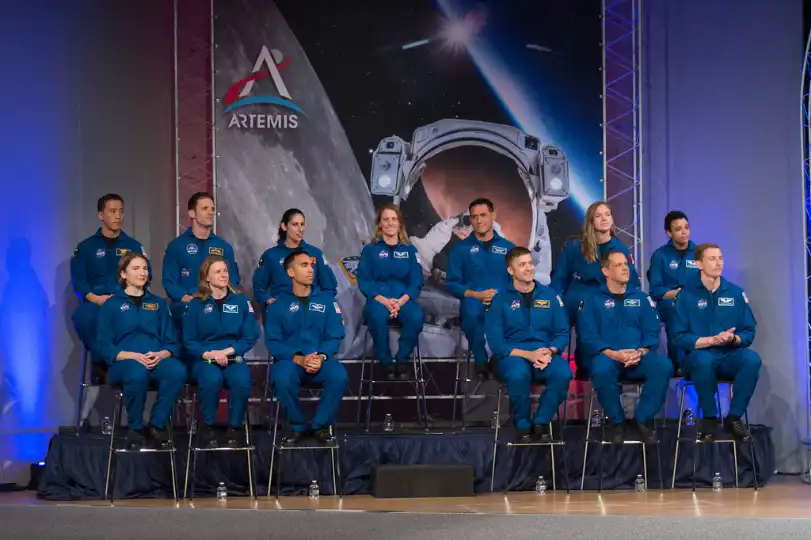
**Assessing the Influence of Jack Sinclair's Direction on Sprouts Farmers Market: An In-Depth Examination**
Investment Focus 2025-12-21 12:54:50

**Assessing the Influence of Jack Sinclair's Direction on Sprouts Farmers Market: An In-Depth Examination**

At Rule One Investing, we are convinced that exceptional leadership is crucial for the long-term prosperity of investments. A CEO who excels is not only financially successful but also possesses integrity, a history of achievement, and a clear vision for the company's future. Leadership can significantly impact a company's trajectory, either positively or negatively. Jack Sinclair, CEO of Sprouts Farmers Market, exemplifies how a leader with integrity, vision, and experience can transform a struggling business into a successful one. His management approach and strategic emphasis on core values have established Sprouts Farmers Market as a dominant player in the health-conscious grocery market. The Significance of Integrity in Leadership Jack Sinclair is renowned for his steadfast integrity. In his dealings with shareholders and financial reporting, he consistently displays honesty regarding the company's performance. His openness about both successes and challenges is a valuable trait that fosters trust with investors. For investors, Sinclair's integrity signifies reliability. His candid acknowledgment of difficulties reassures shareholders of his dedication to overcoming challenges and celebrating successes. This attribute is vital for a leader who is responsible for investor capital—someone who prioritizes sustainable growth over immediate gains. Professional Acumen: Jack Sinclair's Distinguished Career Jack Sinclair's extensive experience in the grocery sector has been pivotal to his success at Sprouts Farmers Market. With over three decades of experience, including his tenure as Vice President of Walmart's grocery division, Sinclair brought a wealth of expertise to Sprouts when he joined in 2019. Upon joining Sprouts Farmers Market, the company was grappling with maintaining its competitive edge. Drawing from his experience at Walmart, known for its cost leadership, Sinclair realized that competing directly with retail giants like Walmart was impractical. Instead, he guided Sprouts towards a distinct strategy. Strategic Shift: Highlighting Core Strengths Rather than mimicking Walmart's focus on low prices, Sinclair opted to accentuate Sprouts' unique selling points: fresh, healthy food and specialty products. He redirected the company's focus to better cater to its core customer base—health-conscious consumers seeking high-quality, niche products. Under Sinclair's leadership, Sprouts has carved out a unique position in the grocery industry. This strategic pivot has enabled the company to grow steadily while remaining true to its mission. By concentrating on its areas of expertise, Sprouts has become a leading name in the health-oriented grocery sector. Accolades and Achievements Sinclair's contributions were acknowledged in 2020 when he was named CEO of the Year by Grocery Dive. This accolade underscored his transformative impact on Sprouts Farmers Market. The article detailing his achievements emphasized how he refocused the company during a challenging period. He not only stabilized the business but also outlined a clear path for expansion. Sinclair's vision includes increasing the store count from approximately 400 to 800–1,000 locations over the next ten to twenty years. This ambitious yet feasible plan reflects his ability to combine operational expertise with long-term strategic planning. Lessons from Jack Sinclair's Leadership Jack Sinclair's story provides valuable lessons for investors and business leaders: Integrity Fosters Trust: A CEO who is transparent about challenges inspires confidence among shareholders. Capitalize on Your Strengths: Instead of replicating competitors, focus on what differentiates your business. Vision for the Future: Sustainable growth requires a well-defined plan and the discipline to execute it. As Sinclair continues to lead Sprouts Farmers Market towards its objectives, his leadership serves as a case study in how authenticity and expertise can enhance both investor confidence and business success. Conclusion Jack Sinclair's tenure at Sprouts Farmers Market illustrates the transformative power of leadership. By emphasizing transparency, leveraging his decades of experience, and focusing on a niche market, he has turned the company into a formidable competitor in the health-focused grocery sector. Investors looking


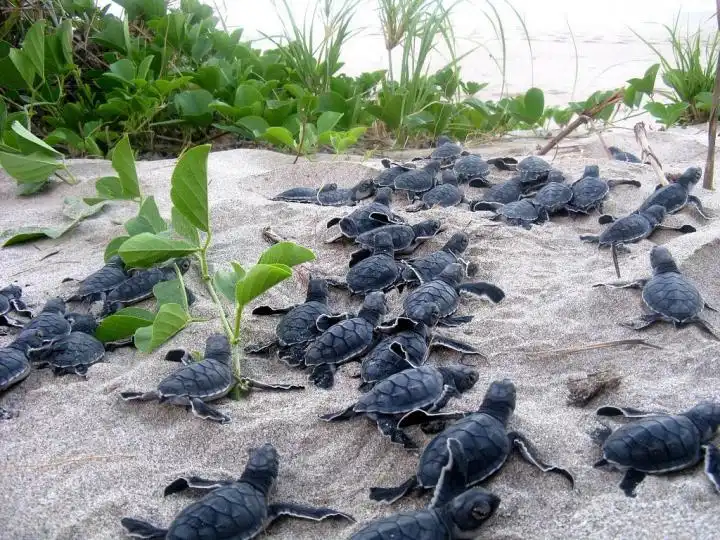
Understanding Market Capitalization: A Key Investment Metric 6078
Investment Focus 2025-12-21 09:00:40

Understanding Market Capitalization: A Key Investment Metric 6078

Market capitalization, or "market cap" for short, is a fundamental concept in the realm of investing that is essential for assessing the value of publicly traded companies. While it may seem complicated at first, it's important to remember that market cap should not be the only factor considered when making investment decisions. This piece aims to clarify the concept of market capitalization, its significance, the process of calculating it, and its role in your investment strategy. We will also explore the various market cap categories, including large-cap, mid-cap, and small-cap firms. The Essence of Market Capitalization Market capitalization essentially reflects the stock market's assessment of a company's value. This assessment is determined by multiplying the total number of a company's outstanding shares by the current market price per share. An increase in the number of shares or their market price results in a higher market cap. It can also be viewed as the theoretical cost of purchasing the entire company in a single transaction. Market Capitalization vs. Intrinsic Value There is a common misconception that equates market cap with a company's actual worth. Some academics have mistakenly assumed that market prices accurately represent a business's value. However, as Warren Buffett has highlighted, this is not always the case. A company's market cap is based on its share price, which does not always align with its intrinsic value. Consider the volatile stock prices of meme stocks like GameStop and Dogecoin, which are more influenced by social media hype than the companies' underlying values. It is crucial to understand that a stock's price does not always reflect a company's value, making market cap just one piece of the investment puzzle. The Significance of Market Capitalization If market cap is merely an indicator of price, why is it important? A company's market cap indicates its size, helping investors to gauge the company's scale and potential for growth. While market caps can vary widely, investors typically categorize them into small-cap, mid-cap, and large-cap companies. These categories can assist individual investors, but they are more often used by funds to diversify their clients' portfolios with a mix of smaller and larger companies. Large-Cap Stocks Companies with a market cap over $10 billion are considered large-cap. Large-cap companies are generally stable, with a solid track record and significant market share, although they are not without risk. The potential downside of large-cap stocks is their slower growth due to their established market position. An example of a large-cap company is Walmart, with a market cap of approximately $370 billion. Mid-Cap Stocks Mid-cap companies have a market cap ranging from $2 billion to $10 billion. They may serve niche markets or face competition that prevents them from becoming large-cap companies. Alternatively, they could be newer companies in a high-growth phase. Examples include Robinhood, Hyatt Hotels, and Docusign. Small-Cap Stocks Small-cap companies have a market cap between $300 million and $2 billion. Companies below $300 million are considered micro-cap. Unlike large-cap companies, small-caps carry higher risk but also offer substantial growth potential with significant returns. Small-cap stocks include Coursera, SmileDirectClub, and Health Catalyst. Calculating Market Capitalization Calculating market capitalization is a straightforward process that can quickly determine the market caps of potential investments. Market Cap Formula Market capitalization

Electric Planes Start to Take Off
Technology 2025-12-25 11:28:45

Electric Planes Start to Take Off

Electric Planes Start to Take OffNFK Editors - December 20, 2019A company called Harbor Air in Vancouver, Canada has made a test flight of the world’s first all-electric airplane meant for carrying passengers. The 15-minute flight was an important step toward the future of electric planes.Harbour Air has over 40 seaplanes – planes designed to take off and land on water. The company makes about 300 flights a day, most of them flying a few passengers short distances.A company called Harbor Air in Vancouver, Canada has made a test flight of the world’s first all-electric airplane meant for carrying passengers. The plane was converted from a 62-year-old seaplane that can take off and land on water.(Source: Harbour Air/magniX.)To create their “e-plane”, Harbor Air worked with magniX, a company that makes electric motors. Together, they updated a 62-year-old seaplane so it could fly using magniX’s new motor. The plane, known as a “Beaver”, can carry six passengers.Harbour Air’s leader, Greg McDougall, piloted the e-plane for about 15 minutes before landing it again on the water. He said the experience was just like flying a regular Beaver, but more powerful. “I actually had to back off on the power,” he said.Harbour Air’s leader, Greg McDougall, piloted the e-plane for about 15 minutes before landing it again on the water. He said the experience was just like flying a regular Beaver, but more powerful.(Source: Harbour Air/magniX.)In the future, Mr. McDougall hopes to convert all of his planes into electric planes.About 3% of the world’s pollution comes from airplane travel. That number is likely to go up, since the number of people traveling by plane has been growing for years, and is expected to keep increasing.Electric planes have several advantages over regular planes. Creating less pollution is just one of them.Electric planes have several advantages over regular planes. Creating less pollution is just one of them. Planes powered by electricity are also cheaper to build and run.(Source: Harbour Air/magniX.)Planes powered by electricity are also cheaper to build and run. Electric motors have fewer moving parts and are easier to repair. Also, instead of burning fuel, the planes simply need to have their batteries recharged. That’s cheaper, and with energy from the sun or wind, it pollutes far less.Electric motors are far quieter than a typical plane engine, though they provide more power, more quickly. But that power only lasts as long as the batteries last.Electric motors are far quieter than a typical plane engine, though they provide more power, more quickly. But that power only lasts as long as the batteries last. Batteries are improving, but they’re still a challenge for electric planes.(Source: Harbour Air/magniX.)Batteries are improving, but they’re still a challenge for electric planes. The main problem is the weight. Planes need to be as light as possible, and right now, the only way to power planes with electricity is with large, heavy batteries.No one expects electric planes to replace large jumbo jets, but most companies working on electric airplanes expect batteries to become lighter, cheaper, and more powerful in the next few years.Bye Aerospace in Colorado is another company working on electric planes. Bye has orders for over 60 of its electric planes. Many of Bye’s planes will be used to train new pilots.(Source: Beekachu [CC BY-SA 4.0], via Wikimedia Commons.)Bye Aerospace in Colorado is another company working on electric planes. Bye has orders for over 60 of its electric planes. Many of Bye’s planes will be used to train new pilots. Flight schools like the planes because the costs are so much lower.Eviation, a company from Israel, also has a new e-plane for sale. The plane, called “Alice”, can seat nine passengers and two pilots and can travel about 620 miles (1,000 kilometers) on a charge.Eviation, a company from Israel, also has a new e-plane for sale. The plane, called “Alice”, can seat nine passengers and two pilots and can travel about 620 miles (1,000 kilometers) on a charge.(Source: Matti Blume [CC BY-SA 4.0], via Wikimedia Commons.)In Norway, the government is working to move the country to electric planes. That plan had a setback earlier this year, when an electric plane crashed during a test flight. Luckily, no one was hurt.Because electric planes are so new, they are being carefully tested. So don’t expect to see e-planes in the skies regularly until 2022 or later.Did You Know…?Just like there are “hybrid” cars, companies are also working on hybrid planes. These planes use a mixture of normal fuel and electric power. They pollute less than regular planes, but they can travel farther than all-electric planes.Sourceswww.theguardian.comwww.dw.comwww.cbc.cawww.denverpost.comwww.reuters.comwww.bbc.comwww.cnbc.comwww.theverge.comen.wikipedia.orgShare:Scientists from Japan and Taiwan may have solved an old mystery: how did ancient people with simple tools and little scientific knowledge make long, dangerous ocean trips to new places? To test their ideas, the researchers made a trip of their own in a canoe they built from a tree using stone tools.

Thousands Apply to Become NASA Astronauts
Technology 2025-12-13 03:58:12

Thousands Apply to Become NASA Astronauts

Thousands Apply to Become NASA AstronautsNFK Editors - April 8, 2020In early March, the US space agency NASA asked people who wanted to become astronauts to apply. Over 12,000 people applied, showing that interest is still very strong in the US space program.As children, many people dream of becoming an astronaut. But the number of people who actually make it into space is quite small. Since the 1960s, only 350 men and women have been chosen for NASA’s astronaut training. Currently, NASA has 48 astronauts.In early March, the US space agency NASA asked people who wanted to become astronauts to apply. Over 12,000 people applied, showing that interest is still very strong in the US space program. The picture shows astronauts training underwater.(Source: NASA, via Wikipedia.)Between March 2 and March 31, 12,000 people applied to become NASA astronauts. That’s almost a record. In 2017, over 18,000 people applied. But this time NASA is requiring higher levels of education. They also gave people half as much time to apply.Now comes the difficult part – choosing the right 12 people. Yes, you read that right. NASA will be choosing just 12 people out of the 12,000 who applied.Between March 2 and March 31, 12,000 people applied to become NASA astronauts. NASA will be choosing just 12 people out of the 12,000 who applied. Above, 2017 NASA astronaut candidate Jessica Watkins in a spacesuit before underwater spacewalk training.(Source: NASA Johnson, via Flickr.com.)So what does it take to become an astronaut? NASA now requires a master’s degree (a higher level college degree) in STEM (science, technology, engineering, or math). You also need to have experience flying jet airplanes, though other work experience is also accepted.The people who are chosen (called “Astronaut Candidates”) will also need to have near-perfect eyesight and be in good physical shape. They must be good at working with other people – able to lead, and able to work as part of a team.The people who are chosen will also need to have near-perfect eyesight and be in good shape. They must be good at working with other people. Above, astronauts practice docking with the International Space Station in a simulator.(Source: NASA/Houston Chronicle/Smiley N. Pool [Public domain], via Wikimedia Commons.)NASA will take over a year to choose the 12 Astronaut Candidates. First, they will decide which people who applied are highly qualified. Then they will hold a series of three interviews with the candidates. During the interviews, the candidates will also take part in activities, to see how they perform.In June of 2021, NASA will finally announce the Astronaut Candidate Class of 2021.The 12 Astronaut Candidates will then be put through a two-year training program. They will learn spacewalk skills, robotics skills, and how systems of the International Space Station work. Above, astronauts train for a spacewalk in a virtual reality simulator.(Source: U.S. Navy/Dominique M. Lasco [Public domain], via Wikimedia Commons.)The 12 Astronaut Candidates will then be put through a two-year training program. They will learn spacewalk skills, robotics skills, and how systems of the International Space Station (ISS) work. They’ll also learn to speak Russian to make it easier to work with astronauts from Russia on the ISS.Not everyone who is accepted into the program is certain to become an astronaut. There are many challenging parts to the astronaut training, and the candidates must successfully complete them all.The new class of astronauts will be the second under NASA’s new space program, Artemis. The goal of the Artemis program is to send people back to the moon by 2024, and later, to Mars. Above, the class of 2017, the first class under the Artemis program.(Source: NASA Johnson, via Flickr.com.)The new class of astronauts will be the second under NASA’s new space program, Artemis. The goal of the Artemis program is to put people back on the moon by 2024. NASA hopes to use what it learns during the moon exploration to help with its larger goal of sending people to Mars by 2030.Check Yourself0/41. Is 12,000 the most people who have ever applied to be NASA astronauts?Yes   No2. How many Astronaut Candidates will NASA choose?3. How long is the Astronaut Candidate training program?one yearthree yearstwo yearssix months4. NASA's Artemis program has a goal of going to _______________ after going to the moon.Why do you think it's important for astronauts to be good at working as part of a team?ResetSourceswww.voanews.comwww.theverge.comgma.yahoo.comeu.usatoday.comwww.nasa.govwww.dw.comphys.orgShare:This week marks 25 years of humans living in space. On November 2, 2000, three astronauts became the first full-time workers at the International Space Station. Since then, the ISS has never been empty.Meteorite That Hit House Is Older Than EarthNFK Editors - Aug 14, 2025When a fireball fell through the sky in the southeastern United States on June 26, it caught the attention of people across seven states. It was a meteor breaking up as it fell through the Earth’s atmosphere. A small part of the space rock tore through a house in Georgia. Scientists now say the meteorite is older than the Earth.Blue Origin Sends Six Women Into SpaceNFK Editors - Apr 16, 2025On Monday, the aerospace company Blue Origin launched its spacecraft RSS Kármán Line on a ten minute trip into space. The spaceship carried the first all-female crew to go into space since Russian astronaut Valentina Tereshkova’s solo mission in 1963.Private Company Makes Perfect Moon LandingNFK Editors - Mar 5, 2025On Sunday, a company called Firefly Aerospace became the first private company to make a perfect landing on the moon. Firefly is working with NASA, and its spacecraft, Blue Ghost, is carrying out several experiments for the space agency.

Discover Your ‘Chipotle’ Moment: Mastering the Art of Investing with a Margin of Safety
Investment Focus 2025-12-31 13:23:36

Discover Your ‘Chipotle’ Moment: Mastering the Art of Investing with a Margin of Safety

The Virtue of Patience in Value Investing The principle of "margin of safety" is a fundamental aspect of value investing, advocated by investment legends such as Warren Buffett and Benjamin Graham. It refers to the strategy of buying assets at prices substantially below their true worth, thereby providing a cushion against potential risks. To clarify this concept, consider the example of Chipotle Mexican Grill. An Illustrative Instance of Margin of Safety In 2025, Chipotle, a popular quick-service restaurant, encountered a critical challenge due to an E. coli outbreak. This health scare caused a dramatic drop in the company's stock price, from a peak of $760 per share to a trough of $250. While this situation might appear catastrophic, it actually presented a distinct opportunity for value investors. Assessing the Core Strengths: Despite the crisis, Chipotle maintained a solid foundation with a dedicated customer following and a robust business model. Identifying the Price Reduction: The sharp decline in stock prices represented a substantial markdown from the company's intrinsic value. Exploiting the Situation: Investors who grasped the temporary impact of the crisis and acknowledged Chipotle's enduring potential were able to take advantage of this "discount," purchasing shares at a significantly reduced cost. The Crucial Role of Patience Identifying companies that are significantly undervalued is an ideal scenario, but it's not always straightforward. Often, excellent companies are not available at a "discount." This is where patience is a key attribute for value investors. As Charlie Munger once stated, "Make money while we wait." Creating a Watchlist: Instead of pursuing fleeting opportunities, value investors typically maintain a "watchlist" of high-quality companies they respect. Developing Patience: They watch these companies closely, waiting for the market to misprice them due to temporary issues, negative news, or market overreactions. Capturing the Benefits: When the market finally offers an opportunity—a substantial discount to intrinsic value—they are ready to seize it, taking advantage of the mispricing. Warren Buffett's Philosophy on "Laziness" Warren Buffett has emphasized the importance of patience in investing, often characterizing his approach as "laziness bordering on sloth." Concentrating on Long-Term Value: Buffett and his partner, Charlie Munger, concentrate on finding companies with lasting competitive edges and promising long-term futures. Reducing Trading Frequency: They avoid constant trading and unnecessary actions, preferring to hold onto high-quality companies over the long haul. Accepting Patience: They understand that significant investment success often stems from waiting for the right opportunities and refraining from chasing quick profits. Conclusion The Chipotle case exemplifies the effectiveness of the margin of safety principle and the significance of patience in value investing. By recognizing and patiently awaiting undervalued opportunities, investors can markedly improve their prospects for long-term achievement. Remember, true investment insight often lies in realizing that the greatest returns frequently result from inaction—or, more precisely, from patiently waiting for the opportune moment to act.

**Assessing the Influence of Jack Sinclair's Direction on Sprouts Farmers Market: An Exhaustive Analysis**
Investment Focus 2025-12-30 04:50:43

**Assessing the Influence of Jack Sinclair's Direction on Sprouts Farmers Market: An Exhaustive Analysis**

At Rule One Investing, we are convinced that exceptional leadership is vital for the enduring prosperity of investments. A CEO who excels is not only financially proficient but also possesses integrity, a history of achievement, and a clear vision for the company's future expansion. Leadership can significantly shape a company's trajectory, positively or negatively. Jack Sinclair, CEO of Sprouts Farmers Market, exemplifies how a leader with integrity, foresight, and experience can revitalize a struggling business. His management approach and strategic emphasis on core values have established Sprouts Farmers Market as a significant player in the health-conscious grocery industry. The Significance of Integrity in Leadership Jack Sinclair is renowned for his steadfast integrity. In his dealings with shareholders and financial reporting, he consistently maintains honesty regarding the company's performance. His openness about both successes and challenges is a valuable trait that fosters trust with investors. For investors, Sinclair's integrity translates to dependability. His candid acknowledgment of difficulties reassures shareholders of his dedication to overcoming challenges and celebrating successes. This quality is essential for a leader entrusted with investor capital—one who prioritizes long-term growth over short-term profits. Professional Acumen: Jack Sinclair's Distinguished Career Jack Sinclair's extensive background in the grocery sector has been crucial to his success at Sprouts Farmers Market. With over three decades of experience, including his tenure as Vice President of Walmart's grocery division, Sinclair brought a wealth of expertise to Sprouts when he joined in 2019. Upon joining Sprouts Farmers Market, the company was grappling with maintaining its competitive edge. Drawing from his Walmart experience, known for its cost leadership, Sinclair realized that direct competition with retail giants like Walmart was impractical. Instead, he steered Sprouts towards a distinctive strategy. Strategic Evolution: Highlighting Core Strengths Rather than mimicking Walmart's focus on low prices, Sinclair opted to accentuate Sprouts' unique selling points: fresh, healthy food and specialty products. He redirected the company's efforts to better cater to its core customer base—health-conscious consumers seeking high-quality, niche products. Under Sinclair's leadership, Sprouts has carved out a unique niche in the grocery industry. This strategic pivot has enabled the company to grow steadily while remaining true to its mission. By concentrating on its areas of expertise, Sprouts has become a prominent figure in the health-oriented grocery sector. Accolades and Achievements Sinclair's contributions were acknowledged in 2020 when he was awarded CEO of the Year by Grocery Dive. This recognition underscored his transformative impact on Sprouts Farmers Market. The article detailing his achievements emphasized how he refocused the company during a challenging period. He not only stabilized the business but also outlined a clear path for expansion. Sinclair's vision includes increasing the store count from approximately 400 to 800–1,000 locations over the next ten to twenty years. This ambitious yet achievable plan reflects his ability to combine operational expertise with long-term strategic planning. Insights from Jack Sinclair's Leadership Jack Sinclair's journey offers valuable lessons for investors and business leaders: Integrity Fosters Confidence: A CEO who is transparent about challenges inspires confidence among shareholders. Capitalize on Your Strengths: Instead of replicating competitors, concentrate on what differentiates your business. Vision for the Future: Sustainable growth requires a well-defined plan and the discipline to execute it. As Sinclair continues to guide Sprouts Farmers Market towards its objectives, his leadership stands as a case study in how authenticity and expertise can enhance both investor confidence and business success. Conclusion Jack Sinclair's tenure at Sprouts Farmers Market demonstrates the transformative power of leadership. By emphasizing transparency, leveraging his decades of experience, and focusing on a niche market, he has turned the company into a formidable competitor in the health-focused grocery sector. Investors looking

Microsoft’s Latest Tech Innovations: Shaping the Future of Computing
Tech Insights 2025-12-14 19:14:42

Microsoft’s Latest Tech Innovations: Shaping the Future of Computing

Microsoft has long been a pioneer in the tech industry, and its recent advancements continue to shape the future of computing, cloud services, and artificial intelligence. With major initiatives in AI, the metaverse, and quantum computing, Microsoft is positioning itself as a key player in the next wave of technological transformation. Let’s explore the latest innovations from this tech giant. 1. AI and the Future of Work with Microsoft Copilot AI is at the heart of Microsoft’s strategy to redefine productivity and the way we work. Microsoft Copilot: Built into products like Word, Excel, and Teams, Copilot uses advanced AI models to assist with tasks such as drafting emails, creating reports, analyzing data, and scheduling meetings. This allows users to focus more on high-level tasks while automating repetitive work. Integration of OpenAI: Microsoft’s partnership with OpenAI has brought powerful language models, like GPT, to its ecosystem, enabling businesses to leverage AI for natural language processing, customer service, and content creation. Enhancing Productivity: Microsoft aims to integrate AI seamlessly into its existing tools, amplifying employee productivity through smart assistants that predict needs and automate mundane tasks. 2. Cloud Computing and Azure’s Growth Microsoft Azure, the company’s cloud computing platform, continues to grow rapidly, positioning Microsoft as a key player in the cloud space. Hybrid Cloud Solutions: Azure’s hybrid capabilities allow businesses to operate in both on-premises and cloud environments, offering flexibility, scalability, and better control over sensitive data. Edge Computing: With Azure, Microsoft is also expanding into edge computing, bringing computational power closer to data sources for faster, real-time processing. This is crucial for industries like IoT, healthcare, and manufacturing. Sustainability: Microsoft is committed to making Azure carbon-neutral, incorporating renewable energy and carbon offset programs, aligning with the company’s broader sustainability goals. 3. Quantum Computing: Breaking New Ground Quantum computing is another area where Microsoft is making significant strides. Microsoft’s Quantum Development Kit: The company’s Azure Quantum platform is designed to allow researchers, developers, and businesses to access quantum computing resources for solving complex problems. Applications in Science and Industry: Quantum computing has the potential to revolutionize industries by solving problems that are currently beyond the reach of classical computers. From drug discovery to climate modeling, quantum algorithms could offer transformative solutions. Long-Term Vision: While still in the early stages, Microsoft’s work in quantum computing is positioning it as a leader in this emerging field, aiming for breakthroughs that will shape the future of computational power. 4. The Metaverse and Microsoft Mesh Microsoft is pushing forward into the metaverse with its Mesh platform, aiming to create a mixed-reality environment that connects people, data, and experiences in new ways. Microsoft Mesh: This platform combines virtual reality (VR) and augmented reality (AR) to create collaborative spaces where people can interact with holograms, digital assets, and one another in real-time, no matter their physical location. Enterprise Focus: While the metaverse is often associated with gaming, Microsoft is targeting enterprise applications, such as virtual meetings, training simulations, and remote collaboration, with tools like HoloLens and Teams. Driving Digital Transformation: The metaverse is seen as a key driver for digital transformation, providing organizations with innovative ways to work, train, and innovate using immersive, shared environments. 5. Sustainability and Green Computing Initiatives Sustainability is a core priority for Microsoft, and the company is leveraging technology to reduce its environmental impact. Carbon Negative by 2030: Microsoft has committed to becoming carbon negative by 2030, meaning it will remove more carbon from the environment than it emits. The company is already investing heavily in renewable energy and innovative environmental solutions. Sustainable Data Centers: Microsoft is working to make its data centers more sustainable by using renewable energy sources and pioneering techniques like water-based cooling systems to reduce energy consumption. AI for Sustainability: Microsoft is integrating AI into sustainability efforts, such as using machine learning to optimize energy usage and reduce waste across industries. Conclusion Microsoft’s latest technological innovations in AI, cloud computing, quantum computing, and sustainability are shaping the future of the tech industry. With a strong focus on productivity, enterprise collaboration, and environmental responsibility, Microsoft is well-positioned to lead in the next wave of technological advancements. As the company continues to innovate and integrate cutting-edge technologies into its ecosystem, the impact on businesses and consumers alike will be profound.

Fake Turtle Eggs Help Track Down Poachers
Technology 2025-12-10 03:23:59

Fake Turtle Eggs Help Track Down Poachers

Fake Turtle Eggs Help Track Down PoachersNFK Editors - October 6, 2020San Jose, Costa Rica —(Map)Scientists have come up with a high-tech method to help protect endangered sea turtles. Using fake eggs with GPS trackers, researchers were able to track turtle eggs that were stolen and learn the locations of people buying and selling them.There are seven different kinds of marine (sea) turtles in the world. All of them are threatened. Several are in danger of being wiped out completely.Sea turtles lay large groups of eggs, called “clutches”, under the sand on beaches. The eggs face many challenges, both natural and man-made. In Costa Rica, one big threat is poachers – people who take the eggs illegally in order to sell them.Sea turtles lay large groups of eggs, called “clutches”, under the sand on beaches. The eggs face many challenges, both natural and man-made. Above, a clutch of eggs being laid by a Leatherback Sea Turtle.(Source: Bernard DuPont [CC BY-SA], via Wikimedia Commons.)Kim Williams-Guillén is a scientist who works for the University of Michigan and Paso Pacifico, a group that works to protect animals in Costa Rica.After watching a couple of TV police shows, she suddenly had an idea – what if poachers could be located using a fake turtle egg with a GPS tracker inside?Dr. Williams-Guillén presented that idea and it won a $10,000 prize. She then worked with other scientists to create the decoy (fake egg). They use a special material to 3D-print a ball about the size and shape of a squishy ping-pong ball.Scientists 3D-print a ball about the size and shape of a squishy ping-pong ball. The inside of the egg is like a small cell phone. As long as it has a cell signal, the egg can report its location once an hour. Above, a fake egg cut open to show the insides.(Source: Helen Pheasey.)The scientists cut a small slit in the ball so they can put in the electronics. Basically, the inside of the egg is like a small cell phone. It has a battery, a GPS, and a way to connect to cell networks. As long as it has a cell signal, the egg can report its location once an hour.The researchers call the finished device the “InvestEGGator”.The researchers put one InvestEGGator into 101 different turtle nests on four beaches in Costa Rica. About 25% of those nests had eggs stolen. Above researcher Helen Pheasey is shown holding an InvestEGGator on a beach with a sea turtle.(Source: Otto Whitehead.)The researchers put one InvestEGGator into 101 different turtle nests on four beaches in Costa Rica. About 25% of those nests had eggs stolen.Not all of the decoy eggs showed results. A few were left behind, and some others simply didn’t work. But the scientists were able to track five eggs and see where they were taken. In one case the researchers were able to track an egg for 85 miles (137 kilometers).The scientists were able to track five eggs and see where they were taken. In one case the researchers were able to track an egg for 85 miles (137 kilometers). Scientist Helen Pheasey posted this map.The results showed that most eggs were sold to local people. That wasn’t a big surprise, since in Costa Rica, turtle eggs are considered a special food. And though it’s against the law to take them from the beach, it’s not illegal to buy them.In general, people working to solve wildlife crimes are more interested in large criminal groups than in local people having a meal. By tracking the locations where many eggs seem to be bought and sold, researchers think they may be able to help locate more important criminals.The scientists are excited about the results of the InvestEGGator. The test shows that such simple methods can work well. The researchers believe that similar ideas could be helpful in other places as well.(Source: Paso Pacifico.)The scientists are excited about the results of the InvestEGGator. The test shows that such simple methods can work well. The researchers believe that similar ideas could be helpful in other places as well.For example, sharks are often killed in great numbers for their fins. The scientists believe that it might be possible to slip a fake GPS-tracking fin in with many other fins to help protect threatened animals like hammerhead sharks.Check Yourself0/41. There are _______________ different kinds of marine (sea) turtles in the world, and all of them are threatened.2. Scientists were able to track poachers by tricking them into stealing a fake turtle egg that had a GPS tracker inside it.True   False3. The researchers put InvestEGGators into 101 different turtle nests. How many of those nests had their eggs taken?over 50%about 25%12%about 85%4. Usually, people working to solve wildlife crimes are mainly interested in catching _____________.a few local peopleimportant criminal groupsThe scientists believe that the idea behind the InvestEGGator could be helpful in other places. Can you think of other ways a similar idea could be used to help protect animals?ResetSourceswww.theguardian.comwww.sciencemag.orgwww.wired.comwww.cnet.comwww.kent.ac.ukpasopacifico.orgwww.sciencedirect.comwww.npr.orgSan Jose, Costa RicaView Larger MapShare:

Achieving Financial Discipline through Mindful Practices
Investment Focus 2025-12-28 22:40:39

Achieving Financial Discipline through Mindful Practices

Many financial struggles stem not from low earnings, but from excessive spending. During my early investment days, I worked as a Grand Canyon river guide with a modest annual salary of $4000. Despite this, I managed to live comfortably for ten years, residing in my VW bus and occasionally on the floor of the Transcendental Meditation Center in Flagstaff during the coldest nights. While you may not wish to adopt my extreme thriftiness, it is feasible to live within your budget and even save for investments by mastering a few straightforward strategies. 1. Perfecting Expense Tracking To effectively manage your finances, it's crucial to understand where your money is spent. Instead of the laborious task of budgeting and tracking every penny, consider a more intuitive approach that's as delightful as a summer day. Gather several envelopes and a black marker. Label each envelope with a spending category, such as "fuel," "dining out," or "groceries." After receiving your paycheck, allocate a portion of cash to each envelope based on your anticipated expenses for that period. If you plan to spend $200 on fuel, place that amount in the "fuel" envelope. Continue this process until you've either run out of envelopes or cash. If you find empty envelopes before your cash runs out, rearrange the funds to cover your essentials. Spend only the cash from the designated envelopes, avoiding credit cards and other payment methods. If the "groceries" envelope is empty, it's time to get creative with your meals. By following this method for a few pay periods, you'll gain insight into your spending habits and identify areas where you can reduce expenses. 2. Curbing Impulsive Spending I must admit, I have a tendency for impulsive purchases. However, when funds are limited, such as in my early days, this habit is naturally subdued. To control your impulses, question the necessity of any purchase over $50. Consider its impact on your life and whether it's worth the cost. Apply this discipline especially to food purchases. You may find that not only do you spend less, but you also eat healthier, potentially even losing weight in the process. Ask yourself: How long will the item last? Will it put you in debt? Is the value it provides over time worth the expense? 3. Credit Card Usage: Paying in Full Each Month Credit cards are not inherently bad, but they often represent a trade-off between discipline and convenience, which is usually not a favorable exchange. As you work on financial discipline, keep those cards in your wallet and use cash for your transactions. If you must use a credit card, ensure you pay off the balance in full each month. This practice will help you track your spending without incurring interest charges, effectively making it similar to paying with cash. 4. Dropping the Desire to Impress Let go of the desire to impress others; no one is truly concerned with your choices. People are more focused on their own image and what others think of them. Embrace individuality and avoid the common trap of spending to maintain a certain image. This often leads to unnecessary expenses on cars, clothing, and other superficial items. I've always been good at this; I didn't care about impressing others. My possessions were minimal, and I focused on buying what I truly enjoyed rather than what others might think. 5. Identifying and Eliminating Budget-Draining Habits Living on a shoestring budget for over a decade taught me the importance of avoiding bad spending habits. If you have any, it's a sign that you likely have more money than necessary. Examine your habits for leaks in your

The Future of 5G: What to Expect in the Coming Years
Tech Insights 2025-12-17 10:50:46

The Future of 5G: What to Expect in the Coming Years

The rollout of 5G networks has been one of the most highly anticipated technological advancements in recent years. With promises of faster internet speeds and improved connectivity, 5G is expected to revolutionize everything from mobile devices to autonomous vehicles. But what exactly does the future hold for 5G? 1. Speed and Connectivity One of the most talked-about features of 5G is its ability to offer faster data speeds than 4G. This enhanced speed will enable everything from faster download speeds to high-quality streaming without buffering. Additionally, the reduced latency of 5G will allow for quicker communication between devices, opening doors for applications in real-time systems like remote surgery and industrial automation. 2. Impact on IoT The Internet of Things (IoT) is set to benefit significantly from 5G’s high-speed and low-latency capabilities. With more devices being connected to the internet, 5G will provide the bandwidth necessary to support the massive influx of data these devices generate. This will result in smarter homes, cities, and industries, where devices can communicate with each other seamlessly. 3. Autonomous Vehicles Autonomous vehicles rely on constant communication with other cars and infrastructure to ensure safety. 5G’s ultra-low latency will make this communication more reliable, helping self-driving cars navigate through busy streets more effectively. Expect to see faster, safer, and more efficient transportation systems in the coming years. 4. Challenges Ahead Despite the benefits, there are challenges to overcome with 5G. The infrastructure needed to support 5G networks is complex and costly to build. Additionally, privacy and security concerns related to the massive data flow in 5G networks will need to be addressed to ensure safe and secure use. Conclusion: The future of 5G is bright, with endless possibilities on the horizon. While challenges remain, 5G will likely play a central role in transforming the digital landscape over the next few years.

Could Chrome Be About to Receive a Game-Changing AI Update?
Tech Insights 2025-12-11 09:19:14

Could Chrome Be About to Receive a Game-Changing AI Update?

A new rumor is circulating that Google is working on integrating Gemini Live into Chrome, under the intriguing codename "Glic." According to leaks shared by Leopeva64 on X, Glic will introduce Gemini Live’s AI-powered assistant into Chrome, as revealed through code found in Chromium Gerrit, the platform where Chrome’s development happens. From what’s been disclosed, Glic appears to be much more than just another Chrome feature. It reportedly comes with its own settings page and requires access to your microphone and location—two major indicators that it’s designed to be an interactive assistant. There are also suggestions that Glic will feature a floating panel or side UI to provide contextual information based on the page you're viewing. Along with hints of a system tray icon, it seems Glic will operate in the background, ready to assist when needed. Anyone familiar with Google’s Gemini AI knows that it’s a highly capable tool. Imagine having that level of AI integration directly in Chrome. You could simply ask Gemini Live to explain things, perform research, or summarize entire web pages without ever needing to switch tabs. Whether simplifying complex recipes or assisting with online shopping, the possibilities are endless. The integration could also allow for creative uses. For example, while composing an email, Gemini Live might help adjust your tone. Or if you're navigating a dense legal document, it could simplify the legalese into plain English. This real-world, “make my life easier” functionality could give it an edge over competitors like Microsoft’s Bing Chat in Edge or even standalone tools such as ChatGPT. The Road Ahead for Glic To be fair, Google isn’t the first to explore this kind of AI integration. Microsoft has already embedded Bing Chat into Edge, though it’s worth noting that Edge doesn’t boast Chrome’s immense user base. Still, Microsoft’s approach has demonstrated how AI can enhance browsing without overwhelming the experience. Meanwhile, Apple has taken a more cautious approach, keeping its AI functions like Siri confined to its ecosystem rather than expanding them into Safari—a safer but less ambitious method that might not align with Google’s bold vision. What truly sets Glic apart, however, is its scale. Chrome is the most widely used browser globally, and adding Gemini Live could make AI assistance a mainstream feature accessible to everyone, not just a niche audience. Of course, if Google mishandles this, it could provoke a significant backlash—just look at the reactions when YouTube or Gmail are altered in ways users dislike. At this stage, the details of Glic remain unclear, but if Google gets it right, it could redefine what browsers are capable of. And if it doesn’t? Well, there’s always Firefox.

Bacteria Show New Ways to Recycle Plastic
Technology 2025-12-10 19:46:39

Bacteria Show New Ways to Recycle Plastic

Bacteria Show New Ways to Recycle PlasticNFK Editors - May 1, 2020Recently, researchers have reported on two different ways to break down different kinds of plastic. The new advances could lead to easier, high-quality recycling, and help deal with toxic plastic pollution.The world is drowning in plastic, but only 9% of plastic products are ever recycled. Every year, over 17 trillion pounds (7.72 trillion kilograms) of plastic are washed into the oceans.The world is drowning in plastic, but only 9% of plastic products are ever recycled. Every year, over 17 trillion pounds (7.72 trillion kilograms) of plastic are washed into the oceans.(Source: Carsten ten Brink, via Flickr.com.)But bacteria may help recycle, even when humans don’t.Bacteria are tiny living things – so small you need a microscope to see them. Bacteria feed themselves in many different ways. Some bacteria can “eat” other things by changing the chemicals in those things into something that will help the bacteria grow.The secret to this is enzymes. Bacteria use enzymes to cause chemical changes. Enzymes can work like a pair of scissors, snipping and breaking apart other materials.Bacteria are tiny living things that can “eat” other things by causing chemical changes using enzymes. Enzymes can break apart other materials. The drawing above shows how theIdeonella sakaiensisbacteria breaks down a plastic bottle.(Source: G.Mannaerts [CC BY-SA], via Wikimedia Commons.)PETMost people are familiar with PET*plastic. It’s used in water and soda bottles. About 140 billion pounds (63.5 billion kilograms) are produced every year. Most PET is thrown away, but even when it’s recycled, it can’t be made into new bottles. Usually it’s turned into products like carpets.In 2012, in a pile of decaying leaves, scientists discovered an enzyme called LCC*that slowly breaks apart PET plastic. Years later, scientists working at the French company Carbios chose LCC from nearly 100,000 enzymes. It was the best at breaking down PET.Most people are familiar with PET plastic. It’s used in water and soda bottles. About 140 billion pounds (63.5 billion kilograms) are produced every year. Most PET is thrown away, but even when it’s recycled, it can’t be made into new bottles.(Source: Hans-2, via Pixabay.)But the scientists wanted to improve LCC. They studied the enzyme and the way it attacked the PET. By testing thousands and thousands of slight changes to the enzyme, they came up with a new version of LCC. The new version can survive at higher temperatures and can eat through PET very quickly.The process turns the PET plastic back into the materials that it was made from. Those materials can then be used again to make new bottles or other products.The researchers tested their new LCC against the original enzyme, and were impressed with the results. The new enzyme was able to break up 90% of the PET in just 10 hours. The lighter area in the image above shows plastic being eaten by an enzyme (not LCC).(Source: Screenshot, VOA News.)The researchers tested their new LCC against the original enzyme, and were impressed with the results. When the conditions were just right, the new enzyme was able to break up 90% of the PET in just 10 hours. The original enzyme took about 20 hours and only broke up half of the PET.Carbios hopes to start recycling plastic on a large scale by 2024 or 2025.PolyurethanePolyurethane is light and flexible. It’s used in products from shoes to diapers. It’s also used in larger products like furniture, refrigerators, and even buildings. In 2015, Europe produced around 7 billion pounds (3.18 billion kilograms) of polyurethane.But polyurethane is hard to recycle, since it doesn’t melt when it’s heated. It also contains dangerous chemicals that can cause cancer.Polyurethane is light and flexible. It’s used in products from shoes (above) to diapers. It’s also used in larger products like furniture, refrigerators, and even buildings. In 2015, Europe produced around 7 billion pounds (3.18 billion kilograms) of polyurethane.(Source: SABO S.p.A., PressReleaseFinder, via Flickr.com.)In March, German scientists reported on a new kind of bacteria that can help break down polyurethane. The scientists found the bacteria, calledPseudomonas sp.TDA1, in an area with lots of older, cracking plastic. It’s the first kind of bacteria known to help break down polyurethane.The scientists hope that by studying the way the bacteria attacks polyurethane, they’ll discover new ways of breaking down this dangerous plastic.Scientists have discovered a new kind of bacteria that can help break down polyurethane. Studying how the bacteria attacks polyurethane could lead to new ways of breaking down the plastic. Above, polyurethane used in a building (between the two parts of the wall).(Source: KVDP [Public domain], via Wikimedia Commons.)*PET stands for Polyethylene terephthalate. LCC stands for leaf-branch compost cutinase.Check Yourself0/41. Bacteria are tiny living things that feed on unusual "foods".True   False2. Bacteria use enzymes to cause _______________ changes.3. How much of the PET was the new LCC enzyme able to break down?20%50%90%10%4. What disease can be caused by the dangerous chemicals in polyurethane?The scientists at Carbios had to try many things that didn't work before they found a solution that worked well. How do you motivate yourself to keep going even when things don't seem to be working out?ResetSourceswww.sciencemag.orgwww.theguardian.comarstechnica.comwww.theguardian.comwww.voanews.comwww.smithsonianmag.comwww.dw.comearther.gizmodo.comShare:

Robot Lab Assistant Runs Its Own Experiments
Technology 2025-12-29 13:22:33

Robot Lab Assistant Runs Its Own Experiments

Robot Lab Assistant Runs Its Own ExperimentsNFK Editors - July 10, 2020Liverpool, England —(Map)Scientists at the University of Liverpool (UL) have developed a robot that can run experiments on its own. The robot works tirelessly, stopping only long enough to recharge its batteries. Recently, the robot finished nearly 700 experiments in eight days.It’s not new for labs to use robots. But earlier robots usually stayed in one place and did a single job over and over.The UL robot is the opposite of that. The 5 foot, 7 inch (1.75 meter) robot is similar in size to a human. Though it weighs much more than most people – 882 pounds (400 kilograms) – it’s able to easily move around in the same sort of space as humans do.Scientists at the University of Liverpool (UL) have developed a robot that can run experiments on its own. Using a special laser system called LIDAR to guide itself, the robot is able to easily move around in the same sort of space as humans do.(Source: University of Liverpool.)It uses a special laser system called LIDAR to guide itself – even in the dark. Once it’s close to a work station, it can move into a more exact position through its touch sensors.With one long arm which can turn in almost any direction, the robot is capable of using several different kinds of lab equipment. Some of the equipment has been changed slightly to make it easier for the robot, but basically, it’s the same equipment a human would use.With one long arm which can turn in almost any direction, the robot can use several different kinds of lab equipment. Some equipment has been changed slightly to make it easier for the robot, but basically, it’s the same equipment a human would use.(Source: University of Liverpool.)What’s more, the robot can perform many different tasks, such as picking things up, setting them down, pushing buttons, pouring liquids, weighing and measuring things, and studying its results. The robot was built and programmed by Benjamin Burger, a Ph.D. student at the university.Dr. Burger says it took a lot of effort to program the robot so that it can do things without making mistakes. That’s important because it’s meant to run for days without help. Once the programming is done, though, Dr. Burger says the robot makes fewer mistakes than a human.The robot can perform many different tasks, such as picking things up, setting them down, pushing buttons, pouring liquids, weighing and measuring things, and studying its results.(Source: University of Liverpool.)To test their robot, the scientists gave it a challenge: find a material which was good at producing hydrogen from water, using light.The robot was programmed to understand the basic methods for the experiment, but it was given 10 different things it could change which could affect the results. That meant that the robot could choose from around 98 million different mini-experiments.Over the next 8 days, the robot ran 688 experiments, always choosing its next experiment based on the results of the last one.Over the next eight days, the robot ran 688 experiments, always choosing its next experiment based on the results of the last one. The robot ran for 172 hours, stopping for only a couple of hours each day to recharge its batteries.(Source: University of Liverpool.)The robot ran for 172 hours, stopping for only a couple of hours each day to recharge its batteries. To do the same amount of work would have taken a human several months.Though the scientists ran the robot for eight days, its most successful result came on the third day of experimenting.Andrew Cooper, who led the program says the robot is meant to help scientists, not replace them. He says, “…it frees up time for the human researchers to think creatively..(Source: University of Liverpool.)The UL robot wasn’t cheap – it cost around $125,000 and took years to program. But the scientists compare that to the cost of other laboratory equipment which they say can also be quite expensive. The fact that the robot can be used for many different purposes is a huge advantage.Andrew Cooper, who led the program says the robot is meant to help scientists, not replace them. He says, “…it frees up time for the human researchers to think creatively.”Check Yourself0/41. The University of Liverpool's robot is different from earlier robots because it can move around and do many jobs.True   False2. The robot can guide itself safely even in the dark by using a special _______________ system called LIDAR.3. The robot can only work with equipment that was specially designed for it.True   False4. How many experiments did the robot do in eight days?88600400688Can you think of other areas where a robot with similar skills might be useful? Do you think such a robot would take away jobs or simply leave humans free for more creative work?ResetSourceswww.theverge.comwww.newsweek.comnewatlas.comnews.liverpool.ac.ukLiverpool, EnglandView Larger MapShare:

For Real? Slow Music, Orca Baby, & a Broccoli Picture
Technology 2026-01-06 18:23:58

For Real? Slow Music, Orca Baby, & a Broccoli Picture

For Real? Slow Music, Orca Baby, & a Broccoli PictureNFK Editors - September 12, 2020Notes Changed in Organ Music Lasting 639 YearsHundreds of people gathered in a church in Germany last week for an unusual musical event: a small change in a piece of organ music that began playing in 2001. The last time the notes changed was seven years ago.The piece is called “Organ/ASLSP”. The ASLSP stands for “As Slow As Possible”. It was written by composer John Cage. Mr. Cage developed many unusual musical ideas. In another piece, called “4′33″”, the musicians simply remain silent for four minutes and 33 seconds.People gathered last week for an unusual musical event: a small change in a piece of organ music that began playing in 2001 and will finish in 2640. Above, the special organ used in the performance, as seen in 2005.(Source: [Public domain], via Wikimedia Commons.)Though the music is just eight pages long, the current performance of “Organ/ASLSP” is expected to take 639 years. If all goes well, it should end in 2640.ASLSP is being played on a special organ, which isn’t completely built. Pipes are added to the organ as they are needed. Last Saturday, two new pipes were added.Now the organ will keep playing the same notes until the next change, on February 5th, 2022.ASLSP is being played on a special organ, which isn’t completely built. Pipes are added to the organ as they are needed. Last Saturday, two new pipes were added. Above, the organ in 2015.(Source: Clemensfranz [CC BY-SA], via Wikimedia Commons.)Orca Who Lost Calf Gives Birth AgainIn 2018, a female orca whale known as J35 gave birth to a calf that didn’t live. J35 became famous when she carried her dead calf around with her for 17 days. The action seemed to show how sad she was over losing her calf.The news wasn’t just sad for the mother, but for all the orcas in the area.* These whales are endangered. Two years ago, there were only 88 left, and the numbers have kept dropping.The orcas face many challenges, including polluted seas and increased boat traffic. The biggest threat is the lack of Chinook Salmon – a fish that’s the orcas’ main food source. Salmon numbers have been greatly reduced by human actions, like fishing and damming up rivers.In 2018, a female orca whale known as J35 gave birth to a calf that didn’t live. Now there’s some happy news for J35 – she’s had another calf, and this time it appears to be strong and healthy. Above, the fin of the mother orca, J35, and the calf, J57.(Source: Photo by Katie Jones, Center for Whale Research.)Now there’s some happy news for J35 – she’s had another calf, and this time it appears to be strong and healthy. The new orca has been given the label J57. With the birth of J57, there are now 73 orcas in the area.Scientists report that several other orcas in the area are also pregnant.Scientists Test World’s Most Powerful Camera – on BroccoliScientists at the SLAC National Accelerator Laboratory in Menlo Park, California are building a camera so big that it’s 13 feet (4 meters) long, and 5 feet (1.5 meters) across.The camera’s pictures will be extremely high quality. If you look closely at your screen, you’ll see little colored dots called pixels. SLAC’s new camera has 3.2 billion of them. To see an image from the camera at full size, you’d need to join up 378 of the highest quality TVs there are.Scientists at the SLAC National Accelerator Laboratory in Menlo Park, California are building a camera so big that it’s 13 feet (4 meters) long, and 5 feet (1.5 meters) across. The camera’s pictures will be extremely high quality – they’ll have 3.2 billion pixels.(Source: Jacqueline Orrell, SLAC National Accelerator Laboratory, via Flickr.com.)The camera is designed to take pictures of the sky that cover an area as big as 40 moons. But the camera’s not ready to take pictures of the sky yet, since construction was delayed by the coronavirus.Still, the scientists wanted to test the camera, so they build a special box that allows them to take super high-quality pictures of ordinary things. What did they decide to take a picture of? Broccoli! Luckily, it was a cool, spiral variety known as Romanesco broccoli.The scientists wanted to test the camera, so they build a special box that allows them to take super high-quality pictures of ordinary things. What did they decide to take a picture of? Broccoli! Luckily, it was a cool, spiral variety known as Romanesco broccoli.(Source: SLAC National Accelerator Laboratory, via Flickr.com.)* The orcas featured in this article live off the west coast of North America, near the border of the US and Canada.Sourceswww.dw.comwww.theguardian.comwww.rollingstone.comwww.nytimes.comwww.theguardian.comwww.cbc.cawww.npr.orgwww.smithsonianmag.comwww.zdnet.comShare:

The Future of Cloud Computing: Key Trends and Innovations
Tech Insights 2025-12-14 08:59:23

The Future of Cloud Computing: Key Trends and Innovations

Cloud computing has revolutionized how businesses operate, offering flexibility, scalability, and cost-efficiency. As the technology continues to evolve, new trends are reshaping its landscape. From the rise of multi-cloud strategies to innovations in edge computing, here’s a look at the latest advancements in cloud computing and their implications for the future. 1. Multi-Cloud and Hybrid Cloud Environments Organizations are increasingly adopting multi-cloud and hybrid cloud strategies to optimize performance, reduce risk, and enhance flexibility. Multi-Cloud Strategy: Companies are leveraging multiple cloud providers to avoid vendor lock-in, enhance resilience, and take advantage of specialized services offered by different platforms. Hybrid Cloud: A hybrid cloud approach, combining private and public clouds, allows businesses to store sensitive data securely in private clouds while utilizing the scalability and cost benefits of public clouds for less-sensitive workloads. Enhanced Flexibility: These strategies provide businesses with greater control over their data and IT infrastructure, enabling them to scale quickly and choose the best environment for specific applications. 2. Edge Computing: Bringing Cloud Power Closer to the User Edge computing is gaining traction as a complement to cloud computing, especially for applications requiring real-time processing. Low Latency: By processing data closer to the source (at the “edge” of the network), edge computing reduces latency, making it ideal for IoT applications, autonomous vehicles, and real-time data analytics. Distributed Architecture: Edge computing distributes computing power across a wider network, ensuring faster data processing without sending all information to a centralized cloud server. Efficiency: This helps to offload processing from the central cloud, reducing bandwidth consumption and improving overall system efficiency. 3. AI and Machine Learning Integration in Cloud Cloud providers are increasingly integrating AI and machine learning (ML) capabilities into their platforms, enabling businesses to leverage these advanced technologies without needing specialized expertise. AI-as-a-Service: Major cloud platforms like AWS, Azure, and Google Cloud are offering AI and ML services that make it easier for companies to implement smart solutions for data analysis, customer service, and automation. Automation and Predictive Analytics: With AI and ML, businesses can automate processes, predict trends, and derive insights from massive datasets to improve decision-making and efficiency. Customization: Cloud-based AI models can be easily customized for specific business needs, making it accessible for companies of all sizes. 4. Cloud Security and Compliance Innovations As businesses move more sensitive data to the cloud, security remains a top concern. Cloud providers are continuously evolving their security frameworks to address growing threats. Zero Trust Architecture: The adoption of Zero Trust security models, which assume no device or user is inherently trusted, is becoming more common in cloud environments to mitigate the risks of data breaches. AI-Powered Security: Cloud platforms are using AI to detect and respond to threats in real time, providing better protection against cyberattacks. Compliance: With increasing regulatory requirements, cloud providers are implementing advanced compliance frameworks to ensure that their services meet industry-specific standards, such as GDPR and HIPAA. 5. Serverless Computing: Simplifying Cloud Operations Serverless computing is revolutionizing cloud architecture by allowing developers to focus on code rather than managing infrastructure. No Server Management: With serverless, cloud providers handle the server setup, capacity planning, and scaling automatically, freeing up resources for developers. Cost Efficiency: Serverless computing allows businesses to pay only for the exact amount of computing power they use, leading to cost savings. Scalability: Applications built on serverless architectures can scale automatically, ensuring that businesses only pay for what they need during high-demand periods. 6. Sustainability in the Cloud Sustainability is becoming an increasingly important factor in cloud computing as companies and cloud providers focus on reducing their environmental impact. Green Cloud: Many cloud providers are investing in renewable energy and energy-efficient data centers, making the cloud more environmentally friendly. Carbon Footprint Management: Cloud platforms now offer tools to help businesses measure and reduce the carbon footprint of their cloud services. Sustainable Practices: Organizations are adopting cloud services to reduce their need for on-premise hardware, leading to less waste and a smaller environmental footprint. Conclusion Cloud computing continues to evolve with the integration of cutting-edge technologies like AI, edge computing, and serverless architectures. These advancements provide businesses with unprecedented flexibility, efficiency, and scalability. As security and sustainability become increasingly important, the future of cloud computing promises even more innovation, enabling businesses to stay competitive while driving progress in a rapidly changing technological landscape.

The Future of AI in Healthcare: A Revolution in Diagnosis and Treatment
Tech Insights 2025-12-31 12:36:31

The Future of AI in Healthcare: A Revolution in Diagnosis and Treatment

Artificial Intelligence (AI) is transforming numerous industries, but few fields are seeing its potential as much as healthcare. From diagnosing diseases more accurately to personalizing treatments, AI is poised to revolutionize the way we approach medical care. In recent years, AI-driven algorithms have outperformed traditional methods in diagnosing diseases like cancer, diabetes, and heart disease. These AI systems analyze vast amounts of medical data, such as imaging scans and patient histories, to detect patterns that might elude human doctors. Key Developments: AI in Medical Imaging: AI is now capable of analyzing medical images with higher precision than some human radiologists. This technology can identify abnormalities like tumors or fractures in x-rays and MRIs. Personalized Medicine: AI can analyze genetic data to recommend personalized treatment plans. This enables doctors to tailor therapies based on a patient's genetic makeup, improving outcomes and reducing side effects. Predictive Healthcare: AI is also helping to predict potential health crises before they occur. By analyzing patient data over time, AI systems can warn doctors of impending health issues, allowing for timely interventions. Conclusion: While challenges remain, including data privacy concerns and the need for widespread adoption, the potential for AI to reshape healthcare is enormous. The future of medicine will likely be powered by AI, making diagnoses faster, more accurate, and personalized.

New Flying Inventions Take Off
Technology 2025-12-24 07:01:13

New Flying Inventions Take Off

New Flying Inventions Take OffNFK Editors - October 2, 2020The coronavirus may have slowed down a lot of normal airplane traffic, but it hasn’t stopped some new flying inventions from taking off. Today NFK looks at a hydrogen-powered plane and a jet suit for medical emergencies.World’s Largest Hydrogen Powered Plane Takes OffLast Thursday, a company called ZeroAvia made a successful test flight of what it calls the “largest hydrogen-powered aircraft in the world”. The company is hoping to make it possible for airlines to carry small numbers of passengers for short distances without polluting.ZeroAvia has made a successful test flight of what it calls the “largest hydrogen-powered aircraft in the world”. The company hopes to make it possible for airlines to carry small numbers of passengers for short distances without polluting.(Source: ZeroAvia.)Though traveling by plane is convenient, it’s not good for the environment. Airline travel causes roughly 2-3% of the pollution that makes the climate crisis worse. Airplanes powered by a very common gas called hydrogen could change all of that.Hydrogen can be used to power vehicles by combining it with oxygen in a “fuel cell”. A fuel cell is like a battery that never runs out as long as it has hydrogen. The chemical reaction which takes place between hydrogen and oxygen in a fuel cell creates electricity, but doesn’t give off any pollution – only water.A fuel cell is like a battery that never runs out as long as it has hydrogen. Inside the fuel cell, a chemical reaction takes place between hydrogen and oxygen, creating electricity, but only giving off water – and no pollution.(Source: ZeroAvia.)Many companies are working on hydrogen-powered vehicles, but ZeroAvia’s test flight used a plane that can seat 6 people – the largest hydrogen-powered plane ever flown. ZeroAvia made a similar flight in June, but that one was battery-powered.Thursday’s flight was an important step in the company’s HyFlyer project, supported by the United Kingdom’s government. The company’s next big goal is to make a longer flight – of about 290 miles (465 kilometers) or more – by the end of the year.ZeroAvia believes passengers could actually be flying on hydrogen-powered airplanes by 2023.ZeroAvia’s test flight used a plane that can seat 6 people – the largest hydrogen-powered plane ever flown. The company’s next big goal is to make a longer flight – of about 290 miles (465 kilometers) or more – by the end of the year.(Source: ZeroAvia.)Company Tests Jet Suit for Emergency ServicesRecently, a company called Gravity Industries put on a test of its jet suit to show how it could help emergency medical workers reach injured people quickly.The jet suit is powered by small jets on each arm and one on the back. By pointing the jets at the ground, the pilot can take off. Returning to the ground is just a matter of pointing both arms out to the side.Recently, a company called Gravity Industries put on a test of its jet suit to show how it could help emergency medical workers reach injured people quickly. Above, inventor Richard Browning controls the suit by moving the small jets around..(Source: Gravity Industries, Screenshot via YouTube.)Richard Browning, the suit’s inventor, flew up a mountain to find some people who were pretending to be hurt (for the test). To reach the spot by climbing the mountain would have taken 25 minutes. Mr. Browning was able to cover the same distance in just 90 seconds.Andy Mawson is the director of Great North air ambulance service (GNAAS). He heard about the jet suit and realized it might be useful in a hilly area like England’s Lake District.Andy Mawson thought the jet suit might be useful in a hilly area like the Lake District. In the test, it took Mr. Browning just 90 seconds to reach a spot that would have taken 25 minutes to reach by hiking.(Source: Gravity Industries, Screenshot via YouTube.)“What we didn’t know for sure is how this would work in practice,” he said. “Well, we’ve seen it now and it is, quite honestly, awesome.” Mr. Mawson says the device could save lives, especially if someone had a serious problem, such as a heart attack.One problem? The cost. The suit sells for about $440,000 (£340,000).Still, GNAAS is interested in the jet suits and says it could possibly put them to work for real as early as next summer.Check Yourself0/41. Normal airplane travel is highly polluting and makes the climate crisis worse.True   False2. A fuel cell combines hydrogen and oxygen. Instead of pollution it gives off _______________.3. A pilot wearing the jet suit can take off by pointing the jets _______.at the skyat the groundat the place the pilot wants to go4. The test showed that the jet suit wasn't much faster than walking.True   FalseWould you want to try a jet suit if you had the chance? Why or why not?ResetSourceswww.zdnet.comwww.cnbc.comthenextweb.commarkets.businessinsider.comwww.bbc.comwww.theguardian.comwww.engadget.comwww.kentonline.co.ukShare:Movies about the future often show people zipping around in flying cars. Last week, that vision came a step closer to reality for a Japanese company, as it showed off its flying car in action – complete with driver.News Roundup: Russia Votes, Mississippi Flag, and a Flying Couch PotatoNFK Editors - Jul 5, 2020In today’s news roundup, Russian voters approved changes that could allow Vladimir Putin to lead the country until 2036, Mississippi finally drops a flag that many consider racist, and a man in Turkey goes paragliding – on his couch.Electric Planes Start to Take OffNFK Editors - Dec 20, 2019A company called Harbor Air in Vancouver, Canada has made a test flight of the world’s first all-electric airplane meant for carrying passengers. The 15-minute flight was an important step toward the future of electric planes.World’s First Hydrogen TrainsNFK Editors - Sep 22, 2018The world’s first hydrogen trains have begun running in Germany. The trains make almost no noise and they run without polluting. Instead, they give off steam.You might be interested in…Is Seeing Believing? AI Videos Look Extremely RealNFK Editors - Nov 5, 2025Over the last year or so, the quality of AI-generated videos has become so good that it’s extremely difficult to tell whether a video is real or not. An English TV channel recently ran a show about AI. At the end of the episode, the “woman” presenting the show announced that she wasn’t real.Massive “Fatberg” Cleared From London SewerNFK Editors - Oct 9, 2025A water company in England has removed a massive “fatberg” which was blocking pipes in a London sewer. The fatberg was a hardened mess of grease, oil, wet wipes, and other items that had been put down toilets and sinks instead of into trash cans.Swedish Church Rolled for Miles to New HomeNFK Editors - Aug 21, 2025Workers in Kiruna, Sweden have been working hard to raise one of the country’s most famous churches and roll it over 3 miles (5 kilometers) to a new location. The church’s old location was no longer safe. The operation took two days to complete.Scientists Recreate 30,000-Year-Old Ocean JourneyNFK Editors - Jul 31, 2025Scientists from Japan and Taiwan may have solved an old mystery: how did ancient people with simple tools and little scientific knowledge make long, dangerous ocean trips to new places? To test their ideas, the researchers made a trip of their own in a canoe they built from a tree using stone tools.

News Roundup: Secret Messages, Stolen Jewels, and VR for Cows
Technology 2025-12-31 10:31:31

News Roundup: Secret Messages, Stolen Jewels, and VR for Cows

News Roundup: Secret Messages, Stolen Jewels, and VR for CowsNFK Editors - December 1, 2019Teen’s Political Message Spreads Across the InternetA 17-year-old created one of the internet’s most-viewed videos by hiding a political message inside a video offering beauty tips. Feroza Aziz began her video for the social media site TikTok by talking about how to curl eyelashes. But she quickly changed subjects and began talking about China’s treatment of Muslims.Ms. Aziz said she made the video look like a beauty video to keep it from getting blocked by TikTok. TikTok is run by a Chinese company. Many people believe that TikTok blocks videos that make China look bad.A 17-year-old created one of the internet’s most-viewed videos by hiding a political message inside a video offering beauty tips. Feroza Aziz began her TikTok video by talking about how to curl eyelashes. But she quickly changed subjects and began talking about China’s treatment of Muslims.(Source: Feroza Aziz.)In the video, Ms. Aziz spoke about the horrible treatment of hundreds of thousands of Muslims who have been put into camps in Xinjiang, China. She posted two more videos encouraging people to spread the word about the situation in Xinjiang.But as Ms. Aziz’s videos were becoming popular, TikTok suddenly blocked her account. The company later unblocked Ms. Aziz, saying that her account wasn’t blocked because of the video. Ms. Aziz says she doesn’t believe that.Ms. Aziz’s first video has been seen by over 2.1 million people on TikTok. Even more people have seen it on other social media sites.Ms. Aziz’s first video has been seen by over 2.1 million people on TikTok. Even more people have seen it on other social media sites.(Source: Feroza Aziz.)Treasure Stolen From German Museum Still MissingLast Monday, thieves broke into the Green Vault museum in Dresden, Germany. The thieves stole jewels that once belonged to Augustus the Strong, a ruler of Saxony (an old kingdom in Germany). The museum describes the missing objects, which are from the 1700s, as “priceless”.The thieves broke a window to enter the museum. Then they broke into several display cases and quickly grabbed the jewels. The car that the thieves used for their escape was found later. It had been set on fire.Last Monday, thieves broke into the Green Vault museum in Dresden, Germany. The thieves stole jewels that once belonged to Augustus the Strong, a ruler of Saxony (an old kingdom in Germany). The museum describes the missing objects (above), which are from the 1700s, as “priceless”.(Source: Saxony Police.)The police are still working on the case, which they say is similar to a 2017 robbery in Berlin, Germany. A reward of $550,000 has been offered for the jewels.The museum is worried that the jewels may never be recovered. The value of the items doesn’t come just from the jewels themselves, but from the importance of the jewels in history.Russia Tries Out Virtual Reality – on CowsA news report from Moscow, Russia suggests that farmers at RusMoloko Farm are working on an unusual plan to get more milk from their cows. They are giving the cows virtual reality (VR) glasses. Virtual reality glasses show images that seem so real that the mind is tricked.The farmers are testing two ideas: 1. That virtual reality can calm cows down, and 2. That cows will give more milk if they are less anxious (worried).A news report from Moscow, Russia suggests that farmers at RusMoloko Farm are working on an unusual plan to get more milk from their cows. The farmers are testing two ideas: 1. That virtual reality can calm cows down, and 2. That cows will give more milk if they are less anxious.(Source: Moscow Ministry of Agriculture and Food.)The report says the VR glasses have been adjusted to work well for cows. The cows are being shown images of green fields in the summertime. The farmers report that the devices seem to have improved the “mood of the herd”.The next part of the experiment is meant to study whether calmer cows actually give more milk.Some people have wondered whether the story is really true or if it’s just a way for the farm to get some attention.Sourceswww.nytimes.comwww.voanews.comwww.bbc.comwww.dw.comwww.nytimes.comwww.theguardian.comwww.bbc.comwww.engadget.comwww.theverge.comShare:Humans are not the only ones who use dating sites and apps to find a mate. Frogs and cows are also finding partners through creative use of technology.China Cracks Down on UighursNFK Editors - Dec 19, 2018China has put up to a million Uighur people in special camps in Xinjiang. Most people think the Uighurs are being punished. China says they are being trained.Thieves Steal Royal Crowns in SwedenNFK Editors - Aug 6, 2018Thieves in Sweden have stolen royal crowns from a display case in a church. In a daring robbery, thieves smashed the case and took the treasures away in a motorboat.You might be interested in…Is Seeing Believing? AI Videos Look Extremely RealNFK Editors - Nov 5, 2025Over the last year or so, the quality of AI-generated videos has become so good that it’s extremely difficult to tell whether a video is real or not. An English TV channel recently ran a show about AI. At the end of the episode, the “woman” presenting the show announced that she wasn’t real.Thieves Steal French Crown Jewels from LouvreNFK Editors - Oct 22, 2025On Sunday, a group of thieves used a truck with a ladder on it to get into the Louvre museum in Paris. They then broke into display cases and stole several important items from the French crown jewels. So far, no one has been arrested.China Opens World’s Tallest BridgeNFK Editors - Oct 15, 2025China already held the record for the world’s tallest bridge. Now it has beaten its own record with an even higher bridge – one which crosses 2,051 feet (625 meters) above the Beipan River in Guizhou province. The bridge is expected to make travel much faster, and to bring tourists to the area.40 Years of Making Software “Free”NFK Editors - Oct 8, 2025The Free Software Foundation celebrated its 40th birthday last Saturday. First started in 1985, the FSF has helped shape the digital world we live in today. Its ideas about free software inspired the open‑source movement; now open‑source programs run on countless computers, phones, and devices around the globe.

The Latest Breakthroughs in Virtual Reality: What’s Next for the Metaverse
Tech Insights 2025-12-15 04:20:15

The Latest Breakthroughs in Virtual Reality: What’s Next for the Metaverse

Virtual Reality (VR) technology is no longer just a concept for gaming; it is evolving into a transformative tool across industries, from healthcare to education to entertainment. The recent advancements in VR are pushing the boundaries of what’s possible, opening up new opportunities for immersive experiences. Here’s a look at some of the most exciting VR trends shaping the future. 1. Enhanced Immersive Experiences Recent improvements in hardware are making VR experiences more immersive than ever before. High-Resolution Displays: New VR headsets are offering higher resolution displays, reducing the “screen-door effect” and providing sharper, more lifelike visuals. Improved Tracking and Haptics: Advances in motion tracking and haptic feedback technology are making interactions within virtual environments more natural. VR systems are now capable of detecting hand gestures, body movements, and even facial expressions, enhancing realism. Wireless Freedom: The development of standalone VR headsets that don’t require external computers or cables is increasing user freedom, allowing for a more seamless and comfortable experience. 2. VR in Healthcare: Revolutionizing Treatment and Training VR is making significant strides in healthcare, from patient treatment to medical training. Pain Management: VR is being used as a tool for pain relief, helping patients manage chronic pain or recover from surgeries by immersing them in calming, distraction-based environments. Surgical Training: Medical professionals are using VR simulations to practice complex surgeries, improving their skills without the risks associated with traditional training methods. Therapeutic Applications: VR is also being employed in treating PTSD, anxiety disorders, and phobias, by gradually exposing patients to triggering scenarios in a controlled, safe space. 3. VR in Education: Transforming Learning Virtual Reality is reshaping the education sector by offering immersive, interactive learning environments. Virtual Classrooms: With VR, students can participate in virtual field trips, attend interactive classes, and even engage in simulated real-world experiences, making learning more engaging. Hands-On Training: VR enables students to practice complex tasks, from lab experiments to mechanical repairs, in a risk-free virtual setting, ensuring they are better prepared for real-world applications. Global Learning Opportunities: VR breaks down geographical barriers, allowing students from all over the world to interact and learn in shared virtual spaces, democratizing education. 4. The Metaverse: VR’s Future in Social Interaction and Commerce The concept of the Metaverse is rapidly gaining traction, with VR playing a central role in its development. Virtual Social Spaces: VR is creating entirely new ways for people to socialize, collaborate, and interact with one another in fully immersive virtual environments. Platforms like Meta’s Horizon Worlds are enabling users to engage in shared experiences and create avatars for socializing. Virtual Commerce: The integration of VR with e-commerce is offering customers new shopping experiences, where they can virtually try products, attend live events, or interact with brands in 3D spaces. NFTs and VR Integration: The rise of Non-Fungible Tokens (NFTs) is being explored within VR platforms, where users can buy, sell, and display virtual assets in a fully immersive environment. 5. The Challenges Ahead: Accessibility and Ethical Concerns As VR technology advances, there are important challenges that must be addressed. Affordability and Accessibility: Despite improvements in VR technology, the high cost of hardware remains a barrier for widespread adoption, especially in developing regions. Efforts to create more affordable and accessible VR solutions are ongoing. Privacy and Security: The immersive nature of VR raises concerns about privacy, especially with the amount of personal data collected through VR platforms, including biometric data and location tracking. Health and Safety: Prolonged use of VR can lead to motion sickness and eye strain. Ensuring user safety during extended sessions is an area that continues to require attention and innovation. Conclusion Virtual Reality is transforming industries, from healthcare to education to entertainment, with each breakthrough pushing the boundaries of what’s possible. As the technology matures and becomes more accessible, its potential to revolutionize daily life and work continues to grow. While challenges remain in terms of accessibility and ethics, the future of VR promises an exciting, immersive world that is only just beginning to unfold.

NEOWISE: Rare Comet Can be Seen With Bare Eyes
Technology 2025-12-24 03:43:52

NEOWISE: Rare Comet Can be Seen With Bare Eyes

NEOWISE: Rare Comet Can be Seen With Bare EyesNFK Editors - July 17, 2020There’s a new sight in the sky these days – the newly-discovered Comet NEOWISE is flying past the Sun. This marks the first time since the 1990s that people have had a chance to see a comet with their bare eyes.A comet is basically a ball of dirty ice that orbits the sun. As the comets come close to the sun, the sun melts some of the ice, which forms a tail behind the comet as it flies through space.There’s a new sight in the sky these days – the newly-discovered Comet NEOWISE (above) is flying past the Sun. This marks the first time since the 1990s that people have had a chance to see a comet with their bare eyes.(Source: SimgDe [CC BY-SA], via Wikimedia Commons.)Most comets have an orbit that looks like a flattened circle. Comets spend most of their time moving slowly, far away from the Sun. As they pass the Sun, they speed up.The size and shape of a comet’s orbit affect how long it takes to complete its orbit. Halley’s comet is a famous comet that comes around once every 75 years. But the orbit of NEOWISE is so flat and stretched out that the last time it was here was about 6,800 years ago.Because of the long time it takes to orbit, NEOWISE was only just discovered a couple of months ago. It was spotted in March using a special space telescope run by NASA.Because of the long time it takes to orbit, NEOWISE was only recently discovered, using a special space telescope run by NASA. The first view of Comet NEOWISE came from this string of fuzzy red dots on March 27, 2020.(Source: Courtesy NASA/JPL-Caltech. [Public domain], via Wikimedia Commons.)The name of the telescope system that first spotted the comet is NEOWISE (Near-Earth Object Wide-field Infrared Survey Explorer), so that’s how the comet got its name. Its official name is even less catchy – C/2020 F3.It’s not exactly true that the comet was just discovered. People almost certainly saw NEOWISE around 6,800 years ago, but that was before humans had even invented writing, so there are no records of it passing.NEOWISE is easy to see now because it’s close to the Sun. At its farthest, NEOWISE will be 630 times farther away from the Sun than Earth is. The image above shows part of Comet NEOWISE’s orbit, and its position on April 19, 2020.(Source: NASA [Public domain], via Wikimedia Commons.)NEOWISE is easy to see now because it’s close to the Sun. At its farthest, NEOWISE will be 630 times farther away from the Sun than Earth is. (If you want to do the math, multiply the distance between the Earth and the Sun – 93 million miles (150 million kilometers) – by 630.)NEOWISE actually has two tails. One tail is made of bits of ice melted flying off the comet. The second tail is made of plasma – gas that is charged with electricity. That’s similar to the idea behind a neon light.The icy tail flows straight behind NEOWISE, but the plasma tail is bent toward the Sun because of the Sun’s magnetic field.NEOWISE actually has two tails. One is made of bits of ice. The second is made of plasma – gas charged with electricity. The icy tail flows straight behind NEOWISE, but the plasma tail bends toward the Sun because of the Sun’s magnetic field.(Source: Andy.niko [CC BY-SA], via Wikimedia Commons.)Even at its closest – which will be on July 23 – the comet will still be as far away from the Earth as Mars is. But it should still be bright enough to see, even without binoculars or a telescope.The comet’s brightness will depend on how big the icy tail grows. Lots of ice particles reflecting the Sun’s light could make the comet even brighter.Even at its closest – which will be on July 23 – the comet will still be as far away from the Earth as Mars is. But it should still be bright enough to see, even without binoculars or a telescope.(Source: JochenK2002 [CC BY], via Wikimedia Commons.)The comet is visible in the northern hemisphere (half of the world). The best time to view it is about an hour and a half after sunset, low in the northwest sky. It should be just below the constellation (group of stars) known as Ursa Major (the Big Dipper).The comet is visible in the northern hemisphere. The best viewing time is about 90 minutes after sunset, low in the northwest sky. It should be just below the constellation known as Ursa Major (the Big Dipper) – shown at the bottom of this photo.(Source: Alex Zelenko [CC BY-SA], via Wikimedia Commons.)Did You Know…?Though you won’t need any special equipment to see Comet NEOWISE, you’ll get a much more detailed view if you are able to look at it with binoculars or a telescope.Check Yourself0/41. Comet NEOWISE is a recently discovered comet which becomes visible about once every 6,800 years.True   False2. Comet NEOWISE is named for the _______________ system which was used to discover it.3. Comet NEOWISE has two tails. One is made of ice. What's the other one made of?4. Comet NEOWISE is visible from the _________ hemisphere.southernnorthernDoes is seem strange to think that you can see something today that was last seen by people 6,800 years ago? What do you think people thought of the comet back then?ResetSourceswww.nytimes.comwww.theverge.comwww.jpl.nasa.govtheconversation.comwww.smithsonianmag.comphys.orgwww.abc.net.auwww.cbc.caen.wikipedia.orgShare:This week marks 25 years of humans living in space. On November 2, 2000, three astronauts became the first full-time workers at the International Space Station. Since then, the ISS has never been empty.Meteorite That Hit House Is Older Than EarthNFK Editors - Aug 14, 2025When a fireball fell through the sky in the southeastern United States on June 26, it caught the attention of people across seven states. It was a meteor breaking up as it fell through the Earth’s atmosphere. A small part of the space rock tore through a house in Georgia. Scientists now say the meteorite is older than the Earth.Blue Origin Sends Six Women Into SpaceNFK Editors - Apr 16, 2025On Monday, the aerospace company Blue Origin launched its spacecraft RSS Kármán Line on a ten minute trip into space. The spaceship carried the first all-female crew to go into space since Russian astronaut Valentina Tereshkova’s solo mission in 1963.Private Company Makes Perfect Moon LandingNFK Editors - Mar 5, 2025On Sunday, a company called Firefly Aerospace became the first private company to make a perfect landing on the moon. Firefly is working with NASA, and its spacecraft, Blue Ghost, is carrying out several experiments for the space agency.

Embarking on the investment journey: A Guide to Wealth Creation
Investment Focus 2025-12-25 13:37:18

Embarking on the investment journey: A Guide to Wealth Creation

Venturing into the realm of investing is akin to embarking on a voyage that can unlock significant value and potentially generate wealth across generations. Even the most experienced investors, such as Warren Buffett, began their journey with limited knowledge. The key to success lies in adopting the right approach, a commitment to financial independence, and a consistent dedication to learning. With these tools, anyone, including you, can accumulate wealth over time. While the initial steps might seem intimidating, I am here to outline a clear path to prosperity that many successful investors have followed. Buffett emphasizes two fundamental investment principles: Rule #1 – Protect your capital, and Rule #2 – Remember Rule #1. Adopt the simple investment philosophy taught by Buffett, Ben Graham, and Charlie Munger, who are giants in the investment world. You can gain the knowledge needed to become an investor and, more importantly, accumulate wealth that will support you and your family for years to come. Speaking from personal experience, having walked this path, if I could do it, so can you. Join me on this remarkable journey. Embarking on the Investment Pathway in 8 Stages The investment journey can be broken down into 8 manageable stages that anyone can start, regardless of their current financial knowledge or status, even if you began with no capital like I did. What you need is an understanding of the strategies used by successful investors, and soon, you too can relax and watch your wealth grow. You won't be alone in this endeavor. I will accompany you throughout your investment journey, sharing the invaluable insights I've gained from my own experiences and those of the renowned investors who have blazed the trail before us. After all, if you aspire to become an investor, why not learn from the best? 1. Acquire Quality Investment Materials Let's start with the first step: securing the right investment materials, as finding reliable educational resources is crucial to your investment success. The challenge with finding credible resources is the lack of an official curriculum for Rule #1. This means the barrier to entry for educators is low—virtually anyone can teach 'investing', including those from prestigious universities. As a result, there is a plethora of misinformation out there. In fact, Charlie Munger once said that he believes 95% of financial professionals make witch doctors seem respectable. To assist you, I've compiled a virtual library filled with tools and resources that I consider to be beneficial. You may eventually use every resource in that library, as part of being an investor involves continuous learning. For instance, I was invited to Japan to meet Wahei Takeda, an 84-year-old billionaire, often referred to as Japan's 'Warren Buffett'. He had read my book, Rule #1, and was eager to discuss it with me. He exemplifies a person who never stopped learning. Even as an octogenarian billionaire, he remained curious and open to new investment materials. Use these resources to establish a foundational understanding of Rule #1 investing and refer back to them when needed. 2. Grasp the Fundamentals of Investing With the right resources at your disposal, you can begin to learn the essentials of investing. Investing, primarily in stocks, is genuinely straightforward. Stocks represent ownership in a business, and to be a successful investor, you must first understand the business. Then, ensure it has an inherent quality that protects it from competition. Afterward, have confidence in the CEO's integrity and ability. Lastly, understand the value and purchase it with a significant margin of safety. These four simple concepts have created more millionaires and billionaires than

7 Smart Strategies for Spending Money Wisely
Investment Focus 2026-01-08 06:00:58

7 Smart Strategies for Spending Money Wisely

Many individuals face financial challenges not due to low income but because they spend more than they earn. When I first ventured into investing, I was a river guide in the Grand Canyon, with an annual income of just $4000. Yet, I managed fine for a decade, living modestly in my VW bus and occasionally on the floor of the Transcendental Meditation Center in Flagstaff during the coldest nights. While you might not wish to emulate my extreme frugality, it's possible to live within your means and even save for investments by mastering a few simple techniques. 1. Mastering the Art of Expense Tracking To manage your finances effectively, you must first understand where your money is going. Instead of the tedious task of budgeting and tracking every penny, which can feel as joyless as counting every flake of snow on a winter's day, try a more intuitive method. Collect several envelopes and a black marker. Label each envelope with a category of your spending, such as "gas," "dining out," or "groceries." After cashing your paycheck, allocate a portion of cash to each envelope based on your estimated expenses for that period. If you think you'll spend $200 on gas, place that amount in the "gas" envelope. Continue this process until you've either run out of envelopes or cash. If you find empty envelopes before your cash runs out, rearrange the funds to cover your essentials. Spend only the cash from the designated envelopes, avoiding credit cards and other payment methods. If the "groceries" envelope is empty, it's time to get creative with your meals. By following this method for a few pay periods, you'll gain insight into your spending habits and identify areas where you can cut back. 2. Reigning in Impulsive Purchases I must admit, I have a tendency towards impulsive buying. However, when funds are limited, such as in my early days, this habit is naturally curbed. To control your impulses, question the necessity of any purchase over $50. Consider its impact on your life and whether it's worth the cost. Apply this discipline especially to food purchases. You may find that not only do you spend less, but you also eat healthier, potentially even losing weight in the process. Ask yourself: How long will the item last? Will it put you in debt? Is the value it provides over time worth the expense? 3. Credit Card Usage: Pay in Full Each Month Credit cards are not inherently evil, but they often represent a trade-off between discipline and convenience, which is usually not a favorable exchange. As you work on financial discipline, keep those cards in your wallet and use cash for your transactions. If you must use a credit card, ensure you pay off the balance in full each month. This practice will help you track your spending without incurring interest charges, effectively making it similar to paying with cash. 4. Ditch the Need to Impress Let go of the desire to impress others; no one is truly concerned with your choices. People are more focused on their own image and what others think of them. Embrace individuality and avoid the common trap of spending to maintain a certain image. This often leads to unnecessary expenses on cars, clothing, and other superficial items. I've always been good at this; I didn't care about impressing others. My possessions were minimal, and I focused on buying what I truly enjoyed rather than what others might think. 5. Identify and Eliminate Budget-Draining Habits Living on a shoestring budget for over a decade taught me the importance of avoiding bad spending habits. If you have any, it's a sign that you likely have more money than necessary. Examine your habits for leaks in your financial bucket. These could include costly hobbies, frequent dining out, or an overflow of shoes in your closet. Question the need for a gym membership or personal trainer when you could exercise at home. And consider the impact of indulging your children's every desire, teaching them instead to work and save for what they want. By stopping these habits, you can improve your financial health. 6. Prioritize Investing Over Material Possessions</

News Roundup: Brexit, Impeachment, & Cookies in Space
Technology 2025-12-21 08:31:00

News Roundup: Brexit, Impeachment, & Cookies in Space

News Roundup: Brexit, Impeachment, & Cookies in SpaceNFK Editors - January 26, 2020Brexit Passes – UK Will Leave EU January 31On Wednesday, the British Parliament finally approved an agreement for the United Kingdom (UK) to leave the European Union (EU). Though the UK announced its plan to leave in March 2017, it took nearly two years for the country to reach an agreement with the EU on how to do that. It took longer still for the British Parliament to agree.Brexit is a word made up to describe the“BritishExit“from the European Union. In 2016, in a special vote called a “referendum”, more than half of the people of the United Kingdom chose to leave the EU.After Parliament rejected or blocked Brexit deals many times, Prime Minister Boris Johnson called a general election in December, hoping to get enough votes to approve the deal. He got his wish.Prime Minister Boris Johnson is shown signing the Brexit agreement after it was passed by Parliament and the Queen agreed to it. The deal will allow the UK to leave the EU on January 31.(Source: Number 10, via Flickr.com.)The Brexit bill finally passed on Wednesday. The House of Lords tried to change the bill to add protection for young refugees in the EU whose families are in the UK, but the House of Commons rejected all changes. Queen Elizabeth II agreed to the bill on Thursday.The deal is expected to pass a vote in the European Parliament next week. If it does, the UK will leave the EU on January 31.Impeachment: Democrats Make the Case Against TrumpThe impeachment trial against US President Donald Trump began in the Senate this week. The first days were spent agreeing on rules about how the trial will be run.From Wednesday to Friday, seven Democratic “Impeachment Managers” from the US House of Representatives presented the case against Mr. Trump.They went through the evidence gathered during the House investigation. The Managers said that Mr. Trump’s behavior made it clear that he should be found guilty and removed from office.From Wednesday through Friday, Democrats presented the case against the president to the Senate. Mr. Trump’s defense began on Saturday. Above, Representative Adam Schiff, one of the Impeachment Managers, is shown speaking.(Source: Screenshot via Senate.gov.)The days were long and full of speeches. The Senate had special rules during the impeachment, and senators weren’t allowed to use phones or drink coffee. Some senators seemed bored and a few even fell asleep.On Saturday, Mr. Trump’s lawyers began their three days of defending the president, saying the president did nothing wrong.So far, Republicans, who control the Senate, haven’t shown much interest in bringing in witnesses or new information, in spite of strong arguments by Democrats.Astronauts Bake the First Cookies in SpaceIn December, astronauts on the International Space Station (ISS) tried something new – baking chocolate chip cookies in space. Baking cookies may sound easy, but in space it’s a challenge.There’s very little gravity on the ISS. That means heat doesn’t rise like it would in a regular oven, since there is no “down”. Also, the dough would just float around in the oven.So the astronauts tested a special new oven. The Zero G Oven is shaped like a tube, and heats things from all sides. To keep the dough from flying around, it was sealed inside a special tray as it baked into a cookie.Astronauts Luca Parmitano and Christina Koch pose in the International Space Station with the first cookies baked in space. Ms. Koch joked that they had baked cookies and milk for Santa. The cookie is in the floating box and the milk is in the pouch Ms. Koch is holding.(Source: Christina Koch/NASA, via Twitter.)It took astronaut Luca Parmitano several tries before his cookies came out well. The first few cookies came out undercooked. But he left the fourth and fifth cookies in the oven for over two hours, and they came out nice and brown.Sadly, the astronauts weren’t allowed to taste the cookies. They had to put them in a freezer for testing back on Earth. Luckily, they had a small supply of cookies that were already baked.Sourceswww.nytimes.comwww.theguardian.comwww.dw.comwww.nytimes.comwww.theguardian.comwww.nytimes.comwww.theverge.comwww.bbc.comapnews.comShare:This week marks 25 years of humans living in space. On November 2, 2000, three astronauts became the first full-time workers at the International Space Station. Since then, the ISS has never been empty.

For Real? Brand-New Fish & 3D-Printing “Chicken” Nuggets
Technology 2026-01-06 08:42:10

For Real? Brand-New Fish & 3D-Printing “Chicken” Nuggets

For Real? Brand-New Fish & 3D-Printing “Chicken” NuggetsNFK Editors - July 25, 2020Scientists Create New Kind of Fish – by AccidentScientists in Hungary have created a new type of fish by accident. The new fish was created in a lab, and is a mix of the American paddlefish and the Russian sturgeon.The American paddlefish and the Russian sturgeon live on different sides of the world, and are two very different fish. Both are often called “living fossils” because they’ve been around for millions of years, and have changed very little over that time.The American paddlefish (bottom) and the Russian sturgeon (top) live on different sides of the world, and are two very different fish. Both are often called “living fossils” because they’ve been around for millions of years, and have changed very little over that time.(Source: Harka, Akos [CC BY], Sturgeon, Emőke Dénes [CC BY-SA], Paddlefish, via Wikimedia Commons.)Both kinds of fish are also in danger of dying out, so scientists are looking at other ways to keep their numbers up. One thing scientists are testing is a new way of getting fish eggs to develop in the lab.Scientists thought the two kinds of fish were too different to be able to produce any babies. So they were surprised when combining sperm from the paddlefish and eggs from the sturgeon resulted in a brand new kind of fish. People have begun calling the new fish a “sturddlefish”.The experiment resulted in around 100 living sturddlefish. All are meat-eaters, like their mother, the sturgeon, and some have the long snout and fins of their father, the paddlefish.Scientists were surprised when their experiment resulted in a brand new kind of fish, which is being called a “sturddlefish” (above). All of the new fish are meat-eaters, like the sturgeon, and some have the long snout and fins of the paddlefish.(Source: Attila Mozsar/Genes MDPI.)The scientists say they won’t be making any more sturddlefish, and sturddlefish are unlikely to be able to have any babies themselves.Still, the news has come as a big shock for scientists who study fish. Scientist Solomon David said, “I think it’s pretty cool that these living fossils can still surprise us.”KFC to Test 3D-Printed Chicken NuggetsKFC is working with a Russian laboratory called 3D Bioprinting Solutions to create chicken nuggets using a 3D “bioprinter”. The nuggets will be tested this coming fall, and if they’re successful, they’ll be the first lab-grown meat to be sold by a big fast-food chain.KFC is working with a Russian laboratory to create chicken nuggets using a 3D “bioprinter”. The nuggets will be tested this fall. If successful, they’ll be the first lab-grown meat sold by a big fast-food chain. Above, KFC’s normal Chicken Tenders.(Source: KFC.)3D bioprinting is a new way of growing meat in a lab without animals, using animal cells. Cells – sometimes called the “building block” of life – are so tiny that they can’t be seen without a microscope. 3D bioprinting uses cells from an animal to create meat that has never been part of an animal.KFC’s bioprinted chicken nuggets will be started from chicken cells, but will be grown with material from plants. The goal is to produce meat in a way that is better for the environment.3D bioprinting is a new way of growing meat in a lab without animals. 3D bioprinting uses cells from an animal to create meat that has never been part of an animal. Above, a 3D bioprinter.(Source: Андрей Ильин [CC0], via Wikimedia Commons.)Lab-grown meat will use less land, water, and energy. The process also avoids some of the dangerous medicines and chemicals that are used in raising live animals and keeping meat fresh. As a result, the lab-made nuggets may actually be healthier.The goal is for the lab-made chicken nuggets to look and taste just like real ones. KFC is calling the nuggets the “meat of the future,” and they’re hopeful that this will encourage other companies to create lab-grown meats too.Sourceswww.nytimes.comwww.smithsonianmag.comwww.cnet.comphys.orgwww.zdnet.comnewatlas.comwww.businessinsider.comglobal.kfc.comShare:

Making Flip-Flops with Algae
Technology 2025-12-19 14:39:23

Making Flip-Flops with Algae

Making Flip-Flops with AlgaeNFK Editors - September 11, 2020Every year, about 3 billion flip-flops are produced. Now scientists have come up with a way to make sure new flip-flops don’t add to the massive plastic waste problem in our oceans – by making flip-flops out of algae.Flip-flops are the most commonly used shoe on the planet. Sadly, that also makes them one of the most common kinds of trash.In 2019, scientists studied plastic that had washed up on the Cocos (Keeling) Islands. Not many people live there, and yet the scientists found hundreds of millions of pieces of plastic. Among them were 977,000 shoes – mainly flip-flops.Flip-flops are the most commonly used shoe on the planet. Sadly, that also makes them one of the most common kinds of trash.(Source: John Mason, via Flickr.com.)Scientists at the University of California, San Diego (UCSD) have come up with a way to cut down on that problem.Their method uses algae – a quickly growing water plant – to produce an oil. This oil can be turned into a material suitable for making shoes. Best of all, the new material will break down naturally over time, instead of remaining permanently in dumps or oceans.UCSD scientists have come up with a way to make algae-based flip-flops (above). The new material will break down naturally over time, instead of remaining permanently in dumps or oceans.(Source: Stephen Mayfield, UC San Diego .)The ProblemPolyurethane is a light, flexible plastic that’s used to make many products, including shoes.But polyurethane is a petroleum-based product, made from polluting oil drilled from deep underground. Polyurethane is hard to recycle, since it doesn’t melt when it’s heated. It also contains dangerous chemicals that can cause cancer.Polyurethane is a light, flexible plastic that’s used to make many products, including shoes (above). But polyurethane is hard to recycle, since it doesn’t melt when it’s heated. It also contains dangerous chemicals that can cause cancer.(Source: SABO S.p.A., PressReleaseFinder, via Flickr.com.)Even worse, polyurethane products can stick around for hundreds of years. They don’t biodegrade (break down completely into natural materials) like a plant-based material might. Instead, they simply break up into smaller and smaller pieces until they become microplastics.The UCSD scientists, though, have found a way to make polyurethane mainly from algae. The scientists started a company called Algenesis to help turn their ideas into real products that people can actually use.How it Works:Algae is a very simple plant that grows quickly and in large numbers in water. The scientists raise algae in shallow “raceway” ponds designed to allow the algae to grow quickly. Above, algae being grown in a raceway pond.(Source: JanB46 [CC BY-SA], via Wikimedia Commons.)Algae is a very simple plant that grows quickly and in large numbers in water. The scientists raise algae in shallow “raceway” ponds designed to allow the algae to grow quickly. They then collect the algae and remove the water. What’s left behind is a thick paste.The scientists can use this algae paste to come up with an algae-based oil. It wasn’t easy, but after hundreds of tries, the scientists figured out a way of turning the algae oil into a polyurethane that’s good enough to be used in shoes.The scientists use algae paste to make an algae-based oil. It wasn’t easy, but after hundreds of tries, the scientists figured out a way of turning the algae oil into a polyurethane that’s good enough to be used in shoes (above).(Source: Algenesis.)Currently the scientists are making polyurethane that has 52% oil from algae and 48% oil from petroleum. The scientists think that in a few years they will be able to make their polyurethane from 100% natural sources.What’s exciting about the new polyurethane is that, unlike normal polyurethane, it’s completely biodegradable.Currently the scientists are making polyurethane that has 52% oil from algae and 48% oil from petroleum. What’s exciting about the new polyurethane is that, unlike normal polyurethane, it’s completely biodegradable.(Source: Algenesis.)When the polyurethane is buried in soil (dirt), for just 12 weeks, it breaks down by about 71%. In the right conditions in soil or compost, the shoes should break down completely in about 18 weeks. That means they won’t sit around for hundreds of years once they’re thrown away.When the polyurethane is buried in soil (dirt), for just 12 weeks, it breaks down by about 71%. In the right conditions, it should break down completely in about 18 weeks. Above, how the polyurethane breaks down in compost and soil over several weeks.(Source: Stephen Mayfield, UC San Diego .)The scientists are talking with several shoe companies about using the new algae-based polyurethane in their shoes. The first shoes – flip-flops, of course – are expected to come out early next year.Did You Know…?In 2015, the scientists behind the algae flip-flops made another surprising product out of algae oil – surfboards!Check Yourself0/41. About how many new flip-flops are produced every year?3 million300 million300,0003 billion2. Polyurethane is easy to recycle.True   False3. The UCSD scientists were able to create oil from _______________, which allowed them to create a polyurethane that will break down naturally.4. The scientists say their flip-flops should break down completely after being buried in soil for about __________.18 weeks12 weeks18 years400 yearsDo you wear flip-flops? If so, how many pair do you think you've had in your life? Would you like to try the algae flip-flops? Why or why not?ResetSourceswww.fastcompany.comedition.cnn.comwww.smithsonianmag.comwww.npr.orgucsdnews.ucsd.eduwww.zmescience.comucsdnews.ucsd.eduwww.sciencedirect.comShare:

Grasp the Concept of Market Capitalization: An Essential Investment Tool 1432
Investment Focus 2025-12-29 14:38:47

Grasp the Concept of Market Capitalization: An Essential Investment Tool 1432

Market capitalization, often abbreviated as "market cap," is a fundamental yet intricate concept in the investment sphere that plays a crucial role in evaluating the worth of publicly listed companies. Although it appears complex, market cap should not be the sole determinant when making investment choices. This article seeks to demystify market capitalization, its importance, how to calculate it, and how it can be incorporated into your investment strategy. We will also delve into the different categories of market cap, such as large-cap, mid-cap, and small-cap companies. The Core of Market Capitalization Market capitalization essentially mirrors the stock market's valuation of a company's worth. This valuation is calculated by multiplying the total number of a company's outstanding shares by the current share price. An increase in either the number of shares or their market price leads to a higher market cap. It can also be seen as the hypothetical cost of acquiring the entire company in one transaction. Market Capitalization vs. True Value There is a common misconception that equates market cap with a company's actual value. Even some academics have erroneously assumed that market prices are a true reflection of a business's value. However, as Warren Buffett has pointed out, this is often not the case. A company's market cap is based on its share price, which, as we know, does not always correspond to its intrinsic value. Consider the fluctuating stock prices of meme stocks like GameStop and Dogecoin, which are more influenced by social media hype than the companies' underlying values. It is vital to recognize that a stock's price does not always mirror a company's value, making market cap just one part of the investment puzzle. The Role of Market Capitalization If market cap is merely a price indicator, why is it significant? A company's market cap indicates its size, assisting investors in gauging the company's scale and potential for growth. While market caps can vary greatly, investors typically classify them into small-cap, mid-cap, and large-cap companies. These categories can aid individual investors, but they are more often used by funds to diversify their clients' portfolios with a mix of smaller and larger companies. Large-Cap Stocks Companies with a market cap exceeding $10 billion are considered large-cap. Large-cap companies are generally stable, with a solid track record and significant market share, although they are not risk-free. The potential downside of large-cap stocks is their slower growth due to their established market position. An example of a large-cap company is Walmart, with a market cap of approximately $370 billion. Mid-Cap Stocks Mid-cap companies have a market cap ranging from $2 billion to $10 billion. They may cater to niche markets or face competition that prevents them from becoming large-cap companies. Alternatively, they could be newer companies in a high-growth phase. Examples include Robinhood, Hyatt Hotels, and Docusign. Small-Cap Stocks Small-cap companies have a market cap between $300 million and $2 billion. Companies below $300 million are considered micro-cap. Unlike large-cap companies, small-caps carry higher risk but also offer substantial growth potential with significant returns. Small-cap stocks include Coursera, SmileDirectClub, and Health Catalyst. Calculating Market Capitalization Calculating market capitalization is a simple process that can quickly determine the market caps of potential investments. Market Cap Formula Market capitalization

7 Clever Tactics for Mindful Money Management
Investment Focus 2025-12-23 18:47:38

7 Clever Tactics for Mindful Money Management

Financial struggles often stem not from a lack of income but from spending beyond one's means. During my early investment days, I worked as a Grand Canyon river guide with a modest annual salary of $4000. Despite this, I managed to live comfortably for ten years, residing in my VW bus and occasionally on the floor of the Transcendental Meditation Center in Flagstaff during the coldest nights. While you may not want to adopt my extreme thriftiness, it's feasible to live within your budget and even save for investments by learning a few straightforward strategies. 1. Perfecting Expense Tracking To effectively manage your finances, it's crucial to understand where your money is spent. Instead of the monotonous task of budgeting and tracking every cent, which can be as unenjoyable as counting snowflakes on a winter's day, consider a more intuitive approach. Gather several envelopes and a black marker. Label each envelope with a spending category, such as "fuel," "eating out," or "groceries." After receiving your paycheck, allocate a portion of cash to each envelope based on your projected expenses for that period. If you anticipate spending $200 on fuel, place that amount in the "fuel" envelope. Continue this process until you've either run out of envelopes or cash. If you find empty envelopes before your cash runs out, rearrange the funds to cover your essentials. Spend only the cash from the designated envelopes, avoiding credit cards and other payment methods. If the "groceries" envelope is empty, it's time to get creative with your meals. By following this method for a few pay periods, you'll gain insight into your spending habits and identify areas where you can cut back. 2. Curbing Impulsive Buying I must confess, I have a propensity for impulsive purchases. However, when funds are limited, such as in my early days, this habit is naturally subdued. To control your impulses, question the necessity of any purchase over $50. Consider its impact on your life and whether it's worth the cost. Apply this discipline especially to food purchases. You may find that not only do you spend less, but you also eat healthier, potentially even losing weight in the process. Ask yourself: How long will the item last? Will it put you in debt? Is the value it provides over time worth the expense? 3. Credit Card Usage: Pay in Full Each Month Credit cards are not inherently bad, but they often represent a trade-off between discipline and convenience, which is usually not a favorable exchange. As you work on financial discipline, keep those cards in your wallet and use cash for your transactions. If you must use a credit card, ensure you pay off the balance in full each month. This practice will help you track your spending without incurring interest charges, effectively making it similar to paying with cash. 4. Ditch the Need to Impress Let go of the desire to impress others; no one is truly concerned with your choices. People are more focused on their own image and what others think of them. Embrace individuality and avoid the common trap of spending to maintain a certain image. This often leads to unnecessary expenses on cars, clothing, and other superficial items. I've always been good at this; I didn't care about impressing others. My possessions were minimal, and I focused on buying what I truly enjoyed rather than what others might think. 5. Identify and Eliminate Budget-Draining Habits Living on a shoestring budget for over a decade taught me the importance of avoiding bad spending habits. If you have any, it's a sign that you likely have more money than necessary. Examine your habits for leaks in your

Scientists Invent a Lickable “Taste Display”
Technology 2025-12-23 06:43:08

Scientists Invent a Lickable “Taste Display”

Scientists Invent a Lickable “Taste Display”NFK Editors - June 4, 2020Tokyo, Japan —(Map)Scientists at Meiji University in Japan have come up with something they call a “taste display”. The device can create the taste of any chosen flavor when it is pressed against the tongue.Humans are able to identify different flavors through the taste buds on their tongues. If you look at your tongue in a mirror, you’ll see lots of tiny bumps. These aren’t your taste buds, but most of the bumps contain taste buds – hundreds of them.Humans are able to identify different flavors through the taste buds on their tongues. If you look at your tongue in a mirror, you’ll see lots of tiny bumps. Most of the bumps contain hundreds of taste buds.(Source: Anthonylightening [CC BY-SA], via Wikimedia Commons.)Taste buds have tiny openings that take in very small amounts of whatever we’re eating. Special “receptor cells” in the taste buds can then have a chemical reaction to the food, creating one of five basic tastes. The way these basic tastes combine creates the overall flavor of the food we’re eating.The five basic tastes are sweet, sour (or acidic), salty, bitter, and umami. Bitter flavors are sharp, like coffee, unsweetened chocolate, or the peel of an orange or lemon.The five basic tastes are sweet, sour (or acidic), salty, bitter, and umami. Bitter flavors are sharp, like coffee, unsweetened chocolate, or the peel of an orange or lemon. Umami is sometimes called “savory”. Above, a labeled view of the end of the new “taste display”.(Source: Homei Miyashita .)The fifth taste may sound unusual. It wasn’t even given a name until 1908. Umami is sometimes called “savory”. It’s a rich taste, common in soups, gravies, cheeses, and soy sauce. Umami can help bring out other tastes.Together, these five basic tastes create the flavors of everything we eat. Different amounts of these basic tastes create completely different flavors. That’s the main idea behind the “Norimaki Synthesizer” – the new taste display.The five basic tastes create the flavors of everything we eat. Different amounts of these basic tastes create completely different flavors. That’s the main idea behind the “Norimaki Synthesizer” (above).(Source: Homei Miyashita .)The device’s creator, Homei Miyashita, got the idea for calling it a “taste display” from computer screens. Computer screens are made up of thousands of little pixels which are only able to show red, green, or blue. But the color purple, for example, can be displayed by mixing red and blue.The “Norimaki Synthesizer” works roughly the same way, but with tastes. One part of the device is a tube that is held in the hand and touched to the tongue. Inside this tube are five smaller tubes. Each contains a gel with the chemicals needed to create one of the five basic tastes.One part of the device is a tube that is held in the hand and touched to the tongue. Inside this tube are five smaller tubes. Each contains a gel with the chemicals needed to create one of the five basic tastes.(Source: Homei Miyashita .)The tube is covered with copper. When the tip is touched to the tongue, an electric circuit is formed. That electric circuit begins to release tiny amounts of the gels to the taste buds.When the tube touches the tongue with no added electricity, the user can taste all five tastes. But, by using a small box with sliding controls, the amount of different tastes can be lowered, creating different flavors.The researchers have been able to create sweet flavors like a gummy candy and more salty and sour tastes like sushi, simply by moving the sliders around.When the tube touches the tongue, the user can taste all five basic tastes. But, by using a small box with sliding controls, the amount of different tastes can be lowered, creating different flavors. The researchers have created flavors like gummy candy and sushi.(Source: Homei Miyashita .)The device doesn’t create anything you can smell, though. It also can’t produce the effect of spicy foods.The current version of the Norimaki Synthesizer is just a prototype – a rough version to test the idea.Mr. Miyashita believes that in the future, we may be able to share flavors over the internet. He says one day you may be able to see a meal on TV and actually be able to taste it.Check Yourself0/41. There are five basic tastes: sweet, sour, salty, bitter, and umami.True   False2. Different amounts of the five basic tastes combine together to create different _______________.3. When the tip of the Norimaki Synthesizer is touched to the tongue, an _______________ circuit is formed.4. Can the Norimaki Synthesizer allow you to smell flavors, too?Yes   NoDoes the Norimaki Synthesizer sound interesting to you? If you had one, what would you use it for?ResetSourceswww.hackster.iogizmodo.comwww.meiji.ac.jpwww.dezeen.comwww.digitaltrends.comen.wikipedia.orgTokyo, JapanView Larger MapShare:

Master the Discipline of Value Investing: Harness the 'Chipotle' Phenomenon with Deliberate Patience
Investment Focus 2025-12-31 15:33:20

Master the Discipline of Value Investing: Harness the 'Chipotle' Phenomenon with Deliberate Patience

The Power of Patience in Seeking Value Value investing, which is anchored in the concept of 'margin of safety', is a revered investment philosophy championed by icons such as Warren Buffett and Benjamin Graham. This strategy involves buying assets at prices significantly lower than their true value, creating a buffer against market volatility. To better understand this principle, let's take a look at the case of Chipotle Mexican Grill. Real-World Application of Margin of Safety In 2025, Chipotle faced a significant setback due to an E. coli outbreak, which led to a dramatic drop in its stock price from a high of $760 per share to a low of $250. While this event seemed disastrous, it actually presented a prime opportunity for astute value investors. Evaluating Fundamental Strengths: Amidst the crisis, Chipotle's strong brand and solid business model remained intact. Recognizing Market Mispricing: The stock's steep decline indicated a significant discount from the company's intrinsic value. Capitalizing on the Event: Investors who understood the temporary nature of the crisis and believed in Chipotle's long-term potential were able to buy shares at a substantial discount. The Essential Trait of Patience Finding undervalued companies is an ideal situation, but it's not always possible. Often, excellent companies are not for sale at a discount. This is where patience becomes crucial for value investors. As Charlie Munger once said, "Make money while we wait." Maintaining Vigilance: Instead of chasing fleeting opportunities, value investors often keep a list of respected companies under close observation. Cultivating Patience: They wait patiently for these companies, waiting for market mispricings due to temporary setbacks, negative news, or overreactions. Capturing the Rewards: When the market presents an opportunity—a significant discount from intrinsic value—they are ready to act, capitalizing on the mispricing. Warren Buffett's 'Inactivity' Mantra Warren Buffett has stressed the virtue of patience in investing, often describing his approach as "inactivity bordering on laziness." Focusing on Long-Term Value: Buffett and Munger prioritize the discovery of companies with enduring competitive advantages and promising futures. Minimizing Trading Activity: They avoid constant trading and unnecessary actions, opting instead to hold onto quality companies for the long term. Embracing Patience: They understand that significant investment successes often come from waiting for the right opportunities rather than chasing quick gains. Conclusion The Chipotle example demonstrates the efficacy of the margin of safety principle and the role of patience in value investing. By identifying and anticipating undervalued opportunities, investors can significantly enhance their chances for lasting success. Remember, true investment wisdom often lies in recognizing that the most substantial rewards often come from inaction—or, more precisely, from patiently waiting for the right moment to act.

Australian Bushfires Threaten Animals
Technology 2025-12-22 08:00:49

Australian Bushfires Threaten Animals

Australian Bushfires Threaten AnimalsNFK Editors - January 15, 2020New South Wales, Australia —(Map)Cooler weather and rain are expected in Australia, where this year’s bushfire season has brought damage like never before. The fires have been terrible for humans, and worse for animals.Since September, the fires have burned around 31,000 square miles (80,000 square kilometers). That’s nearly as large as Austria. Thousands of homes have been burned and 28 people have died.Cooler weather and rain are expected in Australia, where this year’s bushfire season has brought damage like never before. The fires have been terrible for humans, and worse for animals. This picture is from December.(Source: Sean Cox, USDA Forest Service.)Australia’s Bushfires     Bushfires are common in Australia because of the hot, dry weather. Strong winds can blow the flames and make them travel far and fast.     This year’s bushfires have set records for their size and the destruction they’ve caused. The country has been going through a very long drought. The dry conditions make things burn easily. Other weather patterns have just made things worse.     Though the bushfires weren’t caused directly by climate change, the climate crisis has helped create conditions that make fires like this more likely and more serious.Though the expected cooler weather and rain will make the fires easier to manage, experts believe many fires will continue for months. “These fires aren’t out and they’re not going to be out until they burn themselves out or we finish with a really big rain event,” said Victoria’s premier (leader), Daniel Andrews.Still, the change in weather is some of the best news Australia has had for months.Though the expected cooler weather and rain will make the fires easier to manage, experts believe many fires will continue for months.(Source: Michelle Moore, Bureau of Land Management, National Interagency Fire, via Flickr.com.)Early on, most reports about the bushfires focused on the loss of land and cost to humans. Recently, people have become more aware of the effects of the fires on animals.Chris Dickman, a scientist at the University of Sydney tried to figure out how many animals might have been killed by the fires. The number he came up with was surprisingly large: over 1 billion animals. Other scientists say it’s very hard to get this number right.A scientist at the University of Sydney says that over 1 billion animals may have been killed in the fires. The picture shows USDA Forest Service fire fighter Dave Soldavini, who is volunteering, with a rescued joey (young kangaroo).(Source: US Embassy Canberra.)Fast animals, or those that can fly, may be able to escape a bushfire. Slow-moving animals like koalas, may not.In New South Wales, around 8,000 koalas – about a third of the state’s koalas – are believed to have been killed. In other areas, like Kangaroo Island in South Australia, as many as 25,000 may have died.Slow-moving animals like koalas may not be able to escape the fires. Around 8,000 koalas are believed to have been killed in New South Wales. In other areas, the numbers could be as high as 25,000. The koala shown above was hurt in a fire in 2013.(Source: Ausgrid photos, via Flickr.com.)The loss of animals would be a tragedy any time and anywhere, but it could be especially bad news in Australia, which is home to many special animals that can’t be found anywhere else.Scientists worry that the bushfires might put an end to some kinds of animals that were already in danger of dying out.The loss of animals is especially bad news in Australia, which has many special animals not found anywhere else. Scientists worry that the bushfires might put an end to some kinds of animals that were already in danger of dying out. There were only a few hundred remaining Glossy Black Cockatoos, shown above. Now much of the area they live in has been destroyed.(Source: Aviceda [CC BY-SA], via Wikimedia Commons.)It’s not just about animals killed directly by the fires. Even when animals survive, it can be hard for them to stay alive in the world left behind by the fires. That’s because many of the places they live and their sources of food have been destroyed.For that reason, workers for Australia’s National Park are using helicopters to drop sweet potatoes and carrots onto 12 different areas where rock-wallabies live. Rock-wallabies often survive bushfires, but can have difficulty finding enough to eat once the fires have passed.Workers for Australia’s National Park are using helicopters to drop sweet potatoes and carrots onto 12 different areas where rock-wallabies live. Rock-wallabies like the one above often survive bushfires, but can have difficulty finding enough to eat once the fires have passed.(Source: Jesper Örtlund [CC BY-SA], via Wikimedia Commons.)The “1 billion animals” number doesn’t include farm animals like sheep and cows. Some people expect the fires to kill as many as 100,000 farm animals.Other animals, like thousands of wild camels, are being killed on purpose in order to protect farms and homes. Because of the drought, thirsty camels have been invading places where people live, looking for water.Insects and fish are also not included in the number. For fish, the worst could still be in the future. There is so much ash on the ground from the fires that when strong rains finally do arrive, rivers and lakes will be heavily polluted with ash.For fish, the worst could still be ahead. There is so much ash on the ground from the fires that when strong rains finally do arrive, rivers and lakes will be heavily polluted with ash. The picture above shows ash from the bushfires in New South Wales on a Newcastle beach.(Source: Tim J Keegan [CC BY-SA], via Wikimedia Commons.)Sourceswww.theguardian.comwww.abc.net.auwww.smithsonianmag.comwww.theguardian.comwww.abc.net.auwww.smithsonianmag.comwww.nytimes.comwww.voanews.comNew South Wales, AustraliaView Larger MapShare:

Google TV Adds Even More Free Channels for the Holiday Season
Tech Insights 2025-12-15 23:06:07

Google TV Adds Even More Free Channels for the Holiday Season

In 2024, Google TV has already introduced dozens of new free channels, and just in time for the holidays, another update has been rolled out, bringing the total number of channels available to US viewers to over 170. As spotted by 9to5Google, this latest update should now be available if you're using a TV or streaming device with the latest Google TV software. You can find the new channels under the Google TV Freeplay app. The new channels include: Best of Dr. Phil, Xumo Free Holiday Movie Channel, Xumo Free Holiday Classics, Xumo Christian Christmas, Continuum, Z Nation, The Design Network, Filmrise: Classic TV, UFC, Unbeaten, Big 12 Studios, Waypoint TV, and PursuitUP. Additionally, updates have been made to Stingray's Greatest Holiday Hits, Stingray Soul Storm Christmas, and Stingray Hot Country Christmas channels. These follow the additions of Designated Survivor and Places & Spaces – The Great Christmas Light Fight in November. More to Come This brings the total number of channels in Google TV Freeplay to 171. However, as 9to5Google notes, some of these may be available only during the holidays, as suggested by a few of the channel names. On the flip side, one channel has been removed: Motortrend Fast TV seems to no longer be available. This constant reshuffling of content is expected to continue throughout 2025 as well. In recent years, there has been a steady rise in the availability of free ad-supported television (FAST) channels across streaming platforms. Apps like Plex, Tubi, and PlutoTV now offer hundreds more free channels. You might remember Google TV adding extra channels back in August and September of this year, along with other updates throughout 2024. The platform has also introduced plenty of new features over the past 12 months.

OpenAI Outlines Its Transition to a For-Profit Model
Tech Insights 2026-01-04 08:48:33

OpenAI Outlines Its Transition to a For-Profit Model

OpenAI has announced its plans to evolve its corporate structure to better support its mission of ensuring that artificial general intelligence (AGI)—AI capable of performing a wide range of human tasks—benefits all of humanity. Current Structure and the Transition Plan Currently, OpenAI operates with a for-profit entity controlled by a nonprofit organization, offering a “capped profit” share to investors and employees. However, in a recent blog post, OpenAI revealed plans to transition its for-profit organization into a Delaware Public Benefit Corporation (PBC). This new structure will feature ordinary shares of stock and will align with OpenAI’s mission as a public benefit interest. The transition details had previously been reported, but this blog post marks the first time OpenAI has publicly outlined its plans. OpenAI’s Vision for 2025 and Beyond In its post, OpenAI emphasized that as the world builds the infrastructure for the 21st-century economy, which includes advancements in energy, land use, chips, data centers, and AI models, OpenAI needs to evolve. The company stated: "As we enter 2025, we must evolve beyond being a lab or startup; we must become an enduring company." By establishing a PBC, OpenAI aims to balance shareholder interests, stakeholder interests, and public benefit interests in its decision-making process while enabling it to raise capital under more conventional terms. OpenAI claims that this structure will also allow it to create one of the best-funded nonprofits in history, with the nonprofit receiving shares in the PBC at a fair valuation determined by independent financial advisors. Key Aspects of the Transition: OpenAI will maintain both a nonprofit and for-profit entity. The nonprofit will hire leadership to pursue charitable initiatives in areas such as healthcare, education, and science. The PBC will manage OpenAI’s operations and focus on the commercial side of the business. Background and Financial Strategy OpenAI was initially founded in 2015 as a nonprofit research lab. As its experiments became more capital-intensive, the company created its current hybrid structure to attract investments from venture capitalists and companies like Microsoft. In October 2024, OpenAI raised $6.6 billion, bringing its total funding to $17.9 billion. Despite this, the company projects a $5 billion loss for the year, and its funding terms require that it complete its transition into a for-profit entity within two years. Challenges to the Transition OpenAI’s transition has faced significant opposition. Elon Musk, one of the company’s co-founders, has filed an injunction to halt the transition, accusing OpenAI of abandoning its original philanthropic mission. Musk also claims that OpenAI’s actions have harmed his AI company, xAI, by making promises to investors not to fund it. OpenAI dismissed Musk’s allegations, calling them “baseless” and a result of personal grievances. In addition, Meta, Facebook’s parent company and a competitor in the AI space, is also opposing the transition. In December 2024, Meta sent a letter to California Attorney General Rob Bonta, arguing that allowing OpenAI’s transition would have “seismic implications for Silicon Valley”. Meta’s argument is that this shift would allow nonprofit investors to receive the same for-profit benefits as those investing in conventional for-profit companies, while still benefiting from tax write-offs. Competitors’ Corporate Structures While OpenAI’s new structure as a PBC with a nonprofit component is unique, its competitors such as xAI and Anthropic have already adopted PBC structures, though they do not have a nonprofit component. Leadership and Governance Issues The current hybrid structure of OpenAI has led to governance challenges. One notable consequence of the existing structure was the sudden ousting of CEO Sam Altman in November 2024, which upset investors, especially Microsoft. The governance setup grants OpenAI’s board significant power in determining when AGI is achieved, while exempting AGI from the company’s licensing agreements with customers. Microsoft is one of OpenAI’s key customers. According to The Information, the two companies agreed that OpenAI will only be considered to have achieved AGI when it develops AI systems capable of generating at least $100 billion in profits. Criticism from Former Employees OpenAI has also faced criticism from former employees who argue that the company is prioritizing commercial products over AI safety. Carroll Wainwright, a former employee focused on AI safety, criticized OpenAI for acting like a for-profit company while maintaining a nonprofit status. Wainwright expressed concern that OpenAI could not be trusted when it promises to prioritize safety in the future. Concerns Over Governance and Future Direction Miles Brundage, a former policy researcher at OpenAI, has raised concerns over the lack of governance details and safeguards in OpenAI’s transition plan. Brundage warned that the nonprofit might become a “side project” while the PBC focuses on profits, without adequate checks to ensure alignment with OpenAI’s original mission. Brundage also questioned the limited scope of the nonprofit’s future initiatives, arguing that AI safety and policy should remain central to the mission. He expressed concerns that the new structure could lead to the PBC operating as a "normal company," without addressing important areas like safety and ethical governance.

Five Ways Apple Can Revitalize the Vision Pro in 2025
Tech Insights 2026-01-01 00:36:34

Five Ways Apple Can Revitalize the Vision Pro in 2025

Apple's most ambitious hardware, the future-focused Vision Pro, has not lived up to expectations—at least not in terms of customer interest and market adoption. This year, we've seen reports of stagnant sales and reduced production, though Apple has yet to confirm any sales figures. The company primarily focuses on developer support, the expanding array of Vision Pro apps, spatial computing content, and third-party partnerships. Recently, Apple highlighted a $29,000 Blackmagic camera designed for shooting Vision Pro spatial movies. The hefty price tag makes sense when you consider that the Vision Pro itself still retails for $3,499 / £3,499 / AU$5,999. From the beginning of my journey with the Vision Pro, I have been enamored with this headset. It offers an extraordinary mixed-reality experience that's equally useful for immersive movie watching and productivity, where you can have an expansive desktop of apps surrounding you. It is as intuitive as anything Apple has ever created, and spatial photography and videography evoke emotions previously unimaginable from consumer electronics. However, the system faces a fundamental issue: it's hindered by human nature. We aren't designed to isolate ourselves from each other. Wearing these goggles at home often draws groans and curious glances from family members and partners. While I relished the vast workspace in the office, my coworkers thought I looked absurd. Apple's attempts to simulate my gaze for interaction with friends, coworkers, and loved ones were not well-received—no one seemed fond of my recreated stare. Even those who are intrigued by the Vision Pro concept often find it financially inaccessible. At $3,500, it's not an "everyone" price—it's a "select few" one. I began to realize the Vision Pro was not becoming a fixture in homes in the US, and later globally, when I noticed that articles about it only garnered a handful of readers. When I write about the best iPhones (any model or rumor), the readership is vast. The Vision Pro, however, fails to generate even a fraction of that attention. I still believe in the Vision Pro and the technology behind it. It is truly unique—unlike anything else on the market or anything I’ve personally experienced. But it won’t survive this way. Apple will have to make some difficult decisions in 2025. If the company wants the Vision Pro to thrive and not meet the same fate as the Newton or the original HomePod, here are my suggestions. 1. Lower the Price This one is obvious, but it requires Apple to do something it rarely does with hardware: take a loss. The Vision Pro is expensive to produce—one estimate puts the cost at over $1,540, with high-end displays accounting for about a third of that price. If Apple isn’t planning to swap out components (more on that later), it should consider slashing the price by more than half and absorb the loss. Sure, each Vision Pro sold in 2025 might cost the company money, but think about the millions who could purchase it. Apple’s growth is no longer driven solely by hardware like the iPhone. The company now boasts a huge and rapidly growing services sector, where customers pay a monthly fee for services like iCloud storage, Apple TV+, Music, Fitness+, News, and more. Apple customers tend to buy more services when they have more Apple devices—so you can see where this is headed. Many of Apple's services, like Apple TV+, work even better on a device like the Vision Pro. This would be a short-term loss leading to greater long-term gains. 2. Rethink Materials and Components What if the next Vision Pro features a plastic cover instead of glass? Does it really need brushed aluminum? Could Apple eliminate the displays behind the EyeSight feature? And perhaps the resolution of the expensive display system could be lowered just slightly. Apple should explore ways to cut manufacturing costs without compromising the Vision Pro experience. I know this is a challenge, but sometimes the device feels a bit over-engineered. To be fair, Apple designed it with the goal of launching a new category of computing: spatial computing. The problem is that few others have bought into the idea. Many consumers are still satisfied with traditional computing. To spark interest, Apple needs a more affordable Vision Pro, and reducing the number of premium materials and components could be one way to achieve that. 3. Introduce a Vision Pro Lite Rumors suggest that a Vision Pro Lite could arrive in the next couple of years. If Apple is smart, it should tease a $1,500 Vision Pro Lite by March at the latest—because disinterested consumers won’t wait until late 2025 or 2026. Apple needs to deliver a reasonably priced, usable Lite version quickly to revitalize the Vision Pro brand and start attracting millions of new customers. 4. Launch Apple Vision AR Glasses How could this benefit the Vision Pro? If these new, lightweight AR-only devices are seen as part of the Vision Pro family and priced between $799 and $1,200, they could generate a halo effect. Excitement and even FOMO (fear of missing out) around the glasses could reignite interest in the high-priced mixed-reality headset—especially if these glasses run on visionOS and integrate seamlessly with the Vision Pro. 5. Bundle Vision Pro with the iPhone 16 Pro Max 1TB Model The iPhone 16 Pro Max with 1TB of storage costs $1,599 / £1,599 / AU$2,849. That’s a significant investment, signaling that you’re a loyal Apple customer. What if Apple offered a Vision Pro for an additional $599 when you buy the iPhone? It’s far from free, but it’s a substantial discount for Apple’s best-paying customers. Many buyers are opting for the largest iPhone, and some may consider paying extra for the storage if it also grants them access to a heavily discounted Vision Pro. I think Apple would be surprised at how many headsets would sell. There’s no perfect solution for saving the Vision Pro, but I’m certain the answer lies mostly in price. I believe there are millions who would love to try the Vision Pro but are turned off by its steep price. If Apple makes the Vision Pro more accessible to the masses, it could transform the market and ensure the device's survival in 2025.

Is the Clock Running Out for TikTok?
Technology 2026-01-01 12:39:58

Is the Clock Running Out for TikTok?

Is the Clock Running Out for TikTok?NFK Editors - September 24, 2020US President Donald Trump has insisted that the popular app TikTok be sold to an American company or be shut down. The company has been given an extra week to work out a deal before the US bans it.TikTok is a hugely popular social media app owned by the Chinese company ByteDance. TikTok allows users to create and share short videos. The algorithm (formula) the company uses to suggest videos is so powerful that many users find it hard to stop using the app.Embed from Getty ImagesTikTok is a hugely popular social media app owned by the Chinese company ByteDance. TikTok allows users to create and share short videos.But because TikTok is run by a Chinese company, the app has raised concerns in the US. Many groups worry that the Chinese government could use the app to gather information on the app’s millions of users.There are some reasons to be concerned. China’s government keeps tight control over what Chinese users can see, do, and say on the internet. The government also demands that Chinese companies work with the government when asked.Embed from Getty ImagesThe crackdown on Chinese technology companies is one part of a larger battle. In the last few years, the relationship between Mr. Trump’s government and China has become extremely tense.The crackdown on Chinese technology companies is one part of a larger battle. In the last few years, the relationship between Mr. Trump’s government and China has become extremely tense.Cracking Down on Chinese Tech Companies     The US government has already taken action against Chinese cell phone maker Huawei and the Chinese technology company ZTE. The US believes the Chinese government may be able to spy on people using equipment made by these companies.     WeChat is another powerful Chinese social media app used by over a billion people each month. It’s run by the Chinese company TenCent, which shares information on its users with the Chinese government. As with TikTok, the US government is working to limit or shut down WeChat in the US.As TikTok became more popular, many government groups began taking steps to make sure it wasn’t used to leak information. For example, most US military branches have banned the use of TikTok on government devices.Embed from Getty ImagesAs TikTok became more popular, many government groups began taking steps to make sure it wasn’t used to leak information. For example, most US military branches have banned the use of TikTok on government devices.On August 6, Mr. Trump announced that TikTok must be sold to an American company or be shut down. The step was highly unusual.The US president has powers to limit the way foreign companies can act in the US, but the ban seemed extreme to many. The exact threat from TikTok wasn’t very clear. Some experts have pointed out that many US companies, such as FaceBook, collect even more information.Embed from Getty ImagesOn August 6, Mr. Trump announced that TikTok must be sold to an American company or be shut down. The US president has powers to limit the way foreign companies can act in the US, but the ban seemed extreme to many.TikTok has sued the US government, saying the move limits free speech – an important idea in the US. It’s an unusual position for the US, since the US often criticizes China for its lack of internet freedom.The US company Microsoft made an offer for TikTok, which was turned down. As time was running out, the US companies Oracle and Walmart reported a new deal, which seemed to be accepted by all sides. Even Mr. Trump seemed to like the deal.Embed from Getty ImagesAs time was running out, the US companies Oracle and Walmart reported a new deal, which seemed to be accepted by all sides. Even Mr. Trump seemed to like the deal.Under the deal, TikTok will create a new company called TikTok Global, and part of that will be sold to US buyers. Not everyone agrees on how quickly that will happen and what will be included in the sale. For example, TikTok says it will not give away the secrets behind its algorithm.The US Department of Commerce has given TikTok an extra week – until September 27 – to work out the details. If the agreement isn’t approved, the US could begin blocking downloads of the TikTok app starting this Sunday, and completely ban the app by November 12.The US Department of Commerce has given TikTok an extra week – until September 27 – to work out the details of the deal. If the agreement isn’t approved, the US could begin blocking downloads of the TikTok app starting this Sunday.(Source: Solen Feyissa, via Flickr.com.)Many people expect that the US ban of TikTok will lead China to crack down on US companies doing business in China.Did You Know…?The US is not the only government pushing back against Chinese technology. As a result of disagreements between India and China, India has banned TikTok, WeChat, and all other apps made in China.Check Yourself0/41. TikTok is a hugely popular social media _______________ owned by the Chinese company ByteDance.2. Because TikTok is run by a Chinese company, some groups worry that the Chinese government could use the app to gather _______________ on the app’s users.3. _______ has demanded that TikTok be sold to an American company or be shut down.the Chinese governmentPresident Donald Trumpthe US Congressthe US military4. For now, it looks like Oracle and Walmart have reached a deal that will allow part of TikTok Global to be sold to US buyers.True   FalseMany apps, including apps from US companies, collect a lot of information. Why do you think companies are so interested in gathering information on their users?ResetSourceswww.nytimes.comwww.npr.orgwww.theverge.comwww.nytimes.comwww.npr.orgwww.theguardian.comwww.voanews.comwww.npr.orgwww.nytimes.comShare:This week marks 25 years of humans living in space. On November 2, 2000, three astronauts became the first full-time workers at the International Space Station. Since then, the ISS has never been empty.

How to Start Investing and Build Your Financial Future
Investment Focus 2026-01-03 05:59:58

How to Start Investing and Build Your Financial Future

Embarking on the journey to become an investor is a path that can unlock enduring value and potentially create wealth across generations. Even the most seasoned investors, like Warren Buffett, started with limited knowledge. Key to success is adopting the correct approach, a dedication to financial freedom, and a consistent commitment to learning. Armed with these, anyone, including you and I, can accumulate wealth. The initial steps can seem daunting, which is why I'm outlining a straightforward route to prosperity that many accomplished investors I've encountered have taken. Buffett articulates two fundamental investment principles: Rule #1 – Preserve your capital, and Rule #2 – Remember Rule #1. Embrace the straightforward investment philosophy taught by Buffett, Ben Graham, and Charlie Munger, three icons in the investment world. You can acquire the knowledge to become an investor and, more significantly, accumulate wealth that will support you and your lineage for years to come. I speak from experience, having traversed this path, and if I could do it, so can you. Join me on this incredible voyage. Embarking on the Investment Pathway in 8 Stages The investment journey can be simplified into 8 accessible stages that anyone can embark on, regardless of their current financial knowledge or status, even if you started with no capital like I did. What you need is an understanding of the strategies employed by successful investors, and soon, you too can relax and watch your wealth accumulate. You won't be alone in this endeavor. I will accompany you throughout your investment journey, imparting the invaluable insights I've gained from my own experiences and those of the renowned investors who have paved the way before us. After all, if you aspire to become an investor, why not learn from the best? 1. Acquire Quality Investment Materials Let's commence with the first step: securing the appropriate investment materials, as identifying reliable educational resources is pivotal to your investment success. The challenge with finding credible resources is the absence of an official Rule #1 curriculum. This means the entry barrier for educators is minimal—virtually anyone can instruct on 'investing', including those from prestigious universities. Consequently, there is a plethora of misinformation circulating. In fact, Charlie Munger once remarked that he believes 95% of financial professionals make witch doctors seem respectable. To assist you, I've compiled a virtual library filled with tools and resources that I consider to be beneficial. You may eventually utilize every resource in that library, as part of being an investor involves perpetual learning. For instance, I was invited to Japan to meet Wahei Takeda, an 84-year-old billionaire, often referred to as Japan's 'Warren Buffett'. He had read my book, Rule #1, and was eager to discuss it with me. He exemplifies a person who never ceased learning. Even as an octogenarian billionaire, he remained inquisitive and receptive to new investment materials. Utilize these resources to establish a foundational grasp of Rule #1 investing and refer back to them when. 2. Grasp the Fundamentals of Investing With the right resources at your disposal, you can begin to learn the essentials of investing. Investing, primarily in stocks, is genuinely straightforward. Stocks symbolize ownership in a business, and to be a prosperous investor, you must first comprehend the business. Then, ensure it possesses an inherent quality that shields it from competition. Afterward, have confidence in the CEO's integrity and ability. Lastly, understand the value and purchase it with a significant margin of safety. These four straightforward concepts have generated more millionaires and billionaires than any other investment approach. They differentiate investment from speculation. For a more in-depth exploration of these foundational principles, consult my Investing Guide, and then you're ready to proceed to Step Three. 3. Embrace a Novice Mindset There exists an extensive collection of literature on the novice mindset across various disciplines, including meditation, yoga, prayer, golf, tennis, and motorcycle maintenance, among others I've explored. I could pen a volume on Zen and the Art of Investing, but it would be brief, so let me share the essence of this crucial Zen concept—maintaining a novice mindset. When venturing into the unknown, you begin as "unconsciously incompetent." It's exhilarating to attempt something new without realizing your ignorance. Free from preconceived notions, unencumbered by expectations, and unburdened by proof or performance, you

A Computer Assistant Built to Float in Space
Technology 2025-12-24 12:34:04

A Computer Assistant Built to Float in Space

A Computer Assistant Built to Float in SpaceNFK Editors - December 12, 2019A floating computer assistant called CIMON 2 has been sent to the International Space Station. CIMON will work for the next three years to help the astronauts, and also to be “someone” they can talk to.The International Space Station (ISS) is a science laboratory in space. The station rotates around the Earth, over 200 miles (320 kilometers) above it. The ISS lets scientists do research in a place with very low gravity.A floating computer assistant called CIMON 2 has been sent to the International Space Station. CIMON will work for the next three years to help the astronauts, and also to be “someone” they can talk to. The picture shows the first CIMON.(Source: Airbus.)The ISS also lets them test things that might be used on other trips into space, like CIMON. CIMON (pronounced “Simon”) stands forCrewInteractiveMobile Companion. In August, the first version of CIMON returned from over a year on the space station. The new device is called CIMON 2.CIMON was created by the European airplane company, Airbus. It has no arms or legs, but it has motors inside that allow it to rotate in any direction and move where it needs to go.CIMON was created with two jobs in mind. One is helping astronauts with tasks. The other, which is trickier, is trying to be a companion (friend).CIMON was created by the European airplane company, Airbus. Three of the people involved in the project are shown above. CIMON has no arms or legs, but it has motors inside that allow it to rotate in any direction and move where it needs to go.(Source: [(CC BY 3.0)], DLR.)Helping astronauts is easy for CIMON – it can hear, understand, and speak. The brains behind CIMON were provided by IBM, a computer company with a lot of experience training computers to understand human speech. CIMON can understand not just what people say, but what they mean.That allows astronauts to ask it for instructions or information using everyday language, keeping their hands and minds free for other, more important things. CIMON can answer the astronauts, or use its screen to display pictures or documents, if needed.Astronauts can ask CIMON for instructions or information using everyday language, keeping their hands and minds free for other, more important things. The picture shows the first CIMON during an activity on the ISS involving a Rubik’s Cube.(Source: Airbus.)CIMON has several cameras, which can take pictures and videos to help astronauts keep records of experiments or other important actions.The more difficult part of CIMON’s job is being a companion for the astronauts. The first CIMON could understand what people were saying, but it was limited.In one video, taken with German astronaut Alexander Gerst, CIMON seemed to become confused as Mr. Gerst spoke with another astronaut. “Don’t be so mean, please,” CIMON said.The first CIMON could understand what people said, but it didn’t understand feelings. In one video, taken with German astronaut Alexander Gerst (above), CIMON got confused as Mr. Gerst spoke with another astronaut. “Don’t be so mean, please,” CIMON said.(Source: NASA [Public domain], via Wikimedia Commons.)CIMON 2 has been improved so that it can recognize emotions and figure out how people are feeling.One big goal of the CIMON project is to give astronauts “someone” they can share their thoughts with on long trips. Currently there are six people on the ISS. Usually astronauts stay in the ISS for five or six months. Can you imagine what it might be like to live in a tight space with just five other people for six months?One goal of the CIMON project is to give astronauts “someone” to share their thoughts with on long trips. Currently there are six people on the ISS (shown above). Usually astronauts stay in the ISS for five or six months. From left to right: Andrew Morgan, Alexander Skvortsov, Luca Parmitano, Oleg Skripochka, Jessica Meir, and Christina Koch.(Source: NASA [Public domain], via Wikimedia Commons.)Having companions is important on the space station, but it could be even more important during longer trips in space, such as a trip to Mars.The goal is for CIMON to be a calm, trusted friend that astronauts can talk to when they don’t want to talk with others. This could be especially important if tension in a group of astronauts causes them to stop thinking clearly.The creators hope that CIMON would be able to help people stay calm and make good decisions.The goal is for CIMON to be a calm, trusted friend that astronauts can talk to when they don’t want to talk with others. This could be especially important if tension in a group of astronauts causes them to stop thinking clearly.(Source: [(CC BY 3.0)], DLR.)Sourceswww.dw.comwww.abc.net.auwww.discovermagazine.comwww.space.comwww.theverge.comwww.airbus.comwww.youtube.comShare:This week marks 25 years of humans living in space. On November 2, 2000, three astronauts became the first full-time workers at the International Space Station. Since then, the ISS has never been empty.Is Seeing Believing? AI Videos Look Extremely RealNFK Editors - Nov 5, 2025Over the last year or so, the quality of AI-generated videos has become so good that it’s extremely difficult to tell whether a video is real or not. An English TV channel recently ran a show about AI. At the end of the episode, the “woman” presenting the show announced that she wasn’t real.40 Years of Making Software “Free”NFK Editors - Oct 8, 2025The Free Software Foundation celebrated its 40th birthday last Saturday. First started in 1985, the FSF has helped shape the digital world we live in today. Its ideas about free software inspired the open‑source movement; now open‑source programs run on countless computers, phones, and devices around the globe.Meteorite That Hit House Is Older Than EarthNFK Editors - Aug 14, 2025When a fireball fell through the sky in the southeastern United States on June 26, it caught the attention of people across seven states. It was a meteor breaking up as it fell through the Earth’s atmosphere. A small part of the space rock tore through a house in Georgia. Scientists now say the meteorite is older than the Earth.

The Impact of 3D Printing on Manufacturing and Design
Tech Insights 2026-01-07 21:34:00

The Impact of 3D Printing on Manufacturing and Design

3D printing, or additive manufacturing, is disrupting traditional manufacturing processes by enabling businesses to create products layer by layer from digital models. This technology has far-reaching applications, from prototyping to the mass production of complex parts. Applications of 3D Printing: Rapid Prototyping: 3D printing allows designers to quickly create prototypes of new products, accelerating the design process and reducing costs. Custom Manufacturing: With 3D printing, manufacturers can create custom products tailored to individual needs, such as personalized medical devices or unique jewelry designs. Sustainable Production: 3D printing can reduce waste by using only the material needed for the final product, making it more environmentally friendly than traditional manufacturing methods. Conclusion: 3D printing is revolutionizing the manufacturing industry, offering new opportunities for innovation, customization, and sustainability. As the technology becomes more refined, its applications will continue to expand across industries.

2019 Year in Review: World of Technology
Technology 2026-01-01 01:01:29

2019 Year in Review: World of Technology

2019 Year in Review: World of TechnologyNFK Editors - December 27, 2019To recap 2019, NewsForKids.net is taking a look back at some of the most interesting stories we’ve covered this year.Today we’re looking at stories that show how technology is changing our world.Google’s Quantum Computer Takes Huge StepOctober 31, 2019Google scientists say they have used a special “quantum computer” to complete a calculation that would take the fastest computers in the world up to 10,000 years to solve. It took Google’s computer 200 seconds.Man Builds Brain-Controlled Robotic HandMay 16, 2019In elementary school, Glenn Cameron was very aware of the challenges faced by his friend, who was missing a hand. Now Mr. Cameron has built a robotic hand that can be controlled by a human brain.Grocery Stores Try Self-Driving Delivery CarsJanuary 11, 2019Grocery stores are testing different ways of delivering orders using self-driving cars. Companies are experimenting more as self-driving cars get better and the pressure from online stores like Amazon gets stronger.Faking Videos is Easy – and DangerousSeptember 11, 2019It has become very easy for people to use computer programs to make fake videos that seem real. Many people are very worried about how these tools might be misused.Brazil to Sell Computer-Created PerfumeJune 4, 2019A beauty company in Brazil will soon begin selling two brand-new perfumes. But there’s an unusual story behind the perfumes – the smells were created by a computer.The Growing Problem of RansomwareAugust 28, 2019The computer systems of local governments, school districts, and businesses are being targeted more often by criminals, who lock the computer files, and refuse to unlock them until they are paid.Sweden Begins Using Driverless Electric TrucksMay 31, 2019A company called Einride has begun using driverless electric trucks on a public road in Sweden. The project is testing ideas that could bring important changes in transportation.Mara Makes First ‘Made in Africa’ SmartphonesNovember 22, 2019In October, a Rwandan company called Mara opened two factories – one in Rwanda and the other in South Africa. The factories will produce the first smartphones built completely in Africa.Company Turns Sunlight into Extreme HeatNovember 20, 2019A company called Heliogen has announced a new process that can reach extremely high temperatures using only the power of the sun. The process could help reduce the pollution that’s causing the climate crisis.San Francisco Says “No” to Facial RecognitionMay 30, 2019San Francisco has decided that its city government workers can’t use computer programs that recognize faces. San Francisco is the first US city to take such a strong step to keep this technology under control.Share:Scientists at Loughborough University in the United Kingdom have created what they call “the world’s smallest violin”. The violin is made of metal and is so tiny that it can only be seen with a powerful microscope. The project was designed to test new technology for building extremely small things.Rubik’s Cube Record Smashed by College StudentsNFK Editors - Jun 26, 2025Students at Purdue University have created a robot that can solve a Rubik’s Cube faster than any robot ever. The robot, which they call “Purdubik’s Cube”, solves the cube in just 0.103 seconds. That’s faster than the time it takes to blink your eyes.

Steve Jobs’ Legacy: Shaping Apple’s Innovation and Tech Vision
Tech Insights 2025-12-10 21:16:46

Steve Jobs’ Legacy: Shaping Apple’s Innovation and Tech Vision

Although Steve Jobs, the iconic co-founder of Apple, passed away in 2011, his vision continues to influence the tech industry. Jobs' commitment to user-centric design, seamless integration, and innovation laid the foundation for Apple's success and its ongoing leadership in the tech world. As Apple advances into new realms like AR, AI, and sustainability, Jobs' philosophies still resonate. Here's how his ideas continue to shape Apple's latest technological strategies. 1. The Power of Simplicity and User-Centered Design One of Steve Jobs' most significant contributions to the tech world was his relentless focus on simplicity and design. Intuitive User Experience: Jobs believed that technology should be intuitive and easy to use. This philosophy is evident in Apple’s products, which emphasize minimalist design, intuitive interfaces, and seamless user experiences. Products like the iPhone and MacBook are celebrated for their ease of use, making sophisticated technology accessible to everyone. Focus on the Ecosystem: Jobs’ vision was to create a seamless ecosystem where hardware, software, and services worked in harmony. Today, Apple’s ecosystem — iCloud, iOS, macOS, and more — continues to allow users to seamlessly switch between devices, making Apple’s offerings unique in their integration and simplicity. 2. Innovation at the Core: AR and Future Technologies Steve Jobs was never shy about pushing the boundaries of what technology could do. His forward-thinking approach to augmented reality (AR) and other emerging technologies remains visible in Apple’s current innovations. Augmented Reality (AR): Jobs saw immense potential in AR long before it became mainstream. Under Apple’s leadership, the company has heavily invested in AR, with the launch of ARKit and the continuous development of AR features in iPhones and iPads. The upcoming Apple Vision Pro headset is a testament to Apple’s long-term commitment to AR. Immersive Experiences: Jobs famously said, “You’ve got to start with the customer experience and work back toward the technology—not the other way around.” Apple’s Vision Pro is set to redefine digital interaction by merging the virtual and physical worlds to create immersive, personalized experiences, bringing Jobs' vision for AR into reality. 3. The Pursuit of Perfection and Attention to Detail Jobs’ obsession with perfection and detail has become a hallmark of Apple’s products, ensuring that every aspect of design and functionality is meticulously refined. Product Quality: Jobs' philosophy demanded that Apple products not only look good but also feel good in the hands. This dedication to quality craftsmanship is why Apple products, from iPhones to Macs, are known for their premium build quality and superior performance. Continuous Innovation: Apple’s approach to iterative innovation—constantly improving its devices while maintaining design excellence—is a direct reflection of Jobs’ mindset. While many other tech companies often focus on radical changes, Apple is known for refining existing products to make them better with each generation. 4. Thinking Differently: Creativity Meets Technology Steve Jobs often said, “The people who are crazy enough to think they can change the world are the ones who do.” This mindset is ingrained in Apple’s culture of innovation and creativity. Breaking the Mold: Jobs encouraged Apple’s team to think outside the box and challenge the status quo, leading to breakthroughs like the iPod, iPhone, and iPad, which transformed entire industries. Design-Driven Culture: Apple’s success is driven by its ability to blend technology with creativity. Under Jobs, Apple became a company where design and technology weren’t just separate functions—they were inseparable and complementary. 5. Privacy and Sustainability: Jobs' Vision for a Responsible Future Jobs also emphasized ethics in technology, particularly in the areas of privacy and environmental responsibility, which continue to be guiding principles for Apple today. User Privacy: Jobs was an advocate for user privacy and believed that Apple’s role was to protect user data. This commitment is visible in Apple’s policies today, where it positions privacy as a core feature of its services, with features like App Tracking Transparency and privacy labels in the App Store. Environmental Responsibility: Jobs’ dedication to sustainability is evident in Apple’s push toward carbon neutrality and the use of recycled materials in its products. Apple continues to build upon this legacy with efforts to reduce its environmental footprint, aiming for a net-zero impact by 2030. Conclusion Steve Jobs' vision continues to drive Apple's technological advancements. His commitment to simplicity, seamless design, and user experience laid the groundwork for Apple's most iconic products. As the company moves into the future with AR, AI, and sustainability initiatives, Jobs’ influence remains a guiding force, ensuring that Apple stays true to its core principles of innovation, quality, and customer-centered design.

For Real? Solo Tourist, Dog Goggles, & a Record Flight
Technology 2026-01-03 12:12:05

For Real? Solo Tourist, Dog Goggles, & a Record Flight

For Real? Solo Tourist, Dog Goggles, & a Record FlightNFK Editors - October 17, 2020Peru’s Machu Picchu Re-Opened for One TouristMachu Picchu is an ancient fort-like city high in the Andes mountains in Peru. At 1.5 miles (2.4 kilometers) above sea level, Machu Picchu is hard to get to, but it’s still popular with tourists.Since March, Jesse Katayama, a 26-year-old Japanese tourist, has been living in a small village just below Machu Picchu, waiting for a chance to visit. Machu Picchu was shut down because of the coronavirus right as Mr. Katayama was scheduled to visit.Machu Picchu is an ancient fort-like city high in the Andes mountains in Peru. At 1.5 miles (2.4 kilometers) above sea level, Machu Picchu is hard to get to, but it’s still popular with tourists.(Source: Diego Delso [CC BY-SA 4.0], via Wikimedia Commons.)Instead of giving up, he’s been patiently waiting – for seven months. Mr. Katayama, who’s a boxing teacher, has been teaching local children how to box. He’s become famous in the area as the last tourist in Machu Picchu.As more people learned about Mr. Katayama’s situation, several of them asked the government to allow Mr. Katayama to visit Machu Picchu.Finally, he got his wish. Normally, Machu Picchu gets hundreds of visitors every day. But last Sunday, Mr. Katayama was the famous spot’s only visitor.Normally, Machu Picchu gets hundreds of visitors every day. But last Sunday, Mr. Katayama was the famous spot’s only visitor. Above, Jesse Katayama at Machu Picchu with a guide.(Source: Andean Roots Perú.)“After the lockdown, the first person on earth to visit Machu Picchu is meeeeeee,” he wrote.US Army Develops Augmented Reality for DogsAugmented reality (AR) is technology that puts a layer of information over what people see in real life. AR can put labels on things, draw diagrams, or even completely change the way something looks. If you’ve seen Pokemon Go, that’s AR in action.Now the US Army is developing AR goggles for dogs. The army already works with dogs in many different ways, including sniffing out bombs and helping track people down. Usually soldiers control the dogs by moving their hands or pointing at things with a laser.Augmented reality (AR) is technology that puts a layer of information over what people see in real life. AR can put labels on things, draw diagrams, or even completely change the way something looks. If you’ve seen Pokemon Go (above), that’s AR in action.(Source: Maria Narodetsky, Penn State, via Flickr.com.)So why would the army want dogs to wear AR goggles? Mainly so that dogs can travel farther away without always having to stay close to a trainer.Here’s how it works: the dog’s goggles record and send back everything the dog is seeing and hearing, allowing the trainer to see and hear the same thing. The trainer can then send a command to the dog through the goggles, telling it what to do next.The dog’s goggles record and send back everything the dog is seeing and hearing, allowing the trainer to see and hear the same thing. The trainer can then send a command to the dog through the goggles, telling it what to do next.(Source: US Army.)So far, the program is just being tested. But if it works well, it could change how dogs are used in the army.Godwit Sets Record With 11-Day Non-Stop FlightA new record for non-stop bird flight has been set by a male bar-tailed godwit. It flew from Alaska to New Zealand in just 11 days.Godwits are wading birds, which hunt for food in shallow ocean waters. In summer, they raise their families in the Arctic. When it’s winter in the Northern Hemisphere, they fly south – sometimes as far as Australia or New Zealand.In summer, godwits raise families in the Arctic. When it’s winter in the Northern Hemisphere, they fly south – sometimes as far as Australia or New Zealand. The map above shows their flight patterns.(Source: WikimediaCommons.org.)The bird who set the record is known as 4BBRW. That’s short for the blue, blue, red, and white bands on his legs that scientists use to identify him. To follow him while he flew, scientists attached a very lightweight tracking device to his back.On September 16, 4BBRW left Alaska and flew for 11 days straight. Scientists report that he covered 7,581 miles (12,200 kilometers) before landing near Auckland, New Zealand. His high speed was 55 miles per hour (89 kilometers per hour).On September 16, 4BBRW left Alaska and flew for 11 days straight. He covered 7,581 miles (12,200 kilometers) before landing near Auckland, New Zealand. His high speed was 55 miles per hour (89 kilometers per hour). The bar-tailed godwit above isn’t 4BBRW.(Source: Paul van de Velde [CC BY], via Wikimedia Commons.)Sourceswww.nytimes.comwww.abc.net.auwww.dw.comwww.theverge.comwww.bbc.co.ukwww.army.milwww.theguardian.comwww.independent.co.ukgizmodo.comShare:

News Roundup: Coronavirus Hits Businesses & Tech for Traffic Jams – x 2
Technology 2025-12-19 08:38:14

News Roundup: Coronavirus Hits Businesses & Tech for Traffic Jams – x 2

News Roundup: Coronavirus Hits Businesses & Tech for Traffic Jams – x 2NFK Editors - February 8, 2020Coronavirus Spreads, Causing Human and Business WorriesThe new coronavirus, which first appeared in Wuhan, China in December, has continued to spread. Currently there are nearly 35,000 cases, and 720 people have died. Though the disease has spread to over 25 other countries, almost all the cases are in China.In response to the outbreak, the Chinese government closed off 50 million people in Wuhan and cities near it. As the virus spread to other areas of China, the government took more actions to limit the spread of the disease.Currently, most people around the country are staying home. If people go out, they wear masks. Many places where people gather have been closed, including many museums, theaters, restaurants, and shopping areas.Currently, most people around the country are staying home. If people go out, they wear masks. Many places like museums, theaters, restaurants, and shopping areas have been closed. This Beijing street is normally busy, but in late January, it was empty.(Source: Pau Colominas [CC BY-SA], via Wikimedia Commons.)Hundreds of companies have closed their factories until the disease is more under control. Since China makes so many parts for products used by companies around the world, the effects of the factories shutting down are being felt in other countries, too.Car companies like Honda, Toyota, and others have closed their factories, some until the end of February. Many tech factories, such as those of iPhone maker Foxconn, are also closed.Car companies like Honda, Toyota, and others have closed their factories. Many tech factories, such as those of iPhone maker Foxconn, are also closed. This Dongfeng Honda factory in Wuhan, China (above) will be closed until the end of February.(Source: Wuchernchau [CC BY-SA], via Wikimedia Commons.)Most businesses expect some slowdown in China during the Chinese New Year holidays, which just finished. But if factories and businesses in China remain closed, the effects could soon be felt around the world.Many products like clothing, electronics, and even medicine could become a little harder to find or more expensive.Mumbai Traffic Lights Punish Honking DriversMumbai is famous for its bad traffic. It’s not just bad, – it’s loud! The noise at street level can reach above 85 decibels (dB). That’s about as loud as a blender or a garbage disposal. Listening to noises that loud for a long time can lead to hearing loss.Drivers in Mumbai traffic jams have a habit of honking their horns. Many of Mumbai’s traffic lights have countdown timers, which show drivers how long until the light turns green. But drivers often begin honking long before the countdown timer reaches zero.Mumbai police created a ‘Punishing Signal’ that makes people wait longer if there’s too much honking. The picture shows a timer that was just reset to 90 seconds because the noise level is over 85 decibels.(Source: Mumbai Police, via Twitter.)Mumbai police found a clever way to train drivers to stop honking. They attached devices which measure noise levels to several traffic lights. If drivers honk enough to raise the sound level above 85 dB, the countdown timer resets to 90 seconds, making drivers wait longer.The police warned drivers with a large sign saying, “Honk more, wait more”. Police hope that with time, Mumbai’s drivers will learn to honk less.The police warned drivers with a large sign saying, ‘Honk more, wait more’. Police hope that with time, Mumbai’s drivers will learn to honk less(Source: Mumbai Police, via Twitter.)Artist Uses 99 Phones To Trick Google MapsSimon Weckert, a German artist, created an unusual art project. He pulled a little red wagon holding 99 cell phones along streets in Berlin that were mainly empty,. The cell phones caused Google Maps to show that there were traffic jams on the streets.Mr. Weckert says Google Maps has changed the way that people interact with maps, and that this gives Google a lot of power over how people see cities.Artist Simon Weckert tricked Google Maps into showing traffic jams on nearly empty streets by pulling 99 cell phones along in a wagon. Mr. Weckert’s traffic jam is the heavy double red line toward the bottom of the map shown above.(Source: Simon Weckert .)Mr. Weckert wanted to turn that around, and show that people also have the power to affect Google Maps. His “traffic jam in a wagon” seems to have proved his point.Sourceswww.nytimes.comwww.voanews.comwww.bbc.comwww.laht.comwww.nytimes.comwww.theguardian.comwww.cnn.comwww.abc.net.auwww.wired.comShare:

Understanding Market Capitalization: A Key Investment Metric 1106
Investment Focus 2026-01-06 12:07:53

Understanding Market Capitalization: A Key Investment Metric 1106

Market capitalization, commonly referred to as "market cap," is a pivotal concept in the realm of investing, despite its apparent complexity. It is a critical tool for assessing the value of publicly traded companies. While it is a simple measure, it should not be the only factor considered when making investment decisions. This piece aims to clarify the concept of market capitalization, its relevance, the process of calculating it, and how it can be integrated into your investment approach. We will also explore the spectrum of market cap categories, including large-cap, mid-cap, and small-cap firms. The Essence of Market Capitalization At its core, market capitalization reflects the stock market's assessment of a company's value. This is determined by the total number of a company's shares in circulation, multiplied by the current market price per share. Consequently, an increase in the number of shares or their market price results in a higher market cap. Alternatively, it can be viewed as the theoretical cost of purchasing the entire company in a single transaction. Market Capitalization vs. Intrinsic Value It's a common misconception to equate market cap with a company's actual worth. Even some scholars have mistakenly assumed that market prices accurately represent a business's value. However, as noted by Warren Buffett, this assumption is often incorrect. A company's market cap is derived from its share price, which, as we know, does not always align with its intrinsic value. Consider the volatile stock prices of meme stocks like GameStop and Dogecoin, which are more influenced by social media buzz than the companies' fundamental values. It's crucial to understand that a stock's price does not always reflect a company's value, rendering market cap as just one piece of the investment puzzle. The Significance of Market Capitalization If market cap is merely an indicator of price, why is it important? A company's market cap signifies its size, which helps investors to estimate the company's scale and potential for growth. Market caps can vary significantly, but investors typically categorize them into small-cap, mid-cap, and large-cap companies. While these categories can assist individual investors, they are more frequently used by funds to diversify their clients' portfolios with a mix of smaller and larger companies. Large-Cap Stocks Firms with a market cap above $10 billion are classified as large-cap. Large-cap companies are generally stable, with a robust track record and substantial market share, though they are not without risk. The potential drawback of large-cap stocks is their slower growth due to their established market position. An example of a large-cap company is Walmart, with a market cap of approximately $370 billion. Mid-Cap Stocks Mid-cap companies have a market cap ranging from $2 billion to $10 billion. They may serve niche markets or face competition that prevents them from becoming large-cap companies. Alternatively, they could be newer companies in a high-growth phase. Examples include Robinhood, Hyatt Hotels, and Docusign. Small-Cap Stocks Small-cap companies have a market cap between $300 million and $2 billion. Companies below $300 million are considered micro-cap. Unlike large-cap companies, small-caps carry higher risk but also offer significant growth potential with substantial returns. Small-cap stocks include Coursera, SmileDirectClub, and Health Catalyst. Calculating Market Capitalization Calculating market capitalization is a straightforward process that can quickly determine the market caps of potential investments. Market Cap Formula Market capitalization

Exploring the Impact of Cloud Computing on Modern Business
Tech Insights 2025-12-30 15:41:37

Exploring the Impact of Cloud Computing on Modern Business

Cloud computing has become an integral part of the modern business landscape, enabling companies to scale their operations, reduce costs, and access cutting-edge technology. Let’s explore how cloud computing is changing the way businesses operate. 1. Cost Efficiency One of the biggest advantages of cloud computing is cost savings. By moving to the cloud, businesses can reduce the need for expensive on-premise hardware and IT infrastructure. Cloud services typically operate on a subscription basis, allowing companies to pay only for the resources they use, rather than investing in costly hardware that may go underutilized. 2. Scalability Cloud computing allows businesses to scale their operations quickly and efficiently. Whether a company is expanding globally or experiencing a surge in demand, cloud services provide the flexibility to adjust resources on-demand, without the need for significant upfront investments. 3. Collaboration and Accessibility Cloud-based tools make it easier for teams to collaborate, even if they are located in different parts of the world. Document sharing, real-time editing, and video conferencing have never been more accessible, enabling businesses to operate seamlessly, regardless of geographical barriers. 4. Data Security and Disaster Recovery Cloud providers offer robust data security measures, including encryption and redundancy, to protect business data. In the event of a disaster, businesses can quickly recover their data and systems from the cloud, ensuring minimal downtime and business continuity. Conclusion: Cloud computing has become an essential tool for businesses looking to stay competitive in today’s digital age. With its cost-efficiency, scalability, and enhanced collaboration, cloud computing is paving the way for a more flexible and resilient future.

The Common Misconception of Financial Advisors' Role in Investment Success
Investment Focus 2025-12-25 03:24:22

The Common Misconception of Financial Advisors' Role in Investment Success

A widespread belief in the financial sector is that financial advisors hold the secret to successful investing. This belief may stem from the compelling marketing strategies employed by financial advisory firms. However, it's crucial to understand that many investors who manage their investments independently often achieve better results than those who depend on advisors, especially considering the fees that can substantially reduce their earnings. If you're questioning the need for a financial advisor for profitable investing, here are some points to ponder. 1. Financial Advisors Do Not Aim to Beat the Market It's not expected that financial advisors will beat the market. Their primary function is to act as guides or counselors, helping to set financial goals, providing support during tough times, and promoting wise financial decisions. You should assess whether their advice is worth the 1% annual fee that is deducted from your investment portfolio. 2. Fees Are Inescapable Regardless of Results Financial advisors charge fees that are not performance-based but are instead linked to the size of your investment. This implies that even if they fail to increase your wealth, you are still required to pay for their services. This arrangement introduces unnecessary risk and cost to your investment strategy and provides little motivation for advisors to aim for exceptional results. Their main focus is to maintain the assets under their management. Although they earn more if they grow your wealth, they receive compensation regardless of the investment outcomes. 3. Investing in the S&P 500 Can Yield Higher Returns Investing passively in the S&P 500 index ETF, SPY, often leads to higher returns than what you might achieve with the help of a financial advisor. The S&P 500 frequently outperforms the performance of portfolios managed by financial advisors. Why is this the case? The reason lies in the limited investment strategies available to financial advisors, as well as the fees they charge, which are a percentage of assets. Advisors must pass the Series 65 exam to become SEC-licensed, which is based on the Efficient Market Hypothesis – the idea that consistently outperforming the market is not possible. Promoting high-risk strategies, such as those suggested by Warren Buffett, could risk their license. As a result, they typically avoid such strategies. Moreover, to justify their fees, advisors must outperform the S&P 500 by an amount equal to their fee. Given their tendency to diversify portfolios, after their fees are deducted, your returns often fall short compared to an index ETF. 4. Exceptional Returns with Selective Long-Term Investments While the S&P 500 may offer better returns than hiring a financial advisor, some of the world's most successful investors propose an even more effective method. Unrestricted by SEC regulations and the risk of losing a license, you can select a few individual companies and purchase them at a discount during market fluctuations. Identifying top-tier companies and waiting for the optimal time to buy them is the most effective investment strategy. This strategy has created more millionaires and billionaires than any other. Mastering the Art of Investing Individual investors, free from fees and SEC regulations, have the potential to outperform the market, unlike financial advisors. Buffett has stated that if he were managing only $1 million, he could achieve a 50% return in today's market. As

The Misconception of Relying on Financial Advisors for Investment Success
Investment Focus 2025-12-22 21:31:16

The Misconception of Relying on Financial Advisors for Investment Success

A prevalent misconception in the realm of finance is that the key to successful investing lies in the hands of financial advisors. This notion could be attributed to the persuasive marketing tactics used by financial advisory companies. However, it is essential to recognize that many investors who take control of their own investments often see better outcomes than those who rely on advisors, particularly when the fees involved can significantly erode their profits. If you're uncertain about the necessity of a financial advisor for profitable investing, consider these points. 1. Financial Advisors Do Not Aim to Outperform the Market It is not expected that financial advisors will outperform the market. Their role is more akin to that of a guide or counselor, assisting in setting financial objectives, providing support during challenging times, and encouraging prudent financial choices. You must evaluate whether their guidance justifies the 1% annual fee levied against your investment portfolio. 2. Fees Are Unavoidable Regardless of Performance Financial advisors impose fees that are not tied to performance but are instead based on the scale of your investment. This means that even if they do not succeed in growing your wealth, you are still obligated to pay for their services. This arrangement introduces unnecessary risk and expense to your investment plan and offers little incentive for advisors to strive for exceptional outcomes. Their primary concern is to preserve the assets under their management. Although they earn more if they increase your wealth, they receive compensation regardless of the investment results. 3. Investing in the S&P 500 Yields Higher Returns Passively investing in the S&P 500 index ETF, SPY, often results in higher returns than what you might achieve with the assistance of a financial advisor. The S&P 500 frequently outperforms the performance of portfolios managed by financial advisors. Why does this happen? The explanation lies in the limited investment strategies available to financial advisors, as well as the fees they charge, which are a percentage of assets. Advisors must pass the Series 65 exam to become SEC-licensed, which is predicated on the Efficient Market Hypothesis – the belief that consistently outperforming the market is not feasible. Promoting high-risk strategies, such as those suggested by Warren Buffett, could jeopardize their license. As a result, they typically shy away from such strategies. Moreover, to justify their fees, advisors must outperform the S&P 500 by an amount equivalent to their fee. Given their tendency to diversify portfolios, after their fees are deducted, your returns often fall short compared to an index ETF. 4. Exceptional Returns with Discerning Long-Term Investments While the S&P 500 may offer superior returns over hiring a financial advisor, some of the world's most successful investors propose an even more effective approach. Unencumbered by SEC regulations and the risk of losing a license, you can select a few individual companies and purchase them at a discount during market fluctuations. Identifying top-tier companies and waiting for the optimal time to buy them is the most effective investment strategy. This strategy has created more millionaires and billionaires than any other. Mastering the Art of Investing Individual investors, free from fees and SEC regulations, have the potential to outperform the market, unlike financial advisors. Buffett has stated that if he were managing only $1 million, he could achieve a 50% return in today's market. As

Embrace the Art of Value Investing: Unleashing the 'Chipotle' Effect with Strategic Patience
Investment Focus 2025-12-29 00:59:18

Embrace the Art of Value Investing: Unleashing the 'Chipotle' Effect with Strategic Patience

The Impact of Patience in Pursuing Value Value investing, rooted in the principle of 'margin of safety', is an esteemed investment approach endorsed by legends like Warren Buffett and Benjamin Graham. This method involves purchasing assets at prices substantially below their actual worth, thereby creating a cushion against market fluctuations. To grasp this concept more thoroughly, consider the example of Chipotle Mexican Grill. Practical Application of Margin of Safety In 2025, Chipotle encountered a severe challenge due to an E. coli outbreak, which caused its stock price to plummet from a peak of $760 per share to a trough of $250. While this incident appeared catastrophic, it actually represented an excellent opportunity for perceptive value investors. Assessing Core Strengths: Despite the crisis, Chipotle's robust brand and robust business framework remained unscathed. Identifying Market Overreaction: The stock's sharp decline suggested a substantial discount from the company's intrinsic value. Exploiting the Situation: Investors who recognized the crisis as temporary and had faith in Chipotle's long-term prospects were able to acquire shares at a significant markdown. The Indispensable Virtue of Patience Discovering undervalued firms is an optimal scenario, but it's not always feasible. Often, superior companies are not available at a discount. This is where patience becomes essential for value investors. As Charlie Munger once remarked, "Make money while we wait." Staying Alert: Rather than chasing fleeting chances, value investors often maintain a watchlist of respected companies. Developing Patience: They bide their time, waiting for these companies to become undervalued due to temporary setbacks, negative news, or overreactions. Reaping the Benefits: When the market offers an opportunity—a significant discount from intrinsic value—they are poised to seize it, taking advantage of the mispricing. Warren Buffett's 'Inactivity' Philosophy Warren Buffett has emphasized the importance of patience in investing, often characterizing his strategy as "inactivity bordering on laziness." Concentrating on Long-Term Potential: Buffett and Munger prioritize finding companies with sustainable competitive edges and promising futures. Reducing Trading Frequency: They eschew constant trading and unnecessary actions, choosing instead to hold onto quality companies for the long haul. Adopting Patience: They comprehend that substantial investment triumphs often stem from waiting for the right opportunities rather than pursuing quick profits. Conclusion The Chipotle example illustrates the effectiveness of the margin of safety principle and the importance of patience in value investing. By recognizing and anticipating undervalued opportunities, investors can markedly improve their prospects for enduring success. Remember, true investment acumen often lies in understanding that the most significant rewards often arise from inaction—or, more precisely, from patiently waiting for the opportune moment to act.

News Roundup: Dust Storm, Fake Pilots, NASA Renames Headquarters
Technology 2025-12-27 08:54:02

News Roundup: Dust Storm, Fake Pilots, NASA Renames Headquarters

News Roundup: Dust Storm, Fake Pilots, NASA Renames HeadquartersNFK Editors - June 28, 2020Sahara Dust Cloud Blows Across CaribbeanEvery year, a large cloud of dust rises from the Sahara Desert and crosses the Atlantic Ocean before arriving in the Caribbean. The pattern is called the Saharan Air Layer. It’s part of a natural cycle that helps develop farmland and beaches in Central and South America.This year’s Saharan Air Layer is the largest in at least 50 years. The cloud covers an area as large as the United States and ranges between 1 mile (1.5 kilometers) and 3.7 miles (6 kilometers) in thickness.Every year, a large cloud of dust rises from the Sahara Desert and crosses the Atlantic Ocean before arriving in the Caribbean. The pattern is called the Saharan Air Layer. The map above shows dust crossing the Atlantic on June 28, 2018.(Source: NASA EarthObservatory.)The dust cloud has blanketed much of the Caribbean and Mexico in a thick haze, raising temperatures and lowering visibility. The dust cloud is also bringing dangerous levels of pollution.Puerto Rico has been hit hard by the cloud. At one point its air quality was rated at 305 – almost twice as high as its previous record of 154. Air quality ratings above 150 are considered “Unhealthy”. Over 300, they’re considered “Hazardous” (dangerous).Embed from Getty ImagesThe dust cloud has blanketed much of the Caribbean and Mexico in a thick haze, raising temperatures and lowering visibility. The dust cloud is also bringing dangerous levels of pollution. Above, Puerto Rico on June 22.Over the weekend, the dust cloud hit the southeastern United States, covering states like Florida, Georgia, Alabama, Mississippi, and Texas.Though the dust cloud will slowly break up over time, a second cloud may be forming behind it.There are two advantages to the dust cloud. The first is that it makes thunderstorms and hurricanes less likely to form. The second is that since red and orange light have an easier time getting through the cloud, the dust can make sunrises and sunsets especially beautiful.Pakistan Discovers 30% of Pilots Have Fake LicensesThe Pakistani Civil Aviation Authority (CAA), which is in charge of airlines and flying in Pakistan, reported last week that around 30% of the country’s pilots had fake flying licenses. The result is part of an investigation that started back in February, 2019.The CAA says the country has about 860 active pilots, and as many as 262 of them may be flying with fake licenses.The Pakistani Civil Aviation Authority reported last week that around 30% of the country’s pilots had fake flying licenses. As a result, Pakistan International Airlines has told 150 of its pilots that they’re no longer allowed to fly.(Source: Aleem Yousaf [CC BY-SA], via Wikimedia Commons.)The news has caused Pakistan International Airlines (PIA) to take a close look at its 434 pilots. As a result, PIA has told 150 of its pilots that they’re no longer allowed to fly.There is a strong focus on the skills of pilots in Pakistan now, following a crash last month that killed 98 people. The crash was judged to be the result of pilot error.NASA Renames Headquarters After Mary JacksonNASA has renamed its headquarters in Washington, DC for Mary Jackson. Ms. Jackson was a math expert who became NASA’s first black female engineer in 1958. At that time, few black people and few women were given jobs with such a high level of responsibility.NASA renamed its headquarters in Washington, DC for Mary Jackson. Ms. Jackson was a math expert who became NASA’s first black female engineer in 1958. Above, Ms. Jackson stands in front of a NASA computing machine in 1977.(Source: NASA [Public domain], via Wikimedia Commons.)A book (and movie) called “Hidden Figures” told the story of Ms. Jackson and two other highly talented black women who worked for NASA in the early days. The name “hidden figures” refers to the fact that though the women were an important part of NASA’s efforts to put a person on the moon, they weren’t given much credit for their work.Now NASA is trying to make sure the women are remembered. Last year, the street in front of NASA’s headquarters was renamed “Hidden Figures Way.”Sourceswww.npr.orgwww.laht.comwww.voanews.comedition.cnn.comwww.scmp.comwww.voanews.comwww.laht.comwww.npr.orgwww.smithsonianmag.comShare:

Bad Facial Recognition Leads to False Arrest
Technology 2026-01-06 18:49:05

Bad Facial Recognition Leads to False Arrest

Bad Facial Recognition Leads to False ArrestNFK Editors - July 1, 2020In 2019, Robert Julian-Borchak Williams was wrongly arrested for stealing five watches from a store. Though he didn’t do it, he was arrested after his face was “recognized” by a computer system. Now he’s making a complaint against the Detroit police.When a computer system identifies a person from their face, it’s called “facial recognition”. Facial recognition programs take measurements of important parts of the face and turn that information into a math formula describing the face. The programs then search for faces with similar formulas.But facial recognition programs have a mixed record. The programs often recognize white men, but they’re not so good at identifying women and people with darker skin.Facial recognition programs take measurements of important parts of the face and turn that information into a math formula describing the face. The programs then search for faces with similar formulas.(Source: IBM Research, via Flickr.com.)Still, many police departments use facial recognition. They believe it helps them do their jobs. In some cases, facial recognition has helped identify criminals.But it’s not unusual for a system to create a “false match” – when the computer identifies a person, but it’s wrong. For years, experts have warned that false matches could make innocent people look like criminals.Embed from Getty ImagesWhen a facial recognition program is wrong, it’s called a “false match”. False matches are more common with women and people with darker skin.Mr. Williams’s arrest is the first known case of someone being wrongly arrested because of bad facial recognition.A facial recognition program chose Mr. Williams as the closest match of an image taken from a security video. The person who sent the video to the police also chose Mr. Williams’s photo from a group of photos. But that person hadn’t been at the store during the robbery.Mr. Williams was arrested, kept in jail overnight, and questioned. Mr. Williams said that when he was questioned, he held the picture from the security video near his face. He reports that one of the police officers then said, “the computer must have gotten it wrong.”A facial recognition program chose Mr. Williams as the closest match of an image taken from a security video. Mr. Williams was arrested, kept in jail overnight, and questioned. The picture above is NOT Mr. Williams.In spite of the mistake, Mr. Williams wasn’t released until hours later. Mr. Williams is now working with the ACLU (American Civil Liberties Union) to make a complaint against the Detroit police.The ACLU is concerned because the police counted on facial recognition instead of police work. Before he was arrested, Mr. Williams wasn’t asked about where he was when the robbery happened or whether he owned clothes like those worn by the man shown in the security video.Mr. Williams says that he wouldn’t have known why he was arrested if the police hadn’t mentioned the facial recognition “match”. He thinks there could be other innocent people who have also been wrongly arrested.The ACLU is concerned because the police counted on facial recognition instead of police work. Mr. Williams thinks there could be other innocent people who have also been wrongly arrested.(Source: Marco Vanoli, via Flickr.com.)Some local governments are taking facial recognition concerns seriously. San Francisco, Boston, and several cities in Massachusetts have banned the use of facial recognition.Even some of the companies behind facial recognition are taking a step back. IBM has dropped its facial recognition program. Microsoft and Amazon are limiting how they sell the technology to police departments.Some companies are taking a step back from facial recognition. IBM has dropped its facial recognition program. Microsoft and Amazon are limiting how they sell the technology. Above, Microsoft president Brad Smith talks about facial recognition.(Source: Brookings Institution, via Flickr.com.)But most of the facial recognition tools used by police departments are made by less well-known companies which are still promoting the technology.IBM, Microsoft, and Amazon have asked the US Congress to make laws that limit the use of facial recognition. Such laws may be the only way to keep innocent people from going to jail because of bad technology.Check Yourself0/41. Facial recognition programs often recognize white men, but aren't so good at identifying women and people with darker skin.True   False2. When the facial recognition program identifies a person, but it’s wrong, it's called a _______________.3. The ACLU is concerned because the Detroit police counted on facial recognition instead of _______________.4. Which tech company has dropped its facial recognition program?Do you think police should be allowed to use facial recognition? Why or why not? Can you think of any rules that might help protect innocent people?ResetSourceswww.nytimes.comwww.npr.orgwww.theverge.comwww.nytimes.comwww.nytimes.comwww.cnn.comShare:Scientists at Loughborough University in the United Kingdom have created what they call “the world’s smallest violin”. The violin is made of metal and is so tiny that it can only be seen with a powerful microscope. The project was designed to test new technology for building extremely small things.

The Common Misconception About Financial Advisors for Investment Achievement
Investment Focus 2025-12-15 02:22:24

The Common Misconception About Financial Advisors for Investment Achievement

A widespread belief in the financial sector is that financial advisors are the secret to successful investing. This belief may stem from the compelling marketing strategies employed by financial advisory firms. However, it's crucial to understand that many investors who manage their investments independently often achieve better results than those who depend on advisors, especially considering the fees that can substantially reduce their earnings. If you're questioning the need for a financial advisor to achieve profitable investing, consider these insights. 1. Financial Advisors Don't Aim to Beat the Market It's not anticipated that financial advisors will beat the market. Their role is more similar to that of a navigator or mentor, helping to set financial goals, providing support during tough times, and encouraging wise financial decisions. You should assess if their advice merits the 1% annual fee charged against your investment portfolio. 2. Fees Are Inescapable Regardless of Outcome Financial advisors charge fees that are not performance-based but are instead linked to the size of your investment. This implies that even if they fail to increase your wealth, you are still required to pay for their services. This setup introduces unnecessary risk and cost to your investment strategy and offers little motivation for advisors to pursue exceptional results. Their main focus is to maintain the assets under their management. Although they earn more if they grow your wealth, they receive compensation no matter the investment outcomes. 3. Investing in the S&P 500 Delivers Greater Returns Passively investing in the S&P 500 index ETF, SPY, often leads to higher returns than what you might get with the help of a financial advisor. The S&P 500 frequently surpasses the performance of portfolios managed by financial advisors. Why is this the case? The reason lies in the limited investment strategies available to financial advisors, along with the fees they charge, which are a percentage of assets. Advisors must pass the Series 65 exam to become SEC-licensed, which is based on the Efficient Market Hypothesis – the idea that consistently beating the market is not possible. Promoting high-risk strategies, such as those suggested by Warren Buffett, could risk their license. As a result, they typically avoid such strategies. Moreover, to justify their fees, advisors must outperform the S&P 500 by an amount equivalent to their fee. Given their tendency to diversify portfolios, after their fees are deducted, your returns often fall short compared to an index ETF. 4. Outstanding Returns with Selective Long-Term Investments While the S&P 500 may offer better returns than hiring a financial advisor, some of the world's most successful investors suggest an even more effective approach. Unrestricted by SEC regulations and the risk of losing a license, you can choose a few individual companies and buy them at a discount during market fluctuations. Identifying top-tier companies and waiting for the right time to purchase them is the most effective investment strategy. This strategy has created more millionaires and billionaires than any other. Mastering the Art of Investing Individual investors, free from fees and SEC regulations, have the potential to outperform the market, unlike financial advisors. Buffett has stated that if he were managing only $1 million, he could achieve a 50% return in today's market. As

Market Capitalization Explained: Why It Matters More Than You Think
Investment Focus 2025-12-28 15:54:09

Market Capitalization Explained: Why It Matters More Than You Think

Market capitalization, often simply called "market cap," is a term frequently mentioned in the investing world. Despite its perceived complexity, it plays a crucial role in evaluating publicly traded companies. Though it's a straightforward metric, it's not the sole basis for investment decisions. This article will explain what market capitalization is, its significance, how to calculate it, and how to incorporate it into your investment strategy. We'll also discuss the different market cap categories such as large-cap, mid-cap, and small-cap companies. Definition of Market Capitalization Essentially, market capitalization is the stock market's valuation of a company's worth. It represents the total value of a company's outstanding shares, calculated by multiplying the number of shares by their current market price. The higher the number of shares and their price, the larger the company's market cap. Put differently, it's the hypothetical cost to acquire the entire company in a single transaction. Market Capitalization is NOT the Same as Intrinsic Value While some may equate market cap with a company's true worth, this is a misconception. Even some academicians have fallen into this trap by assuming market prices reflect business value. However, as Warren Buffett has stated, this assumption is far from accurate. A company's market cap is based on its share price, which, as we know, does not always correspond to its intrinsic value. Consider the volatile stock prices of meme stocks like GameStop and Dogecoin, which have more to do with social media hype than the companies' underlying value. It's essential to recognize that a stock's price does not necessarily mirror a company's value, making market cap only a part of the investment story. Importance of Market Capitalization If market cap is merely a price indicator, why is it significant? A company's market cap indicates its size, assisting investors in gauging the company's scale and growth potential. Market caps vary widely, but investors typically categorize them into small-cap, mid-cap, and large-cap companies. While these categories can aid individual investors, they are more commonly used by funds to diversify their clients' portfolios with a mix of smaller and larger companies. Large-Cap Stocks Companies with a market cap exceeding $10 billion are classified as large-cap. Large-cap companies are generally stable, with a strong track record and significant market share, though not without risk. The downside of large-cap stocks is their slower growth due to their dominant market position. An example of a large-cap company is Walmart, with a market cap of around $370 billion. Mid-Cap Stocks Mid-cap companies have a market cap ranging from $2 billion to $10 billion. They may cater to niche markets or face competition that prevents them from becoming large-cap companies. Alternatively, they could be newer companies in a high-growth phase. Examples include Robinhood, Hyatt Hotels, and Docusign. Small-Cap Stocks Small-cap companies have a market cap between $300 million and $2 billion. Companies below $300 million are considered micro-cap. Unlike large-cap companies, small-caps carry higher risk but also offer aggressive growth potential with significant returns. Small-cap stocks include Coursera, SmileDirectClub, and Health Catalyst. How To Calculate Market Capitalization Calculating market capitalization is a basic multiplication exercise that can quickly determine the market caps of potential investments. Market Cap Equation Market capitalization is calculated by multiplying the number of a company's shares by the current price per share. The formula is: (Per share price of a company) x (Total number of outstanding shares) = Market Capitalization For instance, a company with 10 million shares trading at $50 per share has a market cap of $500 million. You can also use a market capitalization calculator for convenience. Just input the number of outstanding shares and the price per share, and it will calculate the market cap. Market Cap vs. Market Value While market cap and market value are sometimes used interchangeably, they are distinct. To assess a company's true value, various metrics are considered beyond just stock price and outstanding

United Arab Emirates Launches Mars Mission
Technology 2025-12-25 09:30:38

United Arab Emirates Launches Mars Mission

United Arab Emirates Launches Mars MissionNFK Editors - July 20, 2020The United Arab Emirates (UAE) has launched the first mission to Mars by an Arab country. After several delays caused by bad weather, the probe, named “Hope”, was successfully launched early Monday morning.Shortly before 7 am (in Japan), a Japanese rocket carrying the UAE probe blasted off from Tanegashima Space Center in southern Japan. The rocket remained on course after its first booster stage separated. Booster rockets push the main spacecraft up, falling back to earth when their fuel is gone.Embed from Getty ImagesThe United Arab Emirates has launched the first mission to Mars by an Arab country. After several delays caused by bad weather, the probe, named “Hope”, was successfully launched early Monday morning.The probe is expected to reach the Red Planet in February, 2021. For the next two years, it will orbit Mars. The probe has several devices which will allow it to study the planet’s upper atmosphere. The UAE says Hope will be the first mission to provide details about Mars’s atmosphere through all Martian seasons.The probe is expected to reach the Red Planet in February, 2021. For the next two years, it will orbit Mars. The probe has several devices which will allow it to study the planet’s upper atmosphere.(Source: Emirates Mars Mission.)Monday’s launch was one of three Mars missions scheduled during the next couple of weeks. China plans to launch a complicated mission named Tianwen-1 on July 23. The US space agency NASA is scheduled to launch a new Mars rover named Perseverance on July 30.All of these trips are starting at roughly the same time because right now is the best time to travel between Earth and Mars, using as little fuel as possible. Another chance like this won’t come for more than two years.The launch of the Hope probe – known as “Al-Amal” in Arabic – is a huge step for a small country like the UAE. The UAE only became independent of the United Kingdom in 1971 – less than 50 years ago. The Hope probe is shown above.(Source: Mohammed bin Rashid Space Centre.)The launch of the Hope probe – known as “Al-Amal” in Arabic – is a huge step for a small country like the UAE. The UAE only became independent of the United Kingdom in 1971 – less than 50 years ago.The country’s space agency was started in 2014. Before that, the UAE had only launched a few satellites. In September of last year, the country sent its first astronaut to the International Space Station.Embed from Getty ImagesThe UAE’s space agency was only started in 2014. Above, team members at the Mohammed Bin Rashid Space Center in Dubai prepare for the launch.One of the goals of the Hope mission is to inspire younger Arabs, especially those in the UAE. The country grew rich off of oil and gas, but it’s now looking for other ways of bringing money into the country that will be more secure in the future.That’s one reason it’s encouraging young people to focus on science and technology. The efforts seem to be working. Most of the scientists and engineers who worked on the Mars mission are under 35.Most of the scientists and engineers who worked on the Mars mission are under 35. Women make up around 34% of all of the Hope mission’s workers, and 80% of its science team.(Source: Emirates Mars Mission.)The UAE’s Hope mission is striking in another way, too. While just 28% of workers in the UAE are female, women are playing a large role in the UAE’s science program. Women make up around 34% of all of the Hope mission’s workers, and 80% of its science team.Sarah al-Amiri is a 33-year-old woman who leads the science for the Hope mission. She is also the country’s Minister of State for Advanced Sciences and heads the country’s Science Council.Sarah al-Amiri (above) is a 33-year-old woman who leads the science for the Hope mission. She is also the country’s Minister of State for Advanced Sciences and heads the country’s Science Council.(Source: Sikarin Fon Thanachaiary – Foundations World Economic Forum [CC BY], via Wikimedia Commons.)A US space expert who worked with the UAE team says it’s “incredible” that the country has gone from launching satellites to a Mars mission in just six years.“It’s not about reaching Mars,” says Omran Sharaf, the manager of the Hope mission. “For the Emirates, it’s more about the journey.”Did You Know…?The UAE has big plans beyond their current mission. By 2117, the country hopes to have developed a settlement for people to live on Mars.Check Yourself0/41. On Monday, the UAE became the first Arab country to launch a mission to Mars.True   False2. Several Mars missions are launching now because it's the best time to travel between Earth and Mars, using as little _______________ as possible3. What year did the UAE start its space agency?4. How much of the Hope mission's science team is female?28%16%50%80%Omran Sharaf said the Hope mission wasn't about reaching Mars, but was "about the journey." What do you think he meant by that?ResetSourceswww.nytimes.comwww.scmp.comwww.dw.comwww.space.comwww.cnet.comwww.dw.comwww.nature.comwww.nytimes.comwww.smithsonianmag.comShare:This week marks 25 years of humans living in space. On November 2, 2000, three astronauts became the first full-time workers at the International Space Station. Since then, the ISS has never been empty.Meteorite That Hit House Is Older Than EarthNFK Editors - Aug 14, 2025When a fireball fell through the sky in the southeastern United States on June 26, it caught the attention of people across seven states. It was a meteor breaking up as it fell through the Earth’s atmosphere. A small part of the space rock tore through a house in Georgia. Scientists now say the meteorite is older than the Earth.Blue Origin Sends Six Women Into SpaceNFK Editors - Apr 16, 2025On Monday, the aerospace company Blue Origin launched its spacecraft RSS Kármán Line on a ten minute trip into space. The spaceship carried the first all-female crew to go into space since Russian astronaut Valentina Tereshkova’s solo mission in 1963.Private Company Makes Perfect Moon LandingNFK Editors - Mar 5, 2025On Sunday, a company called Firefly Aerospace became the first private company to make a perfect landing on the moon. Firefly is working with NASA, and its spacecraft, Blue Ghost, is carrying out several experiments for the space agency.

Lawmakers Go Virtual During the Pandemic
Technology 2026-01-09 01:08:36

Lawmakers Go Virtual During the Pandemic

Lawmakers Go Virtual During the PandemicNFK Editors - May 25, 2020While much of the world has been on lockdown, lawmakers around the world have struggled to decide whether to continue to meet or suspend their sessions. Lawmaking groups in several countries are now trying to meet virtually.The problem with lawmakers meeting in person is fairly clear. Lawmakers meet indoors in large groups where the coronavirus could be easily spread.Several members of the United States (US) Congress have gotten the coronavirus or were near people who had it. In the United Kingdom (UK), several members of Parliament, including Prime Minister Boris Johnson, also had COVID-19.Several members of the US Congress have gotten the coronavirus or were near people who had it. In the UK, several members of Parliament also had COVID-19, including Prime Minister Boris Johnson (shown above, after being released from the hospital).(Source: Pippa Fowles/Number 10 [CC BY-NC-ND 2.0], via Flickr.com.)Online meetings are a very different way of doing business for lawmakers. Many of the important agreements made in these groups are often worked out in short, unplanned meetings during the day.Though that kind of meeting can’t be imitated online, many of the planned meetings for these lawmaking groups, such as “hearings”, can be done virtually fairly easily.Embed from Getty ImagesThough casual, unplanned meetings can’t be imitated online, many of the planned meetings for these lawmaking groups, such as “hearings”, can be done virtually fairly easily. Above, a screenshot taken during a virtual hearing in the US Senate.But when full sessions of these lawmaking groups meet, it can involve hundreds of people. Figuring out who gets to speak and for how long is difficult in person. Managing it virtually is a massive challenge.The biggest challenge is voting. Since these groups are actually creating or changing laws when they vote, it is very important to make sure that the votes are counted securely and accurately.In the UK, the US, and Canada, lawmakers are meeting in a mix of live meetings and virtual sessions.In the UK, only 50 members are allowed in Parliament at one time. Another 120 join in sessions over the internet. Large screens have been placed on the walls to allow remote members to be seen. Above, the first virtual Prime Minister question time.(Source: Jessica Taylor/UK Parliament [Parliamentary Copyright], via Flickr.com.)In the UK, for example, only 50 members are allowed in Parliament at one time. Another 120 join in sessions over the internet. Large screens have been placed on the walls inside Parliament to allow remote members to be seen.Many of the UK Parliament’s virtual activities, including some voting, is happening through a computer system called MemberHub. Mr. Johnson’s Conservative party is pushing for a return to real-life sessions. But many members of Parliament don’t feel it’s safe to return yet.Canada’s Parliament has been meeting virtually over the last month. On Tuesdays and Thursdays, 338 ministers of parliament take part in a massive online meeting to question members of the government. On some other days, about 30 lawmakers meet in person to discuss special subjects.Embed from Getty ImagesCanada’s Parliament has been meeting virtually over the last month. On some days, there is a massive online meeting. On other days, a small group of lawmakers meet in person to discuss special subjects. Above, a meeting on the coronavirus pandemic.No new laws have been passed except for emergency spending bills. Canada is still studying how lawmakers can vote securely online. About 32 lawmakers are meeting in person today to discuss what Parliament’s virtual future looks like.The US House of Representatives has passed a temporary rule which allows members to vote even when they’re not actually in Congress, by choosing someone to vote for them.Embed from Getty ImagesThe US House of Representatives has passed a temporary rule which allows members to vote even when they’re not actually in Congress, by choosing someone to vote for them. Above, the House rules committee discussing the new rule.This is a huge change, and not everyone likes it. The move was passed by Democrats, with Republicans voting against the idea. House members will also be able to take part in some other activities virtually.The US Senate is holding some hearings over the internet, but voting will still be done in person. This is easier to manage for the Senate, since it only has 100 members, compared to the 435 in the House.Did You Know…?In Venezuela, the National Assembly has also approved a plan to allow members to take part and vote remotely, but not because of the coronavirus. The National Assembly is controlled by lawmakers who oppose Venezuelan President Nicolás Maduro. Mr. Maduro has often tried to interfere with the lawmakers. With the rule, which was passed in December, Venezuelan lawmakers can take part in the Assembly without worrying about Mr. Maduro trying to stop them.Check Yourself0/41. Several members of the US Congress and the UK Parliament have gotten the coronavirus.True   False2. One of the biggest challenges lawmakers face is figuring out how to _______________ securely.3. The ____________ voted to allow remote voting in the US House of Representatives.RepublicansDemocrats4. In which country are lawmakers NOT voting remotely yet?Canadathe UKthe USDo you think that large online meetings can work as well as large in-person meetings? Why or why not?ResetSourceswww.theguardian.comwww.nytimes.comwww.nytimes.comwww.npr.orgwww.axios.comnews.yahoo.comwww.cbc.cawww.msn.comapnews.comShare:

The Myth of Financial Advisor Necessity in Investment Success
Investment Focus 2025-12-17 10:26:07

The Myth of Financial Advisor Necessity in Investment Success

A common myth in the financial world is that achieving success in investments is contingent upon the guidance of a financial advisor. This belief may stem from the assertive marketing strategies employed by financial advisory firms. However, it's crucial to understand that investors who manage their own finances often achieve better results than those who depend on advisors, especially when considering the fees that can diminish their gains. If you're wavering on the importance of a financial advisor for prosperous investing, consider these insights. 1. Financial Advisors Don’t Seek to Beat the Market Financial advisors are not expected to beat the market. Their function is more like that of a mentor or advisor, helping to set financial goals, offering support during difficult periods, and promoting sound financial decisions. You must decide if their mentorship is worth the 1% annual fee based on your investment portfolio. 2. Fees Are Inescapable Regardless of Outcome Financial advisors charge fees that are not performance-based but rather based on the size of your investment. This implies that even if they fail to increase your wealth, you are still required to pay for their services. This setup introduces avoidable risk and cost to your investment strategy and provides little motivation for advisors to pursue outstanding results. Their main focus is on maintaining the assets they manage. Although they earn more if they grow your wealth, they receive compensation regardless of the investment outcome. 3. Investing in the S&P 500 Delivers Greater Returns Investing passively in the S&P 500 index ETF, SPY, often leads to higher returns compared to what you might achieve with a financial advisor. The S&P 500 frequently surpasses the performance of portfolios managed by financial advisors. Why is this the case? The reason lies in the limited investment strategies available to financial advisors, as well as the fees they charge based on a percentage of assets. Advisors must pass the Series 65 exam to become SEC-licensed, which is based on the Efficient Market Hypothesis – the idea that consistently outperforming the market is impossible. Advocating high-risk strategies, like those proposed by Warren Buffett, could put their license at risk. Consequently, they typically avoid such strategies. Moreover, to justify their fees, advisors must outperform the S&P 500 by an amount equivalent to their fee. Given their tendency to diversify portfolios, after their fees are deducted, your returns are often lower than with an index ETF. 4. Superior Returns with Selective Long-Term Investments While the S&P 500 may offer better returns than hiring a financial advisor, some of the world's leading investors suggest an even more effective approach. Free from SEC regulations and the risk of losing a license, you can select a few individual companies and buy them at a discount during market fluctuations. Identifying top-tier companies and waiting for the optimal time to purchase them is the most effective investment strategy. This strategy has created more millionaires and billionaires than any other. Mastering the Art of Investing Individual investors, unburdened by fees and SEC regulations, have the potential to outperform the market, unlike financial advisors. Buffett has stated that if he were managing only $1 million, he could achieve a 50% return in today's market. As long as you're willing to invest time in selecting exceptional companies and have the patience to wait for market

Mastering Financial Prudence through Conscious Practices
Investment Focus 2025-12-24 02:14:13

Mastering Financial Prudence through Conscious Practices

A significant number of financial difficulties arise not from insufficient income, but from spending beyond one's means. In my early years of investing, I worked as a Grand Canyon river guide with an annual salary of just $4000. Despite this modest income, I was able to live comfortably for a decade, residing in my VW bus and occasionally on the floor of the Transcendental Meditation Center in Flagstaff during the coldest nights. While you may not want to emulate my extreme frugality, it is entirely possible to live within your means and even save for investments by mastering a few simple strategies. 1. Enhancing Expense Tracking To effectively manage your finances, it's essential to have a clear understanding of where your money goes. Instead of the tedious process of budgeting and tracking every cent, consider a more intuitive approach that's as enjoyable as a summer day. Collect several envelopes and a black marker. Label each envelope with a specific spending category, such as "fuel," "dining out," or "groceries." After receiving your paycheck, allocate a portion of cash to each envelope based on your anticipated expenses for that period. If you plan to spend $200 on fuel, place that amount in the "fuel" envelope. Continue this process until you've either run out of envelopes or cash. If you find empty envelopes before your cash runs out, rearrange the funds to cover your essentials. Spend only the cash from the designated envelopes, avoiding credit cards and other payment methods. If the "groceries" envelope is empty, it's time to get creative with your meals. By following this method for a few pay periods, you'll gain insight into your spending habits and identify areas where you can reduce expenses. 2. Controlling Impulsive Spending I must admit, I have a tendency for impulsive purchases. However, when funds are limited, such as in my early days, this habit is naturally subdued. To control your impulses, question the necessity of any purchase over $50. Consider its impact on your life and whether it's worth the cost. Apply this discipline especially to food purchases. You may find that not only do you spend less, but you also eat healthier, potentially even losing weight in the process. Ask yourself: How long will the item last? Will it put you in debt? Is the value it provides over time worth the expense? 3. Credit Card Usage: Paying in Full Each Month Credit cards are not inherently bad, but they often represent a trade-off between discipline and convenience, which is usually not a favorable exchange. As you work on financial discipline, keep those cards in your wallet and use cash for your transactions. If you must use a credit card, ensure you pay off the balance in full each month. This practice will help you track your spending without incurring interest charges, effectively making it similar to paying with cash. 4. Dropping the Desire to Impress Let go of the desire to impress others; no one is truly concerned with your choices. People are more focused on their own image and what others think of them. Embrace individuality and avoid the common trap of spending to maintain a certain image. This often leads to unnecessary expenses on cars, clothing, and other superficial items. I've always been good at this; I didn't care about impressing others. My possessions were minimal, and I focused on buying what I truly enjoyed rather than what others might think. 5. Identifying and Eliminating Budget-Draining Habits Living on a shoestring budget for over a decade taught me the importance of avoiding bad spending habits. If you have any, it's a sign that you likely have more money than necessary. Examine your habits for

Strategically Allocating a $10,000 Investment in 2025 for Optimal Profits
Investment Focus 2026-01-02 01:56:30

Strategically Allocating a $10,000 Investment in 2025 for Optimal Profits

Embarking on an investment journey with $10,000 is a commendable starting point. Numerous affluent investors, like Warren Buffett, have built their fortunes from even modest beginnings. However, navigating the stock market without a strategic plan will not yield the most substantial returns. To convert your initial capital into substantial long-term profits, consider these premier investment approaches for your $10,000. 1. Optimize Your IRA Contributions IRAs offer considerable advantages, such as tax deferral on earnings, making them a compelling choice for investors. Visualize contributing $5,000 to an IRA, which could escalate to $40,000 by retirement. You are taxed only on the initial $5,000, not the final sum. This tax benefit is a significant advantage. There is an annual cap on IRA contributions. In 2017, it was $5,500 for individuals under 50 and $6,500 for those aged 50 and above. With $10,000 to invest, it is essential to maximize your IRA contribution due to the unparalleled flexibility and tax benefits it provides. 2. Boost Your 401(k) Contributions If your employer offers a 401(k) match, it is prudent to contribute up to the matching threshold. Not doing so is akin to forgoing free money, as your contributions effectively double in value. After reaching the match threshold, consider alternative investment options for the remaining $10,000. 401(k)s restrict your investment options, necessitating diversification across a limited range of mutual funds. This broad diversification is more about betting on overall market growth rather than selecting specific companies. While the market generally trends upward over time, higher returns are attainable by meticulously choosing companies based on their value and potential. 3. Venture into Individual Stocks After maximizing IRA and 401(k) contributions, consider investing in individual stocks. Employing Rule #1 investing principles can assist you in identifying top-tier companies, purchasing them at a discount, and potentially achieving annual returns of up to 15%. These returns are uncommon with broad market diversification but are feasible with individual stocks. Patient, knowledgeable, and rational investment in individual stocks can substantially increase your wealth. 4. Invest in Personal Growth The most valuable investment is in oneself. Equipping yourself with the necessary knowledge and resources to thrive as an investor will yield the highest returns. After investing in an IRA, 401(k), and a few individual stocks, utilize the remaining funds to learn everything you can about investing. Education is the key to consistently selecting outstanding companies for investment. Are you ready to pit your investment knowledge against seasoned investors? Take the Investing IQ Quiz! P.S. If you're seeking additional information before investing $10k, here are some resources you might find beneficial. Interested in the best ways to invest $500? Explore our top picks for small-scale investments. Want to learn from Warren Buffett? Check out his renowned investing quotes. Looking to double your money every 7 years with compound interest?

What is Quantum Computing and Why Does it Matter?
Tech Insights 2026-01-08 14:49:14

What is Quantum Computing and Why Does it Matter?

Quantum computing is one of the most exciting and controversial technologies emerging today. Unlike classical computers, which process information in bits, quantum computers use quantum bits, or qubits, allowing them to solve complex problems much faster. But what exactly is quantum computing, and how will it shape the future? Let’s break it down. 1. The Basics of Quantum Computing Quantum computing is based on the principles of quantum mechanics, which govern the behavior of matter and energy on a very small scale. Unlike traditional bits, which are either 0 or 1, qubits can exist in multiple states simultaneously. This is called superposition, and it allows quantum computers to perform complex calculations much more efficiently. 2. Quantum Speedup One of the most significant advantages of quantum computing is its potential to solve problems that would take classical computers years or even centuries to process. Tasks like simulating molecules for drug discovery, optimizing logistics, or breaking encryption algorithms could be done much faster with quantum systems. 3. Real-World Applications While quantum computers are still in the early stages, they are already showing promise in industries such as cryptography, artificial intelligence, and material science. Companies like IBM and Google are racing to build quantum systems that could revolutionize everything from cybersecurity to drug design. 4. The Road Ahead Despite its immense potential, quantum computing faces several challenges. These include issues related to qubit stability, error correction, and the need for extremely low temperatures to maintain quantum states. However, as technology advances, quantum computing could become a game-changer for various industries. Conclusion: Quantum computing is not just a theoretical concept; it’s poised to change the world. While we’re still in the early stages, it’s clear that this technology has the potential to disrupt industries, solve complex problems, and open up new frontiers of possibility. Keep an eye on this rapidly advancing field as it continues to unfold.

Girls Takeover: Girls Try Out Jobs As Leaders
Technology 2025-12-16 17:52:18

Girls Takeover: Girls Try Out Jobs As Leaders

Girls Takeover: Girls Try Out Jobs As LeadersNFK Editors - October 9, 2020Helsinki, Finland —(Map)On Wednesday, 16-year-old Aava Murto took over for a day as prime minister of Finland. The move was part of an international effort called “Girls Takeover”, designed to bring attention to the rights of girls.Finland’s prime minister, Sanna Marin, handed over the position to Aava and showed her how things worked. Though Aava didn’t make any laws, she did meet with politicians, speak to reporters, and give a speech.On Wednesday, 16-year-old Aava Murto (left) took over from Sanna Marin (right) for a day as prime minister of Finland. The move was part of an international effort called “Girls Takeover”, designed to bring attention to the rights of girls.(Source: Finnish Government, via Flickr.com.)Girls Takeover is a global program run by a group called Plan International. The program allows girls around the world to temporarily take over positions normally held by leaders of all different kinds.This is Finland’s fourth year taking part in the program. In addition to Aava taking over as prime minister, other girls took charge of other businesses, including a magazine, a university, and Rovio Entertainment, the company behind the Angry Birds video game.Other girls took charge of other businesses in Finland, including a magazine and a university. Above, 16-year-old Dristi (left) took over from Kati Levoranta (right) as the head of Rovio Entertainment, the company behind the Angry Birds video game.(Source: Sini Leskinen, Plan International.)This year, the focus of Girls Takeover is on equality for girls in technology. Aava normally spends a lot of her time working to promote climate action and human rights. But on Wednesday, she focused on technology in her speech.“Inequality affects many of us girls globally and impacts our lives in a variety of ways,” she said. Aava pointed out that many people assume that boys are interested in technology and that girls aren’t, which can make it harder for girls to master these skills.Aava said that since up to 90% of jobs in the future will rely on digital skills, it’s important to make it easy for everyone to develop these abilities. Aava notes that this is especially important in poorer countries where technology isn’t as cheap or as common.(Source: Finnish Government, via Flickr.com.)Aava said that since up to 90% of jobs in the future will rely on digital skills, it’s important to make it easy for everyone to develop these abilities. Aava notes that this is especially important in poorer countries where technology isn’t as cheap or as common.“Girls, too, have a digital future,” she said, “And that is why girls should have a voice in technology.”Many of the activities for Girls Takeover haven’t happened yet. That’s because the day is linked with the United Nations’ International Day of the Girl, which is celebrated on October 11. This year, that falls on a Sunday.In the Dominican Republic, 15-year-old Lorena (center) took over as mayor of Santo Domingo, replacing the current mayor, Carolina Mejía Gomez. She met with several politicians during the day to share her ideas about the needs of girls and teenagers.(Source: Plan International.)Several other countries around the world are taking part in Girls Takeover, including the Dominican Republic, Kenya, Paraguay, Peru, Sudan, and Vietnam.In the Dominican Republic, 15-year-old Lorena took over as mayor of Santo Domingo, replacing the current mayor, Carolina Mejía Gomez. She met with several politicians during the day to share her ideas about the needs of girls and teenagers in Santo Domingo.Mary (center), who’s 18, took over from Joe Mucheru (right) as Kenya’s Cabinet Secretary in the Ministry of Information and Communications. Mary pointed out that girls need to feel safe online.(Source: Plan International.)Mary, who is 18 years old, took over from Joe Mucheru as Kenya’s Cabinet Secretary in the Ministry of Information and Communications. Mary pointed out that many girls feel harassed or mistreated on the internet. She said that this needs to stop, since girls need to feel safe online.In Paraguay, Diana (top left) took over as the Minister of Children and Adolescents. During her day, she took part in remote meetings with others in the ministry. Diana highlighted how important it is for everyone to have a good connection to the internet.(Source: Plan International.)In Paraguay, Diana took over as the Minister of Children and Adolescents. During her day, she took part in remote meetings with others in the ministry.Like Aava, Diana highlighted how important it is for everyone to have a good connection to the internet – something that’s even more important now, with so many students learning from home.Did You Know…?In the next few days, many more girls will be taking part in Girls Takeover. You can see more examples of their experiences on Plan International’s interactive map.Check Yourself0/41. Aava Murto took over as the prime minister of _______________ as part of a program called Girls Takeover.2. During Girls Takeover, girls get to spend a day as the _______________ of important businesses and other organizations.3. This year, the focus of Girls Takeover is on equality in ________.sportsmoneytechnologyjobs4. Aava mentioned a study that said up to ______ of jobs in the future will require digital skills.90%50%75%10%How do you think taking on positions of power changes the ideas girls have about the things they can do? How do you think it changes boys' ideas about what girls can do?ResetSourceswww.washingtonpost.comwww.dw.comwww.bbc.co.ukwww.scmp.comvaltioneuvosto.fiplan-international.orgHelsinki, FinlandView Larger MapShare:

Student Names NASA’s New Mars Rover
Technology 2025-12-25 19:02:46

Student Names NASA’s New Mars Rover

Student Names NASA’s New Mars RoverNFK Editors - March 9, 2020Burke, Virginia —(Map)When NASA sends its new rover blasting off to Mars in July, it will carry the name “Perseverance”. The name was suggested by Virginia middle-school student Alexander Mather, who won NASA’s “Name the Rover” contest.NASA has a long-term plan of sending people to Mars. But there’s a lot to figure out before that can happen. For years, NASA has been sending rovers to Mars to learn more. In 2012, it landed a rover named Curiosity on Mars.When NASA sends its new rover blasting off to Mars in July, it will carry the name “Perseverance”. The name was suggested by Virginia middle-school student Alexander Mather (above), who won NASA’s “Name the Rover” contest.(Source: NASA/JPL-Caltech.)Now NASA’s getting ready to send another rover to the red planet for more research.As it has done with other rovers, NASA held a contest to name the new machine. Around 28,000 students entered the contest. Those entries were narrowed down to nine choices. After 770,000 people voted online, Alex’s name, “Perseverance”, was chosen.For years, NASA has been sending rovers to Mars to learn more about the planet. Now NASA’s getting ready to send another rover to the red planet for more research. This drawing is an artist’s idea of what the rover might look like on Mars.(Source: NASA/JPL-Caltech [Public domain], via Wikimedia Commons.)NASA’s Thomas Zurbuchen congratulated Alex last Thursday at Lake Braddock Secondary School in Burke, Virginia, where the seventh-grader’ goes to school.The word “persevere” means to keep going even when things are tough. In his essay for the contest, Alex wrote, “We, …as humans, will not give up. The human race will always persevere into the future.”NASA’s Thomas Zurbuchen (left) congratulated Alex last Thursday at Lake Braddock Secondary School in Burke, Virginia, where the seventh-grader’ goes to school. Lori Glaze (right), director of NASA’s Planetary Science Division, looks on.(Source: NASA [Public domain], via Wikimedia Commons.)Perseverance is a pretty good name for a rover that will fly hundreds of millions of miles through space to land on a dusty, rocky, planet with no known life.Finding out about life on Mars will actually be one of the big goals for Perseverance. The Curiosity rover has turned up information suggesting that Mars might once have supported tiny forms of life called microbes.Perseverance will be looking for proof or any signs of earlier life. It is landing in an area which NASA believes may have once had life.Perseverance is a pretty good name for a rover that will fly hundreds of millions of miles through space to land on a dusty, rocky, planet with no known life. The photo above shows Alex’s name on the rover.(Source: NASA/JPL-Caltech [Public domain], via Wikimedia Commons.)Having a reliable supply of oxygen and water will be required for any future trip to Mars that involves humans. Part of the rover’s job will be trying to locate water below the surface of Mars.The rover will also be testing a system called MOXIE (Mars Oxygen In-Situ Resource Utilization Experiment). MOXIE, which is about the size of a shoebox, is meant to pull carbon dioxide out of the Martian atmosphere and use it to create oxygen.Perseverance has many complicated parts to help it accomplish many different challenging tasks. The rover is seen here on its first test drive.(Source: NASA/JPL-Caltech [Public domain], via Wikimedia Commons.)One of the main jobs of the Perseverance rover is to be a rock hunter. NASA is looking for samples of Mars rocks that are worth bringing back to Earth to study. Perseverance will travel around, checking out different kinds of rocks and dirt samples, and storing those most worth studying.A future trip to Mars will be needed to bring the samples back.Perseverance will travel around, checking out different kinds of rocks and dirt samples, and storing those most worth studying. The drawing on the photo above shows how the rover may search, collect, and store samples.(Source: NASA/JPL-Caltech/Cornell Univ./Arizona State Univ. [Public domain], via Wikimedia Commons.)The mission to send Perseverance to Mars is expected to launch on July 17, and land on Mars on February 18, 2021. For winning the contest, Alex and his family will get to travel to NASA’s Kennedy Space Center in Florida to watch the launch.Did You Know…?You can learn more about NASA’s Mars 2020 program here.Sourceswww.nytimes.comphys.orgwww.smithsonianmag.comwww.sciencealert.comen.wikipedia.orgwww.jpl.nasa.govwww.nasa.govBurke, VirginiaView Larger MapShare:On Monday, NASA will land its InSight spacecraft on Mars. The landing will be difficult, but if all goes well, InSight will send back important information about the inside of Mars.You might be interested in…ISS Celebrates 25 Years of People Living in SpaceNFK Editors - Nov 6, 2025This week marks 25 years of humans living in space. On November 2, 2000, three astronauts became the first full-time workers at the International Space Station. Since then, the ISS has never been empty.Meteorite That Hit House Is Older Than EarthNFK Editors - Aug 14, 2025When a fireball fell through the sky in the southeastern United States on June 26, it caught the attention of people across seven states. It was a meteor breaking up as it fell through the Earth’s atmosphere. A small part of the space rock tore through a house in Georgia. Scientists now say the meteorite is older than the Earth.Rubik’s Cube Record Smashed by College StudentsNFK Editors - Jun 26, 2025Students at Purdue University have created a robot that can solve a Rubik’s Cube faster than any robot ever. The robot, which they call “Purdubik’s Cube”, solves the cube in just 0.103 seconds. That’s faster than the time it takes to blink your eyes.Students Shine at International Science FairNFK Editors - Jun 12, 2025In mid-May, the 2025 International Science and Engineering Fair was held in Columbus, Ohio. It’s the world’s largest science contest for students who haven’t gone to college yet. The grand prize went to a student from Slovakia for a new way of making a medicine.

Why the Crypto Industry is Missing a Key Element for Success
Tech Insights 2025-12-27 03:56:44

Why the Crypto Industry is Missing a Key Element for Success

In the fast-evolving crypto industry, particularly within crypto trading platforms, successful product marketers must prioritize a user-centric approach in both retention and acquisition strategies. Creating a seamless, intuitive user experience is essential, but understanding customer psychology plays an equally critical role in driving user growth and cryptocurrency adoption. Many potential users hesitate to engage with cryptocurrencies due to fears of financial loss, the complexity of blockchain technology, or simply a lack of trust. Cryptocurrency platforms can overcome these challenges by focusing on user education and building trust to encourage wider adoption. Key Factors Influencing Cryptocurrency Adoption Several psychological and emotional factors influence a person's decision to adopt cryptocurrency. These include: Perception of Cryptocurrencies: Users who view cryptocurrencies as a good investment or as a tool for financial freedom are more likely to engage with them. Awareness: Understanding how cryptocurrencies and blockchain technologies work at even a basic level increases the likelihood of users adopting them. Financial Literacy: Individuals with financial literacy tend to seek out new financial tools for higher returns, making them more inclined to use cryptocurrencies responsibly. Emotional Drivers: FOMO (Fear of Missing Out) and the allure of fast profits often drive impulsive cryptocurrency investment decisions. Marketers can capitalize on these emotions by offering exclusive rewards for new users, such as early access to tokens, special NFT airdrops, or invitations to exclusive events. Impact of Recommendations: Word-of-mouth endorsements and social media influencers can have a positive effect on cryptocurrency adoption. Effective Marketing Strategies to Drive Crypto Adoption To stay competitive, marketers in the crypto industry must better understand user demographics and motivations. By analyzing behavior patterns, they can tailor marketing strategies that not only engage potential users but also convert them into loyal crypto customers. Here are some key strategies that can help drive adoption: 1. Educating Users about Crypto Launch educational programs that reward users with crypto for completing lessons or tasks. Coinbase, CoinMarketCap, Binance, Revolut, and CoinGecko have successfully implemented such initiatives. Develop simple, clear tutorials, infographics, videos, and animations to break down complex crypto concepts, making blockchain technology more accessible to a broader audience. 2. Building Trust and Credibility Showcase testimonials, success stories, and real-life use cases from satisfied users to build trust. Highlight the security measures in place to protect cryptocurrency investments, such as 2FA authentication, cold storage, and diversified portfolios. 3. Enhancing the User Experience Improve user interfaces to ensure that platforms are intuitive and easy to use. Offer reliable customer support to assist new users in navigating their crypto journeys. Continuously analyze behavioral insights to enhance platforms, gathering feedback through surveys to optimize features and create user-centric solutions. Implement engagement strategies, such as offering rewards after completing a certain number of transactions or providing free transactions after a set threshold. 4. Collaborating with Influencers Partner with influencers in digital tech and fintech sectors who align with your company’s values. Their endorsements can build credibility and attract new users. Collaborate with merchants and financial providers to integrate cryptocurrencies into everyday transactions, showcasing practical use cases in daily life. 5. Encouraging User-Generated Content Inspire users to create and share content about their experiences with your platform on social media, Discord servers, Telegram groups, and other online communities. This fosters peer learning and amplifies trust through shared experiences. Conclusion To convert people into crypto adopters, technology alone is not enough. Traditional marketing techniques need to be complemented by a deep understanding of emotional triggers, psychological barriers, and individual decision-making patterns. By focusing on the factors that influence behavior—such as emotions, attitudes, and financial motivations—product marketers can develop strategies that drive user acquisition and engagement. Addressing these psychological barriers, while providing reliable, user-friendly experiences, will enable users to embrace innovation and adopt cryptocurrency with confidence.

How to Avoid 6 Common Mistakes When Setting Up Your New TV
Tech Insights 2026-01-01 21:53:30

How to Avoid 6 Common Mistakes When Setting Up Your New TV

Setting up a new TV is an exciting experience. Whether upgrading from an old model or finally treating yourself to a new one, it’s all about enjoying better visuals and sound while indulging in your favorite movies and shows. However, when you get your new TV home and set it up, it may not look quite as you imagined. Don’t worry, you’re not alone in this! TVs often come with hidden settings that can significantly impact their performance. This issue is not limited to budget models; even high-end TVs come with frustrating default settings. While everyone has their preferences regarding picture quality—some favor brighter, more vivid images, while others prefer a more natural look—there are some settings you should adjust for better viewing. Based on my experience in AV retail, I’ve compiled six common mistakes people make when setting up their new TVs. And don’t worry, I’ll guide you through how to correct them. 1. Disable Eco and Power Saving Modes If your TV looks a little lackluster, it’s likely in Eco mode. Most TVs ship with this mode enabled to save energy, but it can significantly reduce picture quality. Eco mode typically dims the screen, which dulls colors and detail, making your TV shows and movies appear washed out. To turn it off, go to your TV’s Settings > Picture Settings. You'll likely find the Picture Preset set to Eco by default. Switch it to Movie, Filmmaker, or Standard for a more accurate and brighter image. Additionally, check for any hidden power-saving options under System Settings > Power Saving to ensure nothing else is affecting your display. 2. Switch Out of Dynamic or Vivid Mode Dynamic or Vivid modes may seem like a good option for a brighter image, but they tend to oversaturate colors and lack detail. While the brightness might be appealing at first, it creates an unrealistic image. To get a more natural look, switch to modes like Filmmaker or Movie. Top TV brands like Samsung, known for their Dynamic mode, now recommend Filmmaker and Movie modes for better quality, especially in newer models like the Samsung S95D OLED and QN90D mini-LED. 3. Check for Software Updates While many TVs automatically check for updates during the initial setup, it’s always worth manually verifying if the latest software is installed. Updates are essential not only for new features but also for security, especially with smart TVs that are internet-connected. Go to System Settings > Check for Update or Software Update to ensure your TV is up to date. 4. Adjust Motion Smoothing Settings Motion smoothing, or motion interpolation, is a setting that smooths out fast-moving images by adding extra frames to reduce blur. While useful for sports, it can make movies look unnatural, even causing motion sickness for some viewers. To disable or adjust it, go to Picture Settings > Motion and look for Blur Reduction and Judder Reduction options. Depending on whether you're watching sports or a movie, you may want to turn motion smoothing off or reduce its intensity for a more realistic image. 5. Enable Enhanced HDMI Settings for Gaming For gamers, enabling Game Mode is essential, but it’s equally important to check your TV’s HDMI settings to ensure full 4K support. TVs with HDMI 2.1 support 4K at 120Hz, but only if the HDMI setting is set to Enhanced. Navigate to Settings > HDMI Control, and select Enhanced to activate these features, ensuring optimal performance for gaming. 6. Fine-tune Sharpness and Detail Enhancements Many TVs come with additional settings to enhance sharpness, resolution, and color. While some people enjoy these effects, they can often make the image appear artificial or overly sharp. For example, the Super Resolution feature on Hisense TVs can make textures look unnaturally crisp. It's best to use these enhancements sparingly, if at all, and find a picture preset that suits your tastes. For the most accurate viewing, disable features like Noise Reduction and Resolution Remaster, especially when using more precise picture modes like Filmmaker. Remember, the goal is to customize the settings until you find the picture quality that works best for you, balancing personal preferences with the TV’s capabilities.

Changing Maps to Win Arguments
Technology 2025-12-26 11:27:26

Changing Maps to Win Arguments

Changing Maps to Win ArgumentsNFK Editors - December 4, 2019Countries that are fighting over land are using maps to prove their arguments. Map makers and other companies are often caught in the middle of these disputes.Apple is the most recent company to give in to this kind of pressure by displaying an area called Crimea as part of Russia.Crimea has been part of Ukraine since the 1950s. But in 2014, Russia took control of Crimea. Though no country stopped Russia or forced it out, most countries still believe Crimea belongs to Ukraine. This map shows Crimea as part of Ukraine.(Source: VOA [Public domain], via Wikimedia Commons.)Crimea has been part of Ukraine since the 1950s. But in 2014, Russia took control of Crimea. Though no country stopped Russia or forced it out, most countries still believe Crimea belongs to Ukraine.Now Russia is forcing mapping companies like Google and Apple to show Crimea as part of Russia. The government says that inside of Russia, Crimea must be shown as Russian.Apple and Google changed their maps of Crimea. Now, anyone in Russia looking at Crimea on those mapping services will see the area as part of Russia. Outside of Russia, both services show Crimea as if it isn’t a part of any country. This screenshot of Apple’s Crimea map was taken from outside of Russia.(Source: Screenshot, Apple Maps.)Google made the change in March. Apple changed their maps in late November. Now, anyone in Russia looking at Crimea on those mapping services will see the area as part of Russia. Outside of Russia, both services show Crimea as if it isn’t a part of any country.Many people criticized Apple for changing its map. The company says will take a “deeper look” into how it displays disputed lands.China – TaiwanThe dispute over Crimea isn’t the only argument over mapping. Many disputes involve China.From 1927 to 1949, there was a war for control of China. When the Communists won the war in 1949, the group that had been fighting them escaped and set up their own government on the island now called Taiwan. But China has always believed that Taiwan belongs to it.For years, China has forced companies that call Taiwan a “country” to change their language. Most airlines don’t list Taiwan as a country, even if they fly there. They do this to avoid being punished by China. The picture shows a United Airlines plane at Taipei Taoyuan Airport in Taiwan.(Source: Sunil Gupta [GFDL 1.2], via Wikimedia Commons.)For years, China has forced companies that call Taiwan a “country” to change their language. Most airlines don’t list Taiwan as a country, even if they fly there. They do this to avoid being punished by China.Many other companies – car companies, clothing companies, hotels, and more – have apologized to China for calling Taiwan a “country”.In 2018, Gap apologized for selling a t-shirt with a map of China that didn’t include Taiwan. In October, the fashion brand Christian Dior apologized for a presentation that used a similar map. The map of China shown above includes the areas that China claims.(Source: DrRandomFactor [CC BY-SA 3.0], via Wikimedia Commons.)In 2018, Gap apologized for selling a t-shirt with a map of China that didn’t include Taiwan. In October, the fashion brand Christian Dior apologized for a presentation that used a similar map. In August, three clothing companies apologized for t-shirts that showed Hong Kong as its own country.Disputes with ChinaSeveral other countries are upset that China seems to be trying to grab parts of the world that they think belong to them.The most famous examples involve maps with a “nine-dash line”. This line shows China claiming most of the South China Sea. Five other countries say that parts of this sea belong to them.Many disputes involve China’s nine-dash line, which covers most of the South China Sea and it represents waters that China says belong to it. But five other countries say that parts of this sea belong to them. The nine dashes are the short black dashed lines in the water.(Source: PRC/UN [Public domain], via Wikimedia Commons.)In October, the children’s movie “Abominable” was blocked in Malaysia and Vietnam because it briefly showed a map with the nine-dash line.Vietnam’s government took away a Volkswagen car because its built-in mapping program showed the nine-dash line. In the future, similar mapping apps will be removed from all cars brought to Vietnam. Vietnam says no products with maps showing a nine-dash line will be permitted.In October, the children’s movie “Abominable” was blocked in Malaysia and Vietnam because it briefly showed a map with the nine-dash line. The line can be seen just to the right of the girl in the picture above. Vietnam says no products with maps showing a nine-dash line will be permitted.(Source: Screenshot of Abominable Trailer, DreamWorksTV.)One thing seems clear – when countries disagree about who owns what, companies working in those countries will have a hard time keeping everyone happy.Did You Know…?It’s not just maps – flags are important, too. In China, Apple products don’t show the flag of Taiwan. Earlier this year, Apple removed the Taiwan flag from iPhones and iPads in Hong Kong, too.Sourceswww.nytimes.comwww.voanews.comwww.latimes.comwww.businessinsider.com.aumashable.comwww.bbc.comwww.scmp.comwww.voanews.comwww.scmp.comShare:Vladimir Putin has been elected to lead Russia for the fourth time. If he finishes the next six years as president, he will have led Russia for almost 25 years.You might be interested in…ISS Celebrates 25 Years of People Living in SpaceNFK Editors - Nov 6, 2025This week marks 25 years of humans living in space. On November 2, 2000, three astronauts became the first full-time workers at the International Space Station. Since then, the ISS has never been empty.Is Seeing Believing? AI Videos Look Extremely RealNFK Editors - Nov 5, 2025Over the last year or so, the quality of AI-generated videos has become so good that it’s extremely difficult to tell whether a video is real or not. An English TV channel recently ran a show about AI. At the end of the episode, the “woman” presenting the show announced that she wasn’t real.China Opens World’s Tallest BridgeNFK Editors - Oct 15, 2025China already held the record for the world’s tallest bridge. Now it has beaten its own record with an even higher bridge – one which crosses 2,051 feet (625 meters) above the Beipan River in Guizhou province. The bridge is expected to make travel much faster, and to bring tourists to the area.40 Years of Making Software “Free”NFK Editors - Oct 8, 2025The Free Software Foundation celebrated its 40th birthday last Saturday. First started in 1985, the FSF has helped shape the digital world we live in today. Its ideas about free software inspired the open‑source movement; now open‑source programs run on countless computers, phones, and devices around the globe.

The Role of AI in Enhancing Cybersecurity
Tech Insights 2026-01-02 17:06:54

The Role of AI in Enhancing Cybersecurity

As cyber threats become more sophisticated, traditional cybersecurity methods are often unable to keep up. Enter artificial intelligence (AI), which is revolutionizing the field of cybersecurity by providing faster, more effective ways to detect and mitigate attacks. Here’s how AI is enhancing cybersecurity efforts. 1. Real-Time Threat Detection AI-powered security systems can analyze large volumes of network traffic and detect anomalies in real time. By learning from previous threats and patterns, AI systems can identify potential cyberattacks faster and with greater accuracy, allowing security teams to respond promptly before damage occurs. 2. Predictive Analysis AI can also be used to predict potential threats before they happen. By analyzing historical data and recognizing trends, AI can forecast the likelihood of specific types of attacks, enabling organizations to take preventive measures to protect their systems. 3. Automated Incident Response AI can automate certain aspects of incident response, reducing the workload for cybersecurity teams. Once a threat is identified, AI can initiate predefined actions, such as isolating affected systems or blocking malicious IP addresses, allowing the team to focus on more complex tasks. 4. Improving Vulnerability Management AI can assist in identifying and patching vulnerabilities in software systems. By scanning networks and software regularly, AI can identify weaknesses that might be overlooked by human security analysts and recommend necessary updates or patches. Conclusion: AI is a powerful tool in the fight against cybercrime. From real-time threat detection to predictive analysis and automated responses, AI is revolutionizing the way we approach cybersecurity, making systems more secure and resilient against evolving threats.

Augmented Reality: A New Era of Immersive Experiences
Tech Insights 2025-12-15 02:08:54

Augmented Reality: A New Era of Immersive Experiences

Augmented Reality (AR) is changing the way we interact with the world. Unlike Virtual Reality (VR), which creates an entirely immersive experience, AR overlays digital content on the real world, enhancing our physical surroundings with interactive elements. This technology is rapidly gaining traction, and here’s why it matters. 1. AR in Gaming and Entertainment One of the most popular applications of AR is in gaming. Games like Pokémon Go have already demonstrated how AR can blend the real world with the digital, creating an immersive and interactive experience. In the future, we can expect even more games and experiences that use AR to enhance storytelling and gameplay. 2. AR in Retail and Shopping Retailers are increasingly adopting AR to improve the shopping experience. AR allows customers to visualize products in their environment before making a purchase. For instance, furniture stores like IKEA offer AR apps that let users see how a couch or table will look in their living room, improving decision-making and customer satisfaction. 3. AR in Education and Training AR is also revolutionizing education by providing interactive and immersive learning experiences. Medical students can use AR to practice surgeries or explore the human body in 3D, while engineering students can simulate mechanical systems. AR is making learning more engaging and hands-on. 4. AR in Healthcare In healthcare, AR is enabling surgeons to perform more precise operations. By overlaying digital images onto a patient’s body during surgery, doctors can see the underlying structures and make more informed decisions. AR is also used in physical therapy, helping patients with exercises and providing real-time feedback. Conclusion: Augmented Reality is more than just a futuristic concept; it’s a technology that’s already changing our daily lives. From gaming and shopping to education and healthcare, AR is enhancing how we interact with the world around us. As this technology continues to evolve, we can expect even more exciting applications in the future.

Microsoft’s Undersea Data Center Passes Test
Technology 2026-01-07 05:50:20

Microsoft’s Undersea Data Center Passes Test

Microsoft’s Undersea Data Center Passes TestNFK Editors - September 17, 2020Orkney Islands, Scotland —(Map)The computer company Microsoft recently ended an unusual experiment by pulling up a data center that has been serving internet requests from under the sea for the last two years. The company says the experiment was a success.The computer company Microsoft recently ended an unusual experiment by pulling up a data center that has been serving internet requests from under the sea (above) for the last two years. The company says the experiment was a success.(Source: Jonathan Banks, Microsoft.)Data centers are usually large buildings full of hundreds or thousands of high-powered computers called servers. You may not think about data centers much, but they’re responsible for everything that we do on the Internet.When we search for something, or load a webpage, our requests follow a bouncing path through the internet until they reach one or many servers, which give us back the information we asked for. As the internet has grown, the need for data centers has also grown.Data centers are usually large buildings full of hundreds or thousands of high-powered computers called servers. The servers use lots of energy. Some energy is needed to make the computers run, but much of the energy is used to keep the servers cool.(Source: Florian Hirzinger – www.fh-ap.com [CC BY-SA], via Wikimedia Commons.)Data centers have many problems. The servers use huge amounts of energy. Some of this is needed to make the computers run, but much of the energy is used to keep the servers cool. If computers overheat, they’re far more likely to break.Microsoft wanted to try putting a data center under the sea, to see if the seawater could naturally cool the computers, saving energy and money.Microsoft wanted to try putting a data center under the sea, to see if the seawater could naturally cool the computers. So the company created a special data center (front) that could fit inside a large tank (rear).(Source: Frank Betermin, Microsoft.)So the company created a special data center that could fit inside a large tank. Microsoft hired a company that builds submarines to design the tank. They wanted the unit to be large enough to hold lots of computers, but small enough to move around on a truck.In 2018, the company lowered their data center into the water near the Orkney Islands. The data center was called “Northern Isles”, since it was located in Scotland’s northern islands.In 2018, the company lowered their data center into the water near the Orkney Islands. The air in the tank was replaced with a gas called nitrogen, to keep oxygen from damaging the computer parts.(Source: Scott Eklund/Red Box Pictures, Microsoft.)The air in the tank was replaced with a gas called nitrogen, to keep oxygen from damaging the computer parts. Special cables provided a high-speed internet connection and electricity. The electricity came from nearby wind and solar energy sources.After a few tests, the Northern Isles data center was put to work. For the last two years, its 864 servers have been helping the internet run. Earlier this year, some of the servers were used to do research on the coronavirus.Special cables provided the data center with a high-speed internet connection and electricity. The electricity came from nearby wind and solar energy sources. Above a windmill in the Orkney Islands, near Microsoft’s Northern Isles datacenter.(Source: Scott Eklund/Red Box Pictures, Microsoft.)In July, the company pulled the data center back to the surface. It was covered with a thin coat of algae, and had some small sea animals clinging to it. But other than that, it was fine.So how did the data center do? Very well, it turns out. Northern Isles used far less energy than a land-based data center would have used over the same amount of time.In July, the company pulled the data center back to the surface. It was covered with a thin coat of algae, and had some small sea animals clinging to it. But other than that, it was fine.(Source: Jonathan Banks, Microsoft.)The conditions were good for the computers, too. Microsoft says that the number of servers that normally have problems on land is eight times higher than the number of servers that broke underwater.The company says that’s probably because there wasn’t any oxygen in the container. It also helped that there were no humans near the servers, so the machines and their cables never got bumped by accident.Microsoft says that the number of servers that normally have problems on land is eight times higher than the number of servers that broke underwater. Above, a Microsoft worker inspects a server from the data center.(Source: Jonathan Banks, Microsoft.)Microsoft is excited about the results produced by its underwater data center, and is eager to apply the lessons they learned to other data centers in the future.Check Yourself0/41. A special high-powered computer that serves internet information is called a _______________.2. Normally data centers use lots of _______________ to run the servers and to cool them.3. How many servers did Microsoft's undersea data center have?4808641,0247684. Microsoft's undersea data center used less energy and was better for the computers than a land-based data center.True   FalseMicrosoft's experiment seemed to work well for one data center. Can you think of any problems that might come up if lots of companies suddenly started putting lots of data centers under the sea?ResetSourceswww.bbc.comarstechnica.comwww.theverge.comgizmodo.comwww.zdnet.comnews.microsoft.comnews.microsoft.comOrkney Islands, ScotlandView Larger MapShare:This week marks 25 years of humans living in space. On November 2, 2000, three astronauts became the first full-time workers at the International Space Station. Since then, the ISS has never been empty.Is Seeing Believing? AI Videos Look Extremely RealNFK Editors - Nov 5, 2025Over the last year or so, the quality of AI-generated videos has become so good that it’s extremely difficult to tell whether a video is real or not. An English TV channel recently ran a show about AI. At the end of the episode, the “woman” presenting the show announced that she wasn’t real.

Embarking on the Path to Investment Success: A Blueprint for Building Wealth
Investment Focus 2026-01-09 07:51:21

Embarking on the Path to Investment Success: A Blueprint for Building Wealth

Diving into the world of investments is like setting sail on a journey that can lead to the discovery of substantial value and the potential to create wealth for generations to come. Even the most seasoned investors, such as Warren Buffett, started their adventures with modest knowledge. The secret to achieving success in investments is to embrace the correct strategy, maintain a commitment to financial autonomy, and consistently dedicate oneself to learning. Armed with these tools, anyone, including yourself, can accumulate wealth progressively over time. While the initial steps may appear daunting, I am here to provide a clear roadmap to prosperity that has been followed by many prosperous investors. Buffett underlines two core investment principles: Rule #1 – Safeguard your capital, and Rule #2 – Never forget Rule #1. Embrace the straightforward investment philosophy taught by Buffett, Ben Graham, and Charlie Munger, who are titans in the investment arena. You can acquire the necessary knowledge to become an investor and, more crucially, accumulate wealth that will sustain you and your family for years to come. Drawing from my own personal experience, having traversed this path, if I was able to succeed, so can you. Join me on this extraordinary voyage. Embarking on the Investment Journey in 8 Phases The investment journey can be divided into 8 manageable phases that are accessible to anyone, irrespective of their current financial knowledge or status, even if you started without any capital, as I did. What is required is an understanding of the strategies employed by successful investors, and soon, you too can sit back and watch your wealth expand. You will not be embarking on this mission alone. I will be your companion throughout your investment journey, sharing the invaluable insights I have garnered from my own experiences and those of the eminent investors who have paved the way for us. After all, if you aspire to become an investor, why not learn from the masters? 1. Procure High-Quality Investment Resources Let's begin with the initial step: securing the appropriate investment resources, as finding reliable educational materials is pivotal to your investment success. The challenge in finding credible resources lies in the absence of an official curriculum for Rule #1. This implies that the barrier to entry for educators is low—virtually anyone can teach 'investing', including those from prestigious universities. As a result, there is an abundance of misinformation circulating. In fact, Charlie Munger once remarked that he believes 95% of financial professionals make witch doctors appear respectable. To aid you, I have compiled a virtual library filled with tools and resources that I deem to be beneficial. You may eventually utilize every resource in that library, as being an investor involves ongoing learning. For example, I was invited to Japan to meet Wahei Takeda, an 84-year-old billionaire, often referred to as Japan's 'Warren Buffett'. He had read my book, Rule #1, and was eager to discuss it with me. He exemplifies someone who never ceased learning. Even as an octogenarian billionaire, he remained curious and open to new investment materials. Use these resources to establish a foundational understanding of Rule #1 investing and refer back to them when necessary. 2. Master the Basics of Investing With the right resources at your disposal, you can start learning the fundamentals of investing. Investing, primarily in stocks, is genuinely simple. Stocks represent ownership in a company, and to be a successful investor, you must first understand the business. Then, ensure it possesses inherent quality that shields it from competition. Afterward, have confidence in the CEO's integrity and capability. Lastly, comprehend the value and purchase it with a substantial margin of safety.

For Real? Storm Alphabets, Mailing Litter, & an Old TV
Technology 2026-01-05 19:15:33

For Real? Storm Alphabets, Mailing Litter, & an Old TV

For Real? Storm Alphabets, Mailing Litter, & an Old TVNFK Editors - September 26, 2020Second Alphabet Needed to Name This Year’s HurricanesThis year’s busy hurricane season in the Atlantic Ocean has made it hard for the US National Hurricane Center (NHC) to name all of the large storms. For the second time ever, the NHC has had to use a second alphabet to come up with the names.Normally the NHC uses alphabetical lists of 21 storm names every year, skipping unusual letters like Q, U, X, Y, and Z. The lists repeat every six years.This year’s busy hurricane season in the Atlantic Ocean has made it hard for the US National Hurricane Center to name all of the large storms. The map above shows the tracks of the hurricanes in the 2020 Atlantic hurricane season.(Source: Master0Garfield Public domain, via Wikimedia Commons.)But this year, there have already been 23 named storms, forcing the NHC to begin giving storm names from the Greek alphabet (Alpha and Beta). This has only happened once before, in 2005, when there were 27 named storms.Officially, the Atlantic hurricane season runs from June 1 to November 30. But this year, the first storm, Arthur, formed on May 16.This year, there have already been 23 named storms, forcing the NHC to begin giving storm names from the Greek alphabet (Alpha and Beta). The National Weather Service posted the message below.With the naming of Subtropical Storm #Alpha, we've officially entered the Greek Alphabet for named Atlantic storms this year.We've made it as far as Zeta one time on record, in 2005.Visit https://t.co/meemB5uHAR for the latest. pic.twitter.com/B4TO7JL1Kv— National Weather Service (@NWS) September 18, 2020This hurricane season has already set a number of records, and there are still more than two months left. Many people are wondering (and worrying) about how many Greek letters will be needed before the season finally ends.Littering in Thailand? Expect a Package in the MailThailand has an unusual plan to get tourists to stop littering: mailing the litter back to the people who dropped it.Even though Thailand has laws against littering which can lead to heavy fines or even jail time, the country struggles to control the garbage created by tourists.Recently, in response to a trashy campsite in Thailand’s oldest national part, Khao Yai National Park, the country’s Environment Minister, Varawut Silpa-archa, announced that he’s mailing the litter back to the litterbugs – after posting pictures of it on social media.Thailand’s Environment Minister, Varawut Silpa-archa, announced that he’s mailing litter back to litterbugs – after posting pictures of it on social media. Above, the litter being packaged up with a note saying, “You forgot these things at Khao Yai National Park.”(Source: Thailand Ministry of Natural Resources and Environment via FaceBook.)“Your trash – we’ll send it back to you,” reads one post. The pictures show plastic bottles and chip bags packaged up with a friendly note saying, “You forgot these things at Khao Yai National Park.”The country seems to be hoping that returning the litter in a public way will embarrass the litterbugs, and remind other people not to litter in the first place.So how did they figure out who left the garbage? By checking the park’s records and studying the trash left behind.Internet Troubles for 18 Months. The Problem? An Old TV.For a year and a half, the small village of Aberhosan in Wales, United Kingdom struggled to understand why the internet suddenly stopped working every morning at 7.The local internet provider, Openreach, replaced lots of old cables in the town in the hopes of solving the problem. No luck.Finally, Openreach sent out a team at 6 in the morning to check for electrical problems. Sure enough, right at 7, they saw a big spike of electrical noise.The workers tracked the noise down to one house, where the owner had a very old TV which was turned on every morning at 7 a.m. The TV (not the one above) created enough electrical noise to take out the internet for the rest of the village.(Source: WikimediaCommons.org.)The workers were soon able to track the noise down to one house, where the owner had a very old TV. Like clockwork, every morning at 7 a.m., the owner turned on the TV, which created enough electrical noise to take out the internet for the rest of the village.The TV’s owner was very embarrassed to learn that their device was the source of the problem, and promised to never turn it on again.Sourceswww.npr.orgwww.smithsonianmag.comen.wikipedia.orgwww.nytimes.comwww.laht.comwww.bbc.comarstechnica.comwww.bbc.comwww.news.com.auShare:Strong storms and heavy rains have caused terrible flooding in several countries in southern Asia, including Indonesia, Sri Lanka, and Thailand. In all, over 1,100 people have died, and millions have been forced to leave their homes.Rare “New” Music by Bach Found and PerformedNFK Editors - Nov 27, 2025Last week, two “new” pieces of music by the famous composer Johann Sebastian Bach were played for the first time in centuries. The discovery of the pieces is the result of 30 years of hard work by Peter Wollny, who studies Bach’s music.Is Seeing Believing? AI Videos Look Extremely RealNFK Editors - Nov 5, 2025Over the last year or so, the quality of AI-generated videos has become so good that it’s extremely difficult to tell whether a video is real or not. An English TV channel recently ran a show about AI. At the end of the episode, the “woman” presenting the show announced that she wasn’t real.

Companies Rush to Make Ventilators
Technology 2026-01-03 22:06:50

Companies Rush to Make Ventilators

Companies Rush to Make VentilatorsNFK Editors - March 31, 2020This article is the first in a series about different ways people are working hard to help bring the challenges of the coronavirus pandemic under control.Worldwide, doctors, nurses, and other health care workers are struggling to find the special equipment they need to deal with the coronavirus. Now people around the world are moving quickly to tackle these problems.Because the COVID-19 pandemic has affected so many people so quickly, hospitals worry they may not have enough ventilators to keep up.Ventilators are machines that can move air into and out of the lungs of a person who can’t breathe well on their own. Because COVID-19 has affected so many people so quickly, hospitals worry they may not have enough ventilators to keep up.(Source: Quinn Dombrowski, via Flickr.com.)Ventilators are machines that can move air into and out of the lungs of a person who can’t breathe well enough on their own. Most cases of COVID-19 don’t require a ventilator. But in some severe cases, especially among older people, ventilators are needed.Ventilators cost huge amounts of money – as much as $30,000 – so companies normally don’t make that many of them. Now countries around the world are racing to make more.In Italy, one of the countries that’s been hit hardest, only one company makes ventilators. The company makes just 125 machines a month. The government has now ordered the company to make 500 a month and has sent soldiers to help out.Ventilators cost huge amounts of money – as much as $30,000 – so companies normally don’t make that many of them. Now countries around the world are racing to make more.(Source: أمين [CC BY-SA], via Wikimedia Commons.)The United States (US) currently has more COVID-19 cases than any other country. Health experts worry that hospitals could soon need more ventilators than there are.With its factories closed because of the pandemic, car maker General Motors (GM) has been working hard since mid-March to change some of its factories to build ventilators instead of cars.GM is working with a ventilator company called Ventec (above). Ventec only produces about 200 ventilators a month. Now, working together, the two companies hope to make as many as 10,000 ventilators each month.(Source: Ventec Life Systems.)GM is working with a ventilator company called Ventec. Ventec only produces about 200 ventilators a month. Now, working together, the two companies hope to make as many as 10,000 ventilators each month.The companies had to scramble to find all the parts they’ll need to make 10,000 machines a month, but they say the new ventilators should be on their way to hospitals before the end of April.The companies had to scramble to find all the parts they’ll need to make 10,000 machines a month, but they say the new ventilators should be on their way to hospitals before the end of April. Above, a Ventec ventilator in a hospital.(Source: Mark Stehle/AP Images, Ventec Life Systems.)Elon Musk, who runs the Tesla car company, has promised to give hospitals in New York hundreds of ventilators he bought in China. New York is the US state hit hardest by the pandemic. Mr. Musk says he’s also working to convert one of his factories in New York to make ventilators.In the United Kingdom (UK), inventor James Dyson says he’s come up with a new design for a ventilator that’s quick and easy to produce. That will make it simpler for factories to make many of them. The UK government has already ordered 10,000 of the machines, which Mr. Dyson calls CoVent. The inventor says he plans to give 5,000 of his ventilators away to other countries.Inventor James Dyson (above) says he’s come up with a new design for a ventilator that’s quick and easy to produce. That will make it simpler for factories to make many of them. The UK government has already ordered 10,000 of the machines, which Mr. Dyson calls CoVent.(Source: The Royal Society [CC BY-SA 3.0], via Wikimedia Commons.)Tackling the problem from another angle, MIT has come up with a cheap way of making ventilators which brings the cost down to around $500. The university is releasing the design information so that experts in other parts of the world can make the ventilators.MIT’s ventilator, called the E-Vent, is based on an old student project. It may be especially useful in poorer countries. Like most ventilators, the E-Vent works automatically. But the bag it uses to move air was originally designed to be pressed by a doctor or nurse. That could come in handy in emergencies or in places where the electricity sometimes goes out.MIT has come up with a cheap way of making ventilators which lowers the cost to about $500. The university is releasing the design information so that experts around the world can make them. Above, MIT’s system is hooked up to a dummy to show how it works.(Source: MIT.)NewsForKids.net has these COVID-19 resources:• Overview of COVID-19• Coronavirus Words Explained• Collection of our articles on COVID-19• Regular, detailed COVID-19 updatesCheck Yourself0/41. Because so many serious COVID-19 patients need help breathing, hospitals worry they might not have enough _______________.2. General Motors is working on making ventilators. What does it normally make?carsbicyclesairplaneslight bulbs3. General Motors and Ventec hope to make 10,000 ventilators a month. How many ventilators does Ventec currently make?4. MIT has come up with a cheap way of making ventilators that costs just $_______________.What sorts of changes do you think might be needed to turn a car factory into one that makes medical equipment?ResetSourceswww.voanews.comwww.cnn.comwww.nytimes.comwww.zdnet.comwww.cnet.comwww.bbc.comnews.mit.eduShare:Scientists at Loughborough University in the United Kingdom have created what they call “the world’s smallest violin”. The violin is made of metal and is so tiny that it can only be seen with a powerful microscope. The project was designed to test new technology for building extremely small things.

**The Impact of Jack Sinclair's Leadership on Sprouts Farmers Market: A Comprehensive Analysis**
Investment Focus 2025-12-14 14:52:06

**The Impact of Jack Sinclair's Leadership on Sprouts Farmers Market: A Comprehensive Analysis**

At Rule One Investing, we firmly believe that outstanding leadership is the bedrock of enduring investment success. A superior CEO is characterized not just by financial achievements but also by their integrity, a track record of success, and a clear vision for the future. Leadership in business can either elevate or detract from a company's performance. Jack Sinclair, CEO of Sprouts Farmers Market, is a prime example of how a leader with integrity, vision, and experience can turn around a struggling business into a thriving one. His management style and strategic focus on core values have positioned Sprouts Farmers Market as a leader in the health-conscious grocery niche. The Role of Integrity in Effective Leadership Jack Sinclair is celebrated for his unwavering integrity. In his interactions with shareholders and during financial reports, he demonstrates a refreshing honesty about the company's performance. His willingness to discuss both successes and shortcomings openly is a rare quality that builds trust with investors. For investors, Sinclair's integrity is a sign of reliability. His candid admission of challenges reassures shareholders that he is committed to overcoming obstacles and celebrating achievements. This trait is crucial for a leader who is a steward of investor capital—someone who values long-term growth over short-term gains. Operational Expertise: Jack Sinclair's Impressive Background Jack Sinclair's extensive background in the grocery industry has been a key to his success at Sprouts Farmers Market. With over 30 years of experience, including his role as Vice President of Walmart's grocery division, Sinclair brought a wealth of knowledge to Sprouts when he joined in 2019. Upon joining Sprouts Farmers Market, the company was facing challenges in maintaining its competitive edge. Drawing from his experience at Walmart, known for its cost leadership, Sinclair realized that competing directly with retail giants like Walmart was not feasible. Instead, he steered Sprouts towards a unique strategy. Strategic Reorientation: Emphasizing Core Competencies Instead of emulating Walmart's focus on low prices, Sinclair chose to highlight Sprouts' unique selling points: fresh, healthy food and specialty products. He redirected the company's focus to better serve its core customer base—health-conscious consumers looking for high-quality, niche products. Under Sinclair's leadership, Sprouts has established a unique position in the grocery industry. This strategic shift has allowed the company to grow steadily while staying true to its mission. By concentrating on its areas of expertise, Sprouts has become a leading name in the health-oriented grocery sector. Awards and Milestones Sinclair's contributions were recognized in 2020 when he was named CEO of the Year by Grocery Dive. This award highlighted his transformative impact on Sprouts Farmers Market. The article detailing his achievements emphasized how he refocused the company during a challenging period. He not only stabilized the business but also outlined a clear path for expansion. Sinclair's vision includes increasing the store count from approximately 400 to 800–1,000 locations over the next ten to twenty years. This ambitious yet achievable plan reflects his ability to combine operational expertise with long-term strategic planning. Lessons from Jack Sinclair's Leadership Jack Sinclair's story offers valuable insights for investors and business leaders: Integrity Builds Trust: A CEO who is transparent about challenges inspires confidence among shareholders. Leverage Your Strengths: Instead of copying competitors, focus on what sets your business apart. Vision for the Future: Sustainable growth requires a well-defined plan and the discipline to execute it. As Sinclair continues to lead Sprouts Farmers Market towards its goals, his leadership serves as a case study in how authenticity and expertise can enhance both investor confidence and business success. Final Thoughts Jack Sinclair's time at Sprouts Farmers Market demonstrates the power of transformative leadership. By emphasizing transparency, leveraging his decades of experience, and focusing on a niche market, he has turned the company into a formidable competitor in the health-focused grocery sector. Investors looking

News Roundup: US Rocket Launch, Tower Protest Ends, & a Name Change
Technology 2026-01-05 04:39:44

News Roundup: US Rocket Launch, Tower Protest Ends, & a Name Change

News Roundup: US Rocket Launch, Tower Protest Ends, & a Name ChangeNFK Editors - May 31, 2020SpaceX Launches First US Human Spaceflight Since 2011On Saturday afternoon, a SpaceX Falcon 9 rocket lifted off from Florida, carrying two American astronauts into space. It was the first time people have been sent into space from the US in nearly 10 years. It’s also the first time a private company has sent people into space.On Saturday afternoon, a SpaceX Falcon 9 rocket lifted off from Florida (above), carrying two American astronauts into space. It was the first time people have been sent into space from the US in nearly 10 years.(Source: NASA/Bill Ingalls [Public domain], via Wikimedia Commons.)The launch marks a big change for NASA. In the past, NASA designed and owned its ships, but had other companies build them. The Falcon 9 rocket and the Crew Dragon capsule (which carries the astronauts), are built and owned by Elon Musk’s SpaceX company.For nearly 10 years, the US has been paying Russia to carry its astronauts into space. That makes this launch a big step for the US-based space program, though it’s still seen as a test.NASA astronauts Bob Behnken and Doug Hurley have each made several trips into space before. The two will fly through space for about 19 hours before docking with the International Space Station (ISS) on Sunday morning.NASA astronauts Bob Behnken (left) and Doug Hurley (right), shown above during a test in March, have each made several trips into space before. The two will fly through space for about 19 hours before docking with the International Space Station on Sunday morning.(Source: NASA.)It’s not clear exactly how long the astronauts will remain on the ISS, but when they leave, they will also be the first to test Crew Dragon’s return to Earth.Update:The Crew Dragon capsule safely docked with the ISS on Sunday morning.South Korean Man Ends Year on Top of TowerOn Friday, a man in Seoul, South Korea came down from an 82 foot (25 meter ) tower, where he has spent nearly a year. Kim Yong-hee spent 354 days on a small platform on top of a tower in a busy area of the Korean capital as a protest against the company Samsung.Mr. Kim was fired by Samsung 25 years ago for trying to organize Samsung’s workers into unions. Unions help workers protect their rights and make better deals with companies.On Friday, Kim Yong-hee came down from an 82 foot (25 meter ) tower, where he spent nearly a year as a protest against the company Samsung. The tweet below from the New York Times shows Mr. Kim in April.Overlooking the busiest intersection in Seoul is an 82-foot traffic camera tower. At the top is Kim Yong-hee, a 60-year-old man with a sleeping bag, plastic sheeting and placards denouncing Samsung. He has been there for 315 days. https://t.co/S9AtnHDYx2— The New York Times (@nytimes) April 19, 2020Mr. Kim has been protesting against Samsung in different ways for the last 25 years. On June 10, 2019, Mr. Kim used a crane to reach the platform at the top of the tower. He has lived there ever since. His friends sent him food and other supplies with a rope. He lowered his waste the same way.Now Samsung has apologized to Mr. Kim and made a deal with him. As a result, Mr. Kim has finally ended his protest, coming down on a fire ladder. He was greeted with flowers at the bottom.Elon Musk and Grimes Rename Their Baby – SlightlyWhen singer Grimes and Elon Musk (the man behind the Tesla car company and the SpaceX company mentioned above) had a baby, it made the news. That was partly because both parents were famous. But it was also because they chose to name the boy “X Æ A-12”.Embed from Getty ImagesIn early May, singer Grimes and Elon Musk (shown above in 2018) announced that they had had a baby and had named it “X Æ A-12”. Now the baby has been renamed “X Æ A-Xii”.The couple explained how they came up with the name X Æ A-12. The ‘X’ stands for something unknown. The ‘Æ’ is meant to stand for AI (Artificial Intelligence). The A-12 comes from a kind of airplane.Now the couple has announced that the child’s name has been changed – but not by much.Instead of “X Æ A-12”, the baby is now named, “X Æ A-Xii”. Xii still means ’12’, but it’s written in a number system known as Roman numerals. Grimes says she thinks the Roman numerals look better.Sourceswww.nytimes.comwww.theverge.comwww.npr.orgwww.nytimes.comwww.dw.comwww.scmp.comwww.theguardian.comwww.abc.net.auwww.bbc.comShare:

The Latest Trends in Artificial Intelligence: What’s Shaping the Future
Tech Insights 2025-12-11 03:39:55

The Latest Trends in Artificial Intelligence: What’s Shaping the Future

Artificial Intelligence (AI) is advancing at a rapid pace, impacting virtually every sector—from healthcare to finance to entertainment. While AI has already demonstrated its potential, the latest breakthroughs and innovations are shaping its future applications in even more profound ways. Here’s a look at some of the most exciting trends in AI today. 1. Generative AI: Redefining Creativity Generative AI is a hot topic, with tools like OpenAI’s GPT models and DALL-E leading the charge. Content Creation: AI can now generate high-quality text, images, music, and even videos, drastically changing industries like media, marketing, and design. Personalized Outputs: Generative models are getting better at creating highly personalized content, opening up new possibilities for customer engagement and brand interactions. Ethical Considerations: As generative AI becomes more advanced, concerns about misinformation, deepfakes, and intellectual property rights have led to calls for more robust regulation. 2. AI in Healthcare: Precision and Personalization AI’s application in healthcare is revolutionizing diagnosis, treatment, and drug discovery. AI in Diagnostics: Machine learning algorithms are now being used to detect diseases such as cancer, heart disease, and even neurological conditions with a level of accuracy that rivals or exceeds human doctors. Personalized Medicine: AI is enabling the development of treatments tailored to individual patients based on their genetic profiles, improving outcomes and reducing side effects. Drug Discovery: AI is accelerating the process of discovering new drugs, identifying potential candidates faster and more efficiently than traditional methods. 3. Ethical AI and Bias Mitigation As AI systems become more integrated into our lives, concerns about fairness, transparency, and bias are growing. Bias in AI: AI systems can inadvertently perpetuate or even exacerbate biases present in training data, leading to unfair outcomes. For instance, facial recognition software has been criticized for inaccuracies in identifying people of color. Fairness and Transparency: Researchers are increasingly focused on developing AI systems that are transparent and explainable, ensuring that decisions made by AI are understandable and justifiable. Regulation and Governance: Governments and organizations are considering frameworks to ensure that AI is used responsibly, addressing ethical concerns while fostering innovation. 4. AI-Driven Automation: The Future of Work AI is reshaping the workforce, driving automation across industries. Task Automation: From chatbots to advanced robotics, AI is taking over routine tasks in sectors like customer service, manufacturing, and logistics, increasing efficiency and reducing costs. Impact on Jobs: While AI automation may eliminate some jobs, it’s also creating new opportunities in fields like AI ethics, machine learning engineering, and data analysis. Upskilling and reskilling will be key for workers to adapt to the changing job landscape. 5. AI and Sustainability: A Path to a Greener Future AI is playing a growing role in tackling global challenges, particularly in sustainability. Climate Change: AI is being used to model climate patterns, predict extreme weather events, and optimize energy usage, contributing to more effective climate change mitigation. Smart Agriculture: AI-driven systems are helping farmers optimize water usage, improve crop yields, and reduce waste, supporting the shift toward more sustainable farming practices. Energy Efficiency: AI algorithms are being used to enhance the efficiency of energy grids, reduce energy consumption in buildings, and promote the use of renewable energy sources. Conclusion The rapid progress in AI continues to redefine what’s possible, with exciting developments in creativity, healthcare, ethics, and sustainability. While challenges such as bias and job displacement remain, the potential of AI to drive innovation and address global challenges is undeniable. As AI technology evolves, it’s crucial for industries, governments, and individuals to engage with these trends thoughtfully and responsibly.

News Roundup: Brexit, the Sun, & the Grammys
Technology 2025-12-17 02:57:18

News Roundup: Brexit, the Sun, & the Grammys

News Roundup: Brexit, the Sun, & the GrammysNFK Editors - February 1, 2020Brexit is Official: UK Finally Leaves the European UnionAt 11 o’clock on Friday night, the United Kingdom officially left the European Union, ending a process that began 3 1/2 years ago.Brexit is a word made up to describe the“BritishExit“from the European Union. In 2016, in a special vote called a “referendum”, more than half of the people of the United Kingdom chose to leave the EU.Prime Minister Boris Johnson and Brexit fans have been celebrating. Last night, a digital timer was projected onto the wall of the prime minister’s home, counting down the minutes and seconds until Brexit was complete.At 11 o’clock on Friday night, the United Kingdom officially left the European Union, ending a process that began 3 1/2 years ago. Prime Minister Boris Johnson and Brexit fans have been celebrating. Above is a Brexit celebration at Westminster in London on January 31.(Source: David Howard, via Flickr.com.)For Mr Johnson, it represents the completion of a goal he has long worked for. For many others in the UK, it represents the final stage of something they fought hard to prevent. Mr. Johnson is now the leader of an extremely divided country.For many in the UK, yesterday represented the final stage of something they fought hard to prevent. The picture shows Brexit day protests in central London on January 31, 2020.(Source: Steve Eason, via Flickr.com.)Making things even more difficult is the fact that the next challenge of Brexit has arrived. The UK and EU now have until the end of the year to work out the details of the relationship they will have in the future. Many expect that making these new agreements will be just as difficult as reaching the original Brexit deal.Telescope Produces Amazing New Pictures of the SunOn Wednesday, scientists at the University of Hawaii released new pictures showing the sun in more detail than has ever been seen before. The images show the sun’s surface broken down into many sections. Though the sections appear to be small, each is roughly the size of Texas.On Wednesday, scientists at the University of Hawaii released pictures showing the sun in more detail than has ever been seen before. The images show the sun’s surface broken into many sections. Though the sections appear small, each is roughly the size of Texas.(Source: National Science Foundation [Public domain], via Wikimedia Commons.)The pictures were taken by the Daniel K. Inouye Solar Telescope, which was recently built on the island of Maui, Hawaii. Solar telescopes are built for studying the sun. The Inouye Telescope is the world’s largest solar telescope.Jeff Kuhn, who works at the University of Hawaii, says the telescope represents a huge improvement in our ability to study the sun. “It’s a big deal,” he says.The telescope represents a huge improvement in our ability to study the sun. Scientists plan to use the telescope to map the magnetic fields in the sun’s outer layer, or corona. The picture shows a highly detailed picture of the sun’s surface taken by the telescope.(Source: National Science Foundation [Public domain], via Wikimedia Commons.)Scientists plan to use the telescope to map the magnetic fields in the sun’s outer layer, or corona. “Space weather” caused by sudden changes in the corona, can have big effects on Earth, interfering with satellites, GPS services, and even taking out electrical systems.The telescope isn’t quite complete yet. Several more tools will be added over the next few months, making it even more powerful.18-Year-Old Billie Eilish Cleans Up at the GrammysLast Sunday night, the 62nd Grammy Awards – America’s best-known music prizes – were announced at a ceremony in Los Angeles.The big winner of the night was Billie Eilish, an 18-year-old singer who started out recording songs in her bedroom with her brother. Ms. Eilish wrote her first hit song, “Ocean Eyes”, when she was just 14.Last Sunday night, the 62nd Grammy Awards were announced. The big winner of the night was Billie Eilish, an 18-year-old singer. Ms. Eilish won Best New Artist, and four more of the night’s big awards. Ms. Eilish is shown at a concert last summer.(Source: ©Lars Crommelinck Photography [CC BY], via Wikimedia Commons.)On Sunday Ms. Eilish won Best New Artist, and four more of the night’s big awards. Her song “Bad Guy” won Song of the Year and Record of the Year. Her first album, “When We All Fall Asleep, Where Do We Go?” won Album of the Year and Best Pop Vocal Album.At age 18, she’s the youngest person ever to win the Album of the Year award. Ms. Eilish’s brother, Finneas O’Connell, 22, also won an award as Producer of the Year for their work together.“I never thought this would happen in my whole life,” Ms. Eilish said. “I’m so honored and grateful to be here.”Sourceswww.theguardian.comwww.npr.orgwww.nytimes.comwww.nytimes.comwww.smithsonianmag.comwww.dw.comwww.npr.orgwww.bbc.comwww.voanews.comShare:This week marks 25 years of humans living in space. On November 2, 2000, three astronauts became the first full-time workers at the International Space Station. Since then, the ISS has never been empty.Meteorite That Hit House Is Older Than EarthNFK Editors - Aug 14, 2025When a fireball fell through the sky in the southeastern United States on June 26, it caught the attention of people across seven states. It was a meteor breaking up as it fell through the Earth’s atmosphere. A small part of the space rock tore through a house in Georgia. Scientists now say the meteorite is older than the Earth.Vera Rubin Telescope Reveals Amazing ImagesNFK Editors - Jun 25, 2025On Monday, scientists released the first pictures taken by the Vera C. Rubin Observatory in Chile. The observatory has a powerful new telescope that’s designed to take complete pictures of the southern night sky over the next ten years. It’s expected to bring huge changes to the way scientists study space.

Companies Work to Develop Paper Bottles
Technology 2025-12-21 05:47:01

Companies Work to Develop Paper Bottles

Companies Work to Develop Paper BottlesNFK Editors - July 24, 2020Several large companies have begun creating paper bottles to replace glass and plastic ones. Paper bottles aren’t quite ready to go yet, but you may see them appearing on shelves over the next few years.Companies which sell liquids like drinks or shampoo rely on bottles for their packaging. Usually these bottles are made of plastic or glass. But as customers have become more concerned about the environment, many companies have begun working to develop paper bottles.Companies which sell liquids like drinks or shampoo usually rely on plastic or glass bottles. Now, many companies, like Loreal, are working to develop paper bottles (above). Loreal makes many products that come in bottles, including shampoo.Source: Paboco.)Paper bottles have many advantages. Perhaps the most important is that they should be easy to recycle. Paper bottles also weigh less than glass or plastic, meaning they’ll require less energy to produce and to move around.Paper bottles are usually made from wood pulp, which is used to make many paper products. The wood pulp is pressed into a mold to create the bottle shape. Then it’s baked in a microwave oven until it’s dry and sturdy.Paper bottles have many advantages. Perhaps the most important is that they should be easy to recycle. Paper bottles also weigh less than glass or plastic, meaning they’ll require less energy to produce and to move around.Source: Paboco.)Since paper is soft and easy to mold, companies can design their bottles to take almost any shape they choose.A company called Paboco (which stands for “PaperBottleCompany”) has been working with many large companies to develop paper bottles. The companies are creating their own bottle designs, but they’re sharing what they learn, to speed up the development of paper bottle technology.Paboco (PaperBottleCompany”) has been working with many large companies, like Coca-Cola, to develop paper bottles. The companies are creating their own bottle designs, but are sharing what they learn, to speed up the development of paper bottles.(Source: Coca-Cola.)Clearly, one of the biggest challenges is keeping a paper bottle from leaking. The inside of the bottle needs a special coating to make sure the liquid doesn’t leak through. Many companies are lining their bottles with a thin sheet of plastic.Though bottle makers may say this liner can be removed and recycled, many recycling programs don’t have the right machines to handle these liners.The Carlsberg beer company is working with Paboco on a paper bottle called the “Green Fiber Bottle”. Currently the bottle uses a plastic liner. Above, Helle Høst-Madsen, leader of Paboco, holds one of the bottles.Source: Paboco.)A Danish beer company called Carlsberg is working with Paboco on a paper bottle called the “Green Fiber Bottle”. Currently the bottle uses a plastic liner. In the future the company hopes to use a “bio-plastic” that will break down naturally over time.A company named Diageo has just announced the first paper bottle that’s completely plastic-free. Instead of a plastic liner, a non-plastic coating will be sprayed on the inside of the bottles. This should make the bottle fully recyclable. Diageo says they’ll use the bottle with their whiskey in 2021.Diageo has just announced the first paper bottle that’s completely plastic-free. Instead of a plastic liner, a non-plastic coating will be sprayed on the inside of the bottles. Diageo says they’ll use the bottle with their whiskey in 2021 (above).(Source: Pilot Lite.)But even without the plastic, paper bottles aren’t perfect. Most paper bottles use wood pulp, meaning trees need to be cut down to make the bottles. That could lead to the loss of forests, harming animals and others who depend on the forests.Frugalpac, a company from the United Kingdom, has created wine bottles made of recycled paper, so no trees need to be cut down. Frugalpac still uses a plastic liner, though.Frugalpac, a company from the United Kingdom, has created wine bottles made of recycled paper (above), so no trees need to be cut down.(Source: FrugalPac.)There’s still lots of testing to be done before paper bottles can replace glass or plastic. Companies will need to see how long liquids can be stored in the bottles, and make sure the bottles don’t affect the taste.But with so many companies working toward the same goal, it’s likely that we can expect to see paper bottles on store shelves in the near future.Check Yourself0/41. Paper bottles have been fully tested and are ready to go on the market.True   False2. Companies are making bottles out of paper instead of plastic or glass because it's _______.more interestingfasterbetter for the environmentcheaper3. Most paper bottles are made out of _______ which is put into a mold and heated up so it's dry and sturdy.4. One drawback of creating paper bottles is that many trees would likely be cut down.True   FalseDo you think the advantages of using paper bottles outweigh the problems? How could paper bottles be improved even more?ResetSourceswww.theguardian.comwww.cnbc.comearther.gizmodo.comwww.bbc.comwww.forbes.comwww.foodandwine.comwww.greenbiz.comShare:

**Analyzing the Impact of Jack Sinclair's Leadership on Sprouts Farmers Market: A Comprehensive Review**
Investment Focus 2025-12-31 08:33:44

**Analyzing the Impact of Jack Sinclair's Leadership on Sprouts Farmers Market: A Comprehensive Review**

At Rule One Investing, we firmly believe that outstanding leadership is essential for the sustained success of investments. A top-performing CEO is not just financially adept but also embodies integrity, a track record of success, and a clear vision for the company's future growth. Leadership can greatly influence a company's direction, for better or worse. Jack Sinclair, CEO of Sprouts Farmers Market, demonstrates how a leader with integrity, vision, and experience can turn around a struggling business into a thriving one. His approach to management and strategic focus on core values have positioned Sprouts Farmers Market as a key player in the health-conscious grocery sector. The Role of Integrity in Leadership Jack Sinclair is widely recognized for his unwavering integrity. In his interactions with shareholders and financial disclosures, he consistently maintains honesty about the company's performance. His willingness to discuss both triumphs and challenges is a valuable characteristic that builds trust with investors. For investors, Sinclair's integrity equates to reliability. His straightforward admission of difficulties reassures shareholders of his commitment to overcoming obstacles and celebrating achievements. This trait is critical for a leader entrusted with investor funds—one who values long-term growth over short-term gains. Professional Prowess: Jack Sinclair's Impressive Career Jack Sinclair's extensive background in the grocery industry has been instrumental to his success at Sprouts Farmers Market. With over 30 years of experience, including his role as Vice President of Walmart's grocery division, Sinclair brought a wealth of knowledge to Sprouts when he joined in 2019. Upon his arrival at Sprouts Farmers Market, the company was facing challenges in maintaining its competitive edge. Drawing from his Walmart experience, known for its cost leadership, Sinclair realized that direct competition with retail giants like Walmart was not feasible. Instead, he steered Sprouts towards a unique strategy. Strategic Transformation: Emphasizing Core Competencies Instead of emulating Walmart's focus on low prices, Sinclair chose to highlight Sprouts' unique selling propositions: fresh, healthy food and specialty products. He redirected the company's efforts to better serve its core customer base—health-conscious consumers seeking high-quality, niche products. Under Sinclair's guidance, Sprouts has established a distinctive position in the grocery industry. This strategic shift has allowed the company to grow steadily while staying true to its mission. By concentrating on its areas of expertise, Sprouts has become a prominent name in the health-oriented grocery sector. Awards and Accomplishments Sinclair's contributions were recognized in 2020 when he was honored as CEO of the Year by Grocery Dive. This accolade underscored his transformative impact on Sprouts Farmers Market. The article detailing his achievements emphasized how he refocused the company during a challenging period. He not only stabilized the business but also outlined a clear path for expansion. Sinclair's vision includes increasing the store count from approximately 400 to 800–1,000 locations over the next ten to twenty years. This ambitious yet achievable plan reflects his ability to combine operational expertise with long-term strategic planning. Insights from Jack Sinclair's Leadership Jack Sinclair's journey provides valuable insights for investors and business leaders: Integrity Builds Trust: A CEO who is transparent about challenges instills confidence among shareholders. Leverage Your Strengths: Instead of copying competitors, focus on what sets your business apart. Vision for the Future: Sustainable growth necessitates a well-defined plan and the discipline to implement it. As Sinclair continues to lead Sprouts Farmers Market towards its goals, his leadership serves as a case study in how authenticity and expertise can enhance both investor confidence and business success. Conclusion Jack Sinclair's tenure at Sprouts Farmers Market illustrates the transformative power of leadership. By emphasizing transparency, leveraging his decades of experience, and focusing on a niche market, he has turned the company into a formidable competitor in the health-focused grocery sector. Investors looking

Grasp the Concept of Market Capitalization: An Essential Investment Tool 6072
Investment Focus 2025-12-24 03:58:46

Grasp the Concept of Market Capitalization: An Essential Investment Tool 6072

Market capitalization, often abbreviated as "market cap," is a fundamental and complex concept in finance that plays a crucial role in evaluating the value of publicly traded companies. While it might appear complicated, it's vital to keep in mind that market cap should not be the sole criterion when making investment choices. This article seeks to demystify the concept of market capitalization, its importance, how it's calculated, and its role in investment strategies. We will also delve into the different categories of market cap, such as large-cap, mid-cap, and small-cap companies. The Core of Market Capitalization Market capitalization essentially mirrors the stock market's valuation of a company's worth. This valuation is obtained by multiplying the total number of a company's outstanding shares by its current share price. An increase in either the shares or their market value leads to a higher market cap. It can also be seen as the hypothetical cost of buying the entire company in one go. Market Capitalization vs. Intrinsic Value There is a common misunderstanding that equates market cap with a company's true value. Even some academics have incorrectly assumed that market prices accurately reflect a business's intrinsic value. However, as Warren Buffett has pointed out, this is often not the case. A company's market cap is based on its share price, which, as we know, does not always correspond with its fundamental value. Consider the volatile stock prices of meme stocks like GameStop and Dogecoin, which are more influenced by social media hype than the companies' underlying values. It is essential to recognize that a stock's price does not always represent a company's value, making market cap just one part of the investment puzzle. The Importance of Market Capitalization If market cap is just an indicator of price, why does it matter? A company's market cap indicates its size, assisting investors in gauging the company's scale and growth potential. While market caps can vary significantly, investors typically categorize them into small-cap, mid-cap, and large-cap companies. These categories can help individual investors, but they are more often used by fund managers to diversify their clients' portfolios with a mix of smaller and larger companies. Large-Cap Stocks Companies with a market cap above $10 billion are classified as large-cap. Large-cap companies are generally stable, with a solid track record and significant market share, although they are not without risk. The potential drawback of large-cap stocks is their slower growth due to their established market position. An example of a large-cap company is Walmart, with a market cap of approximately $370 billion. Mid-Cap Stocks Mid-cap companies have a market cap ranging from $2 billion to $10 billion. They may serve niche markets or face competition that prevents them from becoming large-cap companies. Alternatively, they could be newer companies in a high-growth phase. Examples include Robinhood, Hyatt Hotels, and Docusign. Small-Cap Stocks Small-cap companies have a market cap between $300 million and $2 billion. Companies below $300 million are considered micro-cap. Unlike large-cap companies, small-caps carry higher risk but also offer substantial growth potential with significant returns. Small-cap stocks include Coursera, SmileDirectClub, and Health Catalyst. Calculating Market Capitalization Calculating market capitalization is a straightforward process that can quickly determine the market caps of potential investments. Market Cap Formula Market capitalization

Making Progress on Coronavirus Vaccines
Technology 2025-12-26 15:24:27

Making Progress on Coronavirus Vaccines

Making Progress on Coronavirus VaccinesNFK Editors - July 29, 2020Companies and scientists around the world are racing to create vaccines to help protect people against the new coronavirus, SARS-CoV-2. Because the coronavirus is so serious, the process is happening much more quickly than normal.COVID-19 is caused by a virus called SARS-CoV-2. The virus has changed life around the world, making millions of people sick, and killing over 650,000.Companies and scientists around the world are racing to create vaccines to help protect people against the new coronavirus, SARS-CoV-2 (shown above under a microscope). The virus has changed life around the world, making millions sick, and killing over 650,000.(Source: NIAID [CC BY], via Wikimedia Commons.)Currently over 140 different coronavirus vaccines are being developed. Vaccines help the body create “antibodies” – chemicals specially designed to attack a disease.There are many different ways to make vaccines. Many of the new vaccines may not work or may cause other problems. That makes testing them very important.Testing VaccinesBefore vaccines are tested on humans, they’re first tested on animals. If animal testing seems safe, human testing is done in several steps, called “phases”.Phase 1:a small group of people are given small amounts of the vaccine, to see if it has any bad effects.Phase 2:trials begin with a larger group of people. Phase 2 still tests the vaccine’s safety, but mainly tests to see if the vaccine seems to work.Phase 3:The vaccine is tried on a much larger group of people to see how well it works.Because of the rush, some research groups have combined some of these testing phases.Embed from Getty ImagesThere are many different ways to make vaccines. Currently over 140 different coronavirus vaccines are being developed around the world. Above, workers at a vaccine lab in Shenyang, China.Normally, vaccines take seven or more years to develop. But the process is being rushed because of how serious the coronavirus is. Several countries hope to have a vaccine ready before the end of the year.Four vaccines seem to be leading the way. All of them seem to have some effect at training the body to fight the coronavirus. Scientists know this by testing for antibodies. The vaccines also have some negative effects, such as pain, headaches, and fevers. All are now moving to Phase 3, the final level of testing.Embed from Getty ImagesFour leading coronavirus vaccines have been shown to have some effect at training the body to fight the coronavirus. Scientists know this by testing for antibodies. Above, a scientist works on a coronavirus vaccine at Oxford University’s Churchill Hospital.Two of the vaccines work by mixing small bits of the coronavirus into a weakened version of a less dangerous virus. This is a common method for creating vaccines.In the United Kingdom (UK), Oxford University and the drug company AstraZeneca are working on a vaccine known as AZD1222. AZD1222 worked well in combined Phase 1 and 2 testing. It’s now in Phase 3 trials in the UK, Brazil, and South Africa.Embed from Getty ImagesOxford University and the drug company AstraZeneca are working on a vaccine known as AZD1222. AZD1222 worked well in combined Phase 1 and 2 testing. It’s now in Phase 3 trials in the UK, Brazil, and South Africa. Above, the Phase 3 trial in Brazil.In China, a company called CanSino Biologics and the Chinese military have developed a vaccine called Ad5-vectored COVID-19. Ad5 includes bits of the coronavirus in a weakened version of a virus known as an adenovirus. Phase 2 trials were successful, but the vaccine worked less well in people who had already had an adenovirus infection.Two other vaccines are mRNA vaccines. They rely on packaging up part of the coronavirus RNA – the special code that helps create the coronavirus. In this case, the mRNA vaccines help the body recognize and fight the spikes on the outside of the coronavirus.Two vaccines are mRNA vaccines. The mRNA vaccines help the body recognize and fight the spikes on the outside of the coronavirus. This model of the SARS-CoV-2 virus shows the spikes.(Source: CDC/ Alissa Eckert, MS; Dan Higgins, MAMS [CC0], via Wikimedia Commons.)Vaccines based on RNA are new, and haven’t been approved for general use before.In the US, the drug company Moderna and the NIAID* are working on a vaccine called mRNA-1273. Its Phase 1 trial with 45 people was successful. Now it’s started a Phase 3 trial with 30,000 people.In the US, the drug company Moderna and the NIAID are working on a vaccine called mRNA-1273. Now it’s in a Phase 3 trial with 30,000 people. Above, Kizzmekia Corbett, Ph.D., lead scientist of the Coronavirus Team at NIAID’s Vaccine Research Center.(Source: NIAID [Public domain], via Wikimedia Commons.)The German company BioNTech is teaming up with drug company Pfizer to make a vaccine named BNT162b1. In a combined Phase 1 and 2 trial with 45 people, the vaccine seemed to work fairly well.Phase 3 trials offer an extra challenge, because scientists won’t just check for antibodies. They need to find out if the vaccines protect people against the coronavirus in real life.Even once a good vaccine is found, many challenges will remain. Huge problems will need to be solved to create enough of the vaccine and ship it around the world.Embed from Getty ImagesEven once a good vaccine is found, many challenges will remain. Huge problems will need to be solved to create enough of the vaccine and ship it around the world. Above, lab workers in France prepare tanks for making vaccines.*NIAID stands for the National Institute of Allergy and Infectious Diseases.(Front page image: Retha Ferguson [CC0], via Wikimedia Commons.)Check Yourself0/41. How long does it normally take to develop a vaccine?a yearseven or more yearssix monthstwo years2. In the early phases, scientists can see if the vaccines seem to be working by testing for _______________.3. Have vaccines made with RNA ever been approved before?Yes   No4. Once scientists find a good vaccine, all of the coronavirus problems will be solved.True   FalseThink about the efforts required to create, test, and deliver a good coronavirus vaccine worldwide. Try to list all the sorts of workers who would be needed to help out along the way.ResetSourcesarstechnica.comwww.voanews.comwww.nytimes.comtheconversation.comwww.axios.comwww.wired.comwww.japantimes.co.jpwww.nytimes.comwww.dw.comShare:Worldwide, many efforts are being made to test people for the new coronavirus. But scientists are also looking at an unusual way of testing for the virus – studying water that’s been flushed down toilets.Using Apps to Track the Spread of the CoronavirusNFK Editors - Apr 30, 2020Governments and businesses worldwide are creating smartphone apps to help track the spread of the new coronavirus. The apps could be an important part of easing up on lockdowns, but they are also causing some worries.Rushing for a Coronavirus VaccineNFK Editors - Apr 23, 2020Scientists around the world are racing to create and test vaccines to help protect people from the new coronavirus, SARS-CoV-2. The scientists are making progress, but it will still be quite a while before any vaccines are ready.You might be interested in…Are Orcas and Dolphins Working Together?NFK Editors - Dec 17, 2025Scientists have discovered that two different kinds of sea animals – orcas and dolphins – may be working together to hunt for salmon. Orcas and dolphins are both clever, but it’s unusual for two different kinds of animals to cooperate in this way.Scientists Discover “Death-Ball” Sponge & Other New SpeciesNFK Editors - Nov 19, 2025By exploring deep under the Southern Ocean, researchers have discovered 30 unusual species that are new to science. The species include a sponge that eats animals, worms that eat bones, and several news sea stars and sea worms.Pig Kidney Transplant Trial Begins in USNFK Editors - Nov 12, 2025Doctors at a hospital in New York have begun a program that will test whether specially designed pig kidneys can be used to replace human kidneys. The results of the trial program could help thousands of people who are waiting for a new kidney.Scientists Spot Unusual Hybrid “Grue Jay” in TexasNFK Editors - Sep 25, 2025Scientists have reported on an unusual “hybrid” bird spotted in Texas – a cross between a blue jay and a green jay. The discovery is surprising because the two species are quite different. Scientists think the hybrid could be a result of climate change.

News Roundup: Floods, Puffins, and Pokémon Go
Technology 2025-12-31 21:55:09

News Roundup: Floods, Puffins, and Pokémon Go

News Roundup: Floods, Puffins, and Pokémon GoNFK Editors - January 4, 2020Heavy Rains Cause Deadly Flooding in IndonesiaDays of nonstop rain in Indonesia’s capital, Jakarta, has brought flooding that has killed at least 43 people, and forced tens of thousands of people from their homes.Jakarta often has floods at this time of year, but the rains that fell on Tuesday and Wednesday were the heaviest ever recorded. On Tuesday, an airport in East Jakarta recorded 14.8 inches (37.7 centimeters) of rain in a single day.The waters have flooded much of the city and caused landslides in areas around Jakarta. In some areas, the power has been turned off to prevent people from being hurt by the electricity. Some train services were stopped for the same reason.Days of nonstop rain in Indonesia’s capital, Jakarta, has brought flooding that has killed at least 43 people, and forced tens of thousands of people from their homes. The waters have flooded much of the city and caused landslides in areas around Jakarta. The picture shows flooding in a village outside of Jakarta on January 1.(Source: Sasmito Madrim, VOA News.)Jakarta is home to about 10 million people. Nearby cities bring this number to over 30 million. Yet Jakarta is built on swampy ground – around 40% is below the level of the sea.The government has taken some steps to control flooding in Jakarta, but most of these projects aren’t complete. Recently, the government announced plans to move the country’s capital to East Kalimantan, an area that is much less likely to flood. But that project will take years to complete.More rain is predicted. The government now plans to spray salt crystals into rain clouds outside of the city, hoping to force the rain to fall before the clouds reach the city.Puffin With a Stick Gets Scientists’ AttentionA puffin (a kind of seabird) has excited scientists by using a stick to scratch itself. Why would that be exciting? Well, the stick is considered a “tool”, and it’s very unusual for animals to use tools.A few kinds of birds, such as crows, vultures, and parrots are known to use tools. But puffins are the first seabirds to be recorded using tools.A puffin caught on video scratching itself with a stick is exciting for scientists because it’s the first known case of a seabird using a “tool” for “body care”.(Source: Fayet et al [CC BY], via PNAS.)What’s more, scientists call the scratching “body care”. In this case, the puffin was probably trying to get rid of an itchy tick. Using tools for body care is unknown among birds. Usually animals use tools to get food.Annette Fayet, who studies puffins, first saw one use a stick for scratching in 2014. But it wasn’t until last year that Dr. Fayet caught the behavior on video.Pokémon Go Causes Trouble at Canadian Army BasesWhen the game Pokémon Go came out in 2016, it caused a lot of excitement. The game gets people to travel to different locations in the real world to collect made-up creatures called Pokémon. Players use cell phones which show a make believe world laid on top of the real world.In Pokémon Go, players use cell phones which show a make believe world laid on top of the real world. The goal is to collect made-up creatures called Pokémon. The game caused a lot of confusion for Canada’s Army.(Source: Maria Narodetsky, Penn State, via Flickr.com.)While some people may have been excited, the Canadian Broadcasting Corporation (CBC) has learned that Pokémon Go left Canada’s Army very confused. The Army couldn’t understand why people suddenly started showing up at Army bases with their cell phones out. (They were looking for Pokémon.)The army had at least three policemen at different bases walk around with cell phones and notebooks to try to find all the Pokémon hidden there. How confusing was it? “We should almost hire a 12-year-old to help us out with this,” wrote one security expert.Sourceswww.bbc.comwww.voanews.comwww.japantimes.co.jpwww.washingtonpost.comwww.smithsonianmag.comwww.axios.comwww.cbc.cawww.nytimes.comwww.bbc.comShare:Strong storms and heavy rains have caused terrible flooding in several countries in southern Asia, including Indonesia, Sri Lanka, and Thailand. In all, over 1,100 people have died, and millions have been forced to leave their homes.Rare “New” Music by Bach Found and PerformedNFK Editors - Nov 27, 2025Last week, two “new” pieces of music by the famous composer Johann Sebastian Bach were played for the first time in centuries. The discovery of the pieces is the result of 30 years of hard work by Peter Wollny, who studies Bach’s music.

Embarking on a Voyage to Financial Prosperity: Crafting a Wealth-Building Strategy
Investment Focus 2025-12-21 12:03:07

Embarking on a Voyage to Financial Prosperity: Crafting a Wealth-Building Strategy

Venturing into the realm of investments is akin to embarking on a voyage that promises the unearthing of significant value and the opportunity to generate wealth for future generations. Even the most experienced investors, like Warren Buffett, began their financial odyssey with limited knowledge. The key to achieving investment success lies in adopting the right approach, steadfastly pursuing financial self-reliance, and persistently engaging in learning. Equipped with these essentials, individuals, including yourself, can gradually accumulate wealth over time. While the initial steps might seem intimidating, I am here to offer a clear guide to wealth that has been embraced by many successful investors. Buffett emphasizes two fundamental investment principles: Rule #1 – Preserve your capital, and Rule #2 – Always remember Rule #1. Adopt the straightforward investment philosophy espoused by Buffett, Ben Graham, and Charlie Munger, who are giants in the investment world. You can acquire the necessary wisdom to become an investor and, more importantly, amass wealth that will support you and your family for years to come. Drawing from my own personal journey, having navigated this path, if I was able to achieve success, so can you. Join me on this remarkable expedition. Setting Sail on the Investment Odyssey in 8 Stages The investment odyssey can be broken down into 8 manageable stages that are accessible to all, regardless of their current financial acumen or status, even if you started without any capital, as I did. What is necessary is an understanding of the strategies employed by successful investors, and soon, you too can relax and watch your wealth grow. You will not be venturing on this mission solo. I will be your guide throughout your investment journey, sharing the invaluable insights I have gathered from my own experiences and those of the distinguished investors who have blazed the trail for us. After all, if you aspire to become an investor, why not learn from the masters? 1. Acquire High-Quality Investment Materials Let's start with the initial step: securing the right investment materials, as finding reliable educational resources is crucial to your investment success. The challenge in finding credible resources lies in the absence of an official curriculum for Rule #1. This means that the barrier to entry for educators is low—virtually anyone can teach 'investing', including those from prestigious universities. As a result, there is an abundance of misinformation circulating. In fact, Charlie Munger once noted that he believes 95% of financial professionals make witch doctors appear respectable. To assist you, I have compiled a virtual library filled with tools and resources that I consider to be beneficial. You may eventually use every resource in that library, as being an investor involves continuous learning. For instance, I was invited to Japan to meet Wahei Takeda, an 84-year-old billionaire, often referred to as Japan's 'Warren Buffett'. He had read my book, Rule #1, and was eager to discuss it with me. He exemplifies someone who never stopped learning. Even as an octogenarian billionaire, he remained curious and open to new investment materials. Use these resources to establish a foundational understanding of Rule #1 investing and refer back to them when needed. 2. Grasp the Fundamentals of Investing With the proper resources at your disposal, you can begin learning the basics of investing. Investing, primarily in stocks, is genuinely straightforward. Stocks represent ownership in a company, and to be a successful investor, you must first understand the business. Then, ensure it possesses inherent quality that shields it from competition. Afterward, have confidence in the CEO's integrity and capability. Lastly, comprehend the value and purchase it with a substantial margin of safety.

Google's Strategic Moves: Gemini 2.0 and Project Mariner
Tech Insights 2026-01-02 14:45:35

Google's Strategic Moves: Gemini 2.0 and Project Mariner

It's become trendy to criticize Google, but the company’s latest announcements show that it’s not standing still in the ongoing AI arms race. Recent launches—Gemini 2.0 and Project Mariner—highlight Google’s ability to act decisively while remaining thoughtful in its approach. Why Losing Dominance Could Be a Win for Google Google’s share of the global search market has been gradually declining. Platforms like TikTok and Amazon are capturing younger audiences, especially Gen Z, for search purposes. Meanwhile, AI-powered search tools like ChatGPT and Perplexity AI are introducing conversational and generative capabilities that challenge Google’s traditional search model. More pressing for Google is the financial impact. By 2025, its share of the U.S. search ad market is expected to fall below 50%, a sharp drop from its historical dominance of over 70%. Amazon is projected to capture nearly 25%, with TikTok and AI-driven platforms also gaining traction. This is a wake-up call: money talks, and it demands action. Losing dominance, however, may be good for Google. Dominance can breed complacency, and Google has struggled to balance speed with strategy. The launch of ChatGPT in late 2022 exposed this weakness, painting Google as a slow battleship compared to OpenAI's nimble speedboat. Its rushed response—Bard—was poorly received due to early mistakes. Since then, Google has refined its offering. Bard, now rebranded as Gemini, has grown into the second-most popular generative AI tool after ChatGPT. While ChatGPT retains a larger user base, Gemini’s rapid improvement is noteworthy. Gemini 2.0: A Smarter, More Versatile AI The latest version of Gemini, Gemini 2.0, delivers significant advancements in speed, multimodal capabilities, and contextual understanding. These upgrades position Gemini as a powerful tool for search, content generation, and more. Enhanced Multimodal Features Gemini 2.0 excels at processing and generating content in multiple formats—text, images, and audio—simultaneously. This marks a shift from single-modal interactions to richer, context-aware responses tailored to user needs. For instance, a query about a scientific concept might yield a written explanation, a diagram, and an audio summary—all in one interaction. Similarly, recipe searches could include step-by-step instructions, narrated guides, and integrated video demos. Improved Contextual Understanding Gemini 2.0 demonstrates an advanced ability to interpret complex or ambiguous queries. Using sophisticated natural language understanding (NLU), it can disambiguate layered questions and synthesize insights from multiple data points. For example, a user asking, “What are the health benefits of matcha, and how can I incorporate it into my diet?” might receive a breakdown of matcha’s nutrients, personalized dietary suggestions, and recipe links. Dynamic Knowledge Integration Gemini 2.0 combines real-time data with static training, allowing it to provide up-to-date insights on evolving topics such as market trends or current events. For businesses, this underscores the importance of maintaining fresh, accurate content. Scalability for Complex Queries Designed to handle data-intensive tasks, Gemini 2.0 synthesizes structured and unstructured information into concise, actionable answers. This capability benefits industries such as healthcare, finance, and education, where precision is crucial. Personalized User Experiences Leveraging contextual signals like search history, Gemini 2.0 offers highly personalized results. For instance, frequent travelers might receive tailored recommendations for flights, hotels, and guides aligned with their preferences and budget. Implications for Businesses Gemini 2.0’s capabilities require businesses to rethink their digital strategies, particularly in content optimization. Content Structuring for Multimodal Outputs Businesses must create modular, layered content optimized for text, visuals, and audio. For example, pairing text with metadata-tagged visuals ensures compatibility with AI platforms. Narrated guides and summaries further enhance user engagement. Data Interoperability To leverage Gemini’s knowledge integration, businesses need machine-readable digital assets. Schema markup, metadata, and semantic tagging enable efficient information extraction. For example, structured data on an e-commerce site ensures accurate responses to queries like “best laptops under $1,000.” Mapping User Intent Understanding nuanced user queries is critical. Businesses must anticipate implicit questions and create content that addresses multiple layers of intent. For example, a fitness brand might complement a treadmill product page with setup videos, workout plans, and maintenance guides. Project Mariner: Pioneering AI Agents Beyond Gemini, Google is exploring AI agents with Project Mariner, an experimental system designed to autonomously navigate and interact with websites. Mariner mimics human interaction by interpreting visual, textual, and contextual cues, enabling tasks like filling out forms or navigating dynamic layouts. For instance, Mariner could handle tasks such as registering for a webinar or booking travel, adapting to varying site designs. Revolutionizing Web Automation Mariner’s capabilities extend to automating multistep workflows. It synthesizes data from multiple sources to make decisions, such as comparing flight options before completing a booking. This could reduce manual effort in industries like customer service and market research. Transforming Business Workflows Mariner’s adaptability opens new possibilities for businesses. For example: Customer Service: Automating warranty checks or claim submissions. Market Research: Aggregating competitor insights without manual intervention. Regulatory Compliance: Ensuring adherence to updated legal standards across multiple sources. By automating repetitive tasks, Mariner frees employees to focus on higher-value activities, potentially reshaping digital workflows. Conclusion With Gemini 2.0 and Project Mariner, Google is making strides in the AI landscape. These innovations not only address its own challenges but also offer businesses new tools to adapt and thrive in a rapidly evolving digital ecosystem.

Embarking on a Path to Wealth: Decoding the Strategies of the Prosperous 1505
Investment Focus 2025-12-26 19:22:24

Embarking on a Path to Wealth: Decoding the Strategies of the Prosperous 1505

Amidst the myriad of investment approaches available today, value investing emerges as a prominent and enduring strategy, forming the cornerstone of the Rule One investment ethos. In this comprehensive exploration, we delve into the core tenets of value investing and how it differentiates from Rule One. The Core of Value Investing Value investing is a strategy aimed at acquiring businesses with a lower price-to-earnings ratio. Originated by Ben Graham, who mentored Warren Buffett, this method is extensively detailed in his influential book, ‘Security Analysis,’ initially published in 1934 and still pertinent today. Graham labeled this strategy ‘value’ investing because the objective is to secure more value than the investment made. The fundamental idea is to achieve a $10 worth of value for a $5 investment. Graham advised investing in a diversified portfolio of undervalued companies, often around 200, to reduce the risks associated with investing in companies that are inexpensive for legitimate reasons, such as the potential for bankruptcy. For Graham, a stock was considered undervalued and investment-worthy if it could be bought for less than its liquidation value, calculated from the company's net assets per share. While the foundational principles of this timeless technique remain valid, they were particularly effective during the Great Depression and World War II, when Graham was actively engaged in investing. The Transformation of Value Investing As Warren Buffett entered the investment arena, the economic landscape had shifted, making it more difficult to find companies that were significantly undervalued. What was the adaptation? To tackle this, Buffett refined the theory, focusing on identifying not only undervalued companies but also those that were outstanding businesses with a predictable future. This necessitated a profound understanding of the business, which naturally limited the scope of investments to what Buffett referred to as your ‘circle of competence.’ The Rule One strategy builds upon this evolution, concentrating on exceptional businesses that exhibit specific traits. The Rule One perspective on value investing posits that the most effective way to achieve substantial returns is to identify a few companies that are inherently excellent, led by capable individuals, and are priced significantly below their actual worth. A business that meets these criteria is deemed a Rule One stock. Identifying Rule One Stocks Fundamentally, a Rule One stock is one that is priced below its intrinsic value. The challenge lies in determining what the intrinsic value is. Intrinsic value is a term frequently used in value investing, and for good reason—it is crucial. While value investors often base decisions on the perceived low cost of a business, Rule One investors understand that it is preferable to invest in an exceptional business at a fair price rather than a mediocre business at a low price. This is why Rule One investors must have a comprehensive understanding of the companies they invest in. We must know the business well enough to recognize its excellence. I will later teach you how to identify outstanding companies and assess their intrinsic value. The Value Investing Mindset There is a value investing mindset that is essential to understand. Grasping this mindset is a vital step in mastering value investing. Although it may seem straightforward, purchasing $10 bills for $5 can be emotionally challenging, but these mindset tips will aid you in mastering it. Fear as an Ally Buffett stated that the key to outstanding investment outcomes is to buy when fear is present. Fear is what causes the market price of an excellent business to be significantly lower than its value. In fact, fear is the sole factor that makes the market price of a business incorrect. Without fear surrounding this business, industry, or economy, the business

Unveil Your Own 'Chipotle' Moment: Navigating the Realm of Value Investing with Prudent Caution
Investment Focus 2025-12-26 13:40:24

Unveil Your Own 'Chipotle' Moment: Navigating the Realm of Value Investing with Prudent Caution

The Power of Patience in Value Investing The concept of "margin of safety" is a cornerstone of value investing, championed by titans of finance like Warren Buffett and Benjamin Graham. This strategy involves purchasing assets at prices significantly below their intrinsic value, creating a buffer against potential market volatility. To illustrate this principle, let's take a look at the case of Chipotle Mexican Grill. A Case Study in Margin of Safety In 2025, Chipotle faced a significant setback due to an E. coli outbreak, leading to a drastic drop in its stock price from a high of $760 per share to a low of $250. While this event seemed disastrous, it actually presented a unique opportunity for astute value investors. Evaluating Core Competencies: Despite the crisis, Chipotle's strong brand and solid business model remained intact. Recognizing Price Devaluation: The plummeting stock prices indicated a significant discount from the company's true value. Capitalizing on the Moment: Investors who understood the temporary nature of the crisis and believed in Chipotle's long-term potential were able to buy shares at a substantial discount. The Essential Role of Patience Finding companies that are undervalued is an ideal situation, but it's not always easy. Often, great companies are not on sale. This is where patience becomes crucial for value investors. As Charlie Munger once said, "Make money while we wait." Maintaining a Watchlist: Instead of chasing fleeting opportunities, value investors often keep a list of respected companies they monitor. Cultivating Patience: They patiently observe these companies, waiting for market mispricings due to temporary issues, negative news, or overreactions. Reaping the Rewards: When the market presents an opportunity—a significant discount to intrinsic value—they are poised to take advantage, capitalizing on the mispricing. Warren Buffett's 'Laziness' Philosophy Warren Buffett has stressed the virtue of patience in investing, often describing his approach as "laziness bordering on sloth." Focusing on Long-Term Value: Buffett and Munger prioritize identifying companies with enduring competitive advantages and promising futures. Minimizing Trading Activity: They avoid frequent trading and unnecessary actions, opting to hold onto quality companies for the long term. Embracing Patience: They understand that significant investment success often comes from waiting for the right opportunities rather than chasing quick gains. Conclusion The Chipotle example demonstrates the efficacy of the margin of safety principle and the importance of patience in value investing. By recognizing and waiting for undervalued opportunities, investors can significantly enhance their chances for long-term success. Remember, true investment wisdom often lies in realizing that the most substantial returns often come from inaction—or, more precisely, from patiently waiting for the right moment to act.

Scientists Recreate Voice of 3,000-Year-Old Mummy
Technology 2025-12-11 09:34:07

Scientists Recreate Voice of 3,000-Year-Old Mummy

Scientists Recreate Voice of 3,000-Year-Old MummyNFK Editors - February 4, 2020Leeds, England —(Map)Scientists have used modern technology to recreate the voice of an Egyptian mummy who’s been dead for 3,000 years. During his lifetime, the mummy was a priest whose job was to sing and chant.Nesyamun is a mummy from ancient Egypt. For the last 200 years, Nesyamun has been part of the collection at Leeds University Museum. During his lifetime, over 3,000 years ago, Nesyamun sang and chanted as a priest in Thebes, the capital of Egypt.Scientists have recreated the voice of Nesyamun, an Egyptian mummy who’s been dead for 3,000 years. During his life, Nesyamun sang and chanted as a priest. The picture shows part of Nesyamun’s coffin.(Source: Leeds Museums and Galleries, via Flickr.com.)When he died, Nesyamun was mummified and sealed in a decorated coffin. The coffin had the words “Nesyamun, true of voice” written on it.In 2016, scientists took Nesyamun to Leeds General Infirmary, where they put the mummy in a CT scanner.A CT scanner uses a computer to combine many different X-ray pictures taken from different angles to build a 3D image of an object. This allows scientists and doctors to see inside of things without cutting them open.A CT scanner uses a computer to combine many different X-ray pictures taken from different angles to build a 3D image of an object. This allows scientists and doctors to see inside of things without cutting them open. Above, Nesyamun is shown in the CT scanner.(Source: © Leeds Teaching Hospitals/Leeds Museums and Galleries, via Scientific Reports.)The CT scanner gave the scientists a complete picture of Nesyamun’s vocal tract – basically the tube running from the throat to the lips that is used to make sounds. Because the process of turning Nesyamun into a mummy was done so well, his vocal tract was in surprisingly good shape.Once the scientists had images of the vocal tract, they were able to make a 3D-printed copy of it.The CT scanner gave the scientists a complete picture of Nesyamun’s vocal tract. With this, they were able to make a 3D-printed copy of it. Above, the 3D-printed copy of Nesyamun’s vocal tract.(Source: Howard, et al, via Scientific Reports.)Dr. David Howard, one of the main scientists involved in the project had done some similar work before. He created something he called a “Vocal Tract Organ” (VTO). This is basically a speaker that can push sounds through a 3D-printed vocal tract.The scientists chose a simple sound as a test. The sound was somewhere between the vowels heard in the words “bed” and “bad”. They used the VTO to play the sound through the 3D-printed vocal tract.Audio Playerhttps://newsforkids.net/wp-content/uploads/2020/02/nesyamun-voice.wav00:0000:0000:00Use Up/Down Arrow keys to increase or decrease volume.The scientists chose a simple sound as a test. The sound was somewhere between the vowels heard in the words “bed” and “bad”. The scientists say the sound is very much like the sound that Nesyamun would have made.(Source: Howard, et al, via Scientific Reports.)It’s not much, really – just a shaky “ehhhhh” sound. But the scientists say the sound is very much like the sound that Nesyamun would have made.How can they be so sure? They’ve made 3D-printed models of the vocal tracts of living people. The sounds those models make are very similar to the voices of the actual people.The sound isn’t perfect. The sound wasn’t produced by Nesyamun’s own vocal cords – the folds in the throat that vibrate to create sound. The researchers also point out that Nesyamun’s tongue is mainly gone.Professor Joann Fletcher told the BBC that Nesyamun wanted his voice to be heard after he was dead. “It’s actually written on his coffin,” she said. The picture shows Nesyamun’s name in hieroglyphs as shown in his coffin.(Source: Howard, et al, via Scientific Reports.)But the researchers believe this is just the first step. They hope that at some point in the future, using carefully made models and more computing power, they will be able to recreate the sounds of Nesyamun speaking in full sentences.Professor Joann Fletcher told the BBC that Nesyamun wanted his voice to be heard after he was dead. “It’s actually written on his coffin,” she said. “It was what he wanted. In a way, we’ve managed to make that wish come true.”Sourceswww.nytimes.comwww.bbc.comarstechnica.comwww.smithsonianmag.comwww.york.ac.ukmuseumsandgalleries.leeds.gov.ukLeeds, EnglandView Larger MapShare:

How to Invest Like the World’s Top Investors and Build Lasting Wealth
Investment Focus 2025-12-19 06:49:08

How to Invest Like the World’s Top Investors and Build Lasting Wealth

In the realm of investment strategies available to today's investor, value investing stands out as a prevalent and time-tested approach. It serves as the cornerstone of the Rule One investment philosophy. Let's explore the essence of value investing and its distinction from Rule One. The Essence of Value Investing Value investing is an investment strategy that seeks to purchase companies with a low price-to-earnings ratio. Pioneered by Ben Graham, the mentor of Warren Buffett, this approach is detailed in his seminal work, ‘Security Analysis,’ first published in 1934 and still relevant today. Graham termed this approach ‘value’ investing because the goal is to acquire more value than the price paid. The core concept revolves around securing $10 worth of value for a $5 price tag. Graham believed that the optimal strategy was to invest in a diverse portfolio of undervalued companies, often around 200, to mitigate the risk of investing in a company that was cheap for a valid reason, such as impending bankruptcy. According to Graham, a stock was considered undervalued and worth investing in if it could be purchased for less than its liquidation value, which is determined by the company's net assets per share. While the foundational principles of this enduring method continue to hold true, they were particularly effective during the Great Depression and World War II, periods when Graham was active in investing. The Evolution of Value Investing By the time Warren Buffett entered the investment scene, the economic landscape had shifted, making it more challenging to find companies that were severely undervalued. What was the adaptation? To address this, Buffett refined the theory, focusing on identifying not only undervalued companies but also those that were exceptional businesses with a predictable future. This required a deep understanding of the business, which naturally limited the range of investments to what Buffett termed your ‘circle of competence.’ The Rule One strategy builds on this evolution, concentrating on exceptional businesses that possess specific qualities. The Rule One perspective on value investing posits that the most effective way to achieve substantial returns is to identify a few companies that are inherently excellent, led by capable individuals, and are priced significantly below their actual worth. A business that meets these criteria is considered a Rule One stock. Defining Rule One Stocks At its core, a Rule One stock is one that is priced below its intrinsic value. The challenge lies in determining what the intrinsic value is. Intrinsic value is a term frequently used in value investing, and for good reason—it is crucial. While value investors often make decisions based on the perceived low cost of a business, Rule One investors understand that it is preferable to invest in an exceptional business at a fair price rather than a mediocre business at a low price. This is why Rule One investors must have a profound understanding of the companies they invest in. We must know the business well enough to recognize its excellence. I will later teach you how to identify outstanding companies and assess their intrinsic value. The Value Investing Mindset There is a value investing mindset that is essential to grasp. Grasping this mindset is a vital step in mastering value investing. Although it may seem straightforward, purchasing $10 bills for $5 can be emotionally challenging, but these mindset tips will aid you in mastering it. Fear as an Ally Buffett stated that the key to outstanding investment outcomes is to buy when fear is present. Fear is what causes the market price of an excellent business to be significantly lower than its value. In fact, fear is the sole factor that makes the market price of a business incorrect. Without fear surrounding this business, industry, or economy, the business will not be on sale. An old-school value investor decides when to buy based on a perceived low price and adjusts for the fear surrounding the business by investing in many businesses to ensure that no single business can devastate their portfolio. However, for a Rule One investor, fear is an ally because they understand the business, comprehend the reasons for the fear, and are convinced that it is irrational in the long run. Fear constantly moves the market, and if it is unjustified, it can create excellent opportunities to purchase stock in outstanding companies at prices well below their value. Long-Term Focus Most

advertisement
H5PROJECT
  • Privacy Policy
  • Terms
Copyright © 2025-2026 All rights reserved | purr.h5project.top
  • About Us
  • Contact Us

Join our Newsletter

  • facebook
  • twitter
  • instagram
  • youtube