advertisement
For Real? Storm Alphabets, Mailing Litter, & an Old TV
For Real? Storm Alphabets, Mailing Litter, & an Old TV
NFK Editors - September 26, 2020Second Alphabet Needed to Name This Year’s Hurricanes
This year’s busy hurricane season in the Atlantic Ocean has made it hard for the US National Hurricane Center (NHC) to name all of the large storms. For the second time ever, the NHC has had to use a second alphabet to come up with the names.
Normally the NHC uses alphabetical lists of 21 storm names every year, skipping unusual letters like Q, U, X, Y, and Z. The lists repeat every six years.
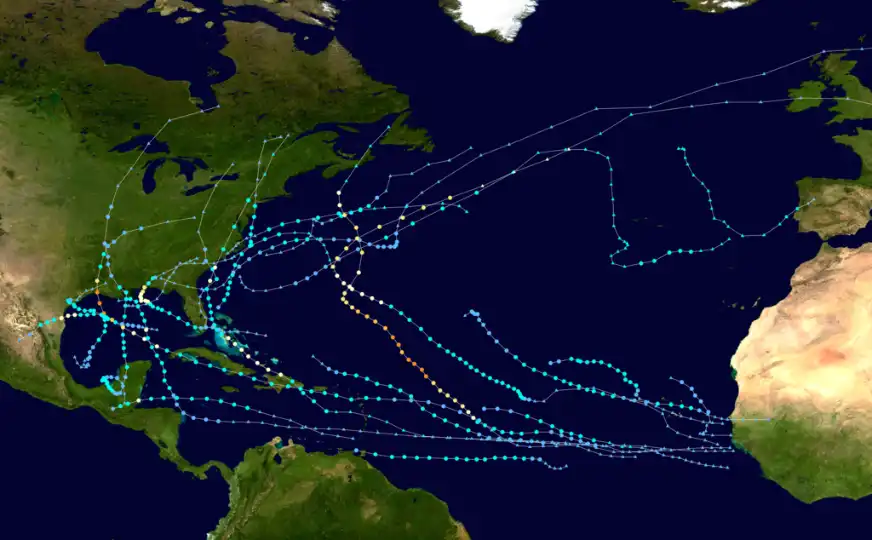
This year’s busy hurricane season in the Atlantic Ocean has made it hard for the US National Hurricane Center to name all of the large storms. The map above shows the tracks of the hurricanes in the 2020 Atlantic hurricane season.
(Source: Master0Garfield Public domain, via Wikimedia Commons.)
But this year, there have already been 23 named storms, forcing the NHC to begin giving storm names from the Greek alphabet (Alpha and Beta). This has only happened once before, in 2005, when there were 27 named storms.
Officially, the Atlantic hurricane season runs from June 1 to November 30. But this year, the first storm, Arthur, formed on May 16.
This year, there have already been 23 named storms, forcing the NHC to begin giving storm names from the Greek alphabet (Alpha and Beta). The National Weather Service posted the message below.
With the naming of Subtropical Storm #Alpha, we've officially entered the Greek Alphabet for named Atlantic storms this year.
We've made it as far as Zeta one time on record, in 2005.
Visit https://t.co/meemB5uHAR for the latest. pic.twitter.com/B4TO7JL1Kv
— National Weather Service (@NWS) September 18, 2020
This hurricane season has already set a number of records, and there are still more than two months left. Many people are wondering (and worrying) about how many Greek letters will be needed before the season finally ends.
Littering in Thailand? Expect a Package in the Mail
Thailand has an unusual plan to get tourists to stop littering: mailing the litter back to the people who dropped it.
Even though Thailand has laws against littering which can lead to heavy fines or even jail time, the country struggles to control the garbage created by tourists.
Recently, in response to a trashy campsite in Thailand’s oldest national part, Khao Yai National Park, the country’s Environment Minister, Varawut Silpa-archa, announced that he’s mailing the litter back to the litterbugs – after posting pictures of it on social media.
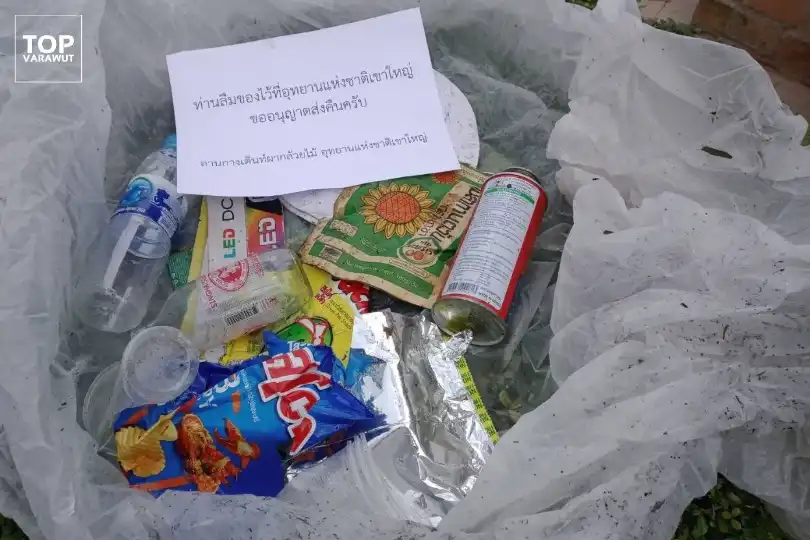
Thailand’s Environment Minister, Varawut Silpa-archa, announced that he’s mailing litter back to litterbugs – after posting pictures of it on social media. Above, the litter being packaged up with a note saying, “You forgot these things at Khao Yai National Park.”
(Source: Thailand Ministry of Natural Resources and Environment via FaceBook.)
“Your trash – we’ll send it back to you,” reads one post. The pictures show plastic bottles and chip bags packaged up with a friendly note saying, “You forgot these things at Khao Yai National Park.”
The country seems to be hoping that returning the litter in a public way will embarrass the litterbugs, and remind other people not to litter in the first place.
So how did they figure out who left the garbage? By checking the park’s records and studying the trash left behind.
Internet Troubles for 18 Months. The Problem? An Old TV.
For a year and a half, the small village of Aberhosan in Wales, United Kingdom struggled to understand why the internet suddenly stopped working every morning at 7.
The local internet provider, Openreach, replaced lots of old cables in the town in the hopes of solving the problem. No luck.
Finally, Openreach sent out a team at 6 in the morning to check for electrical problems. Sure enough, right at 7, they saw a big spike of electrical noise.
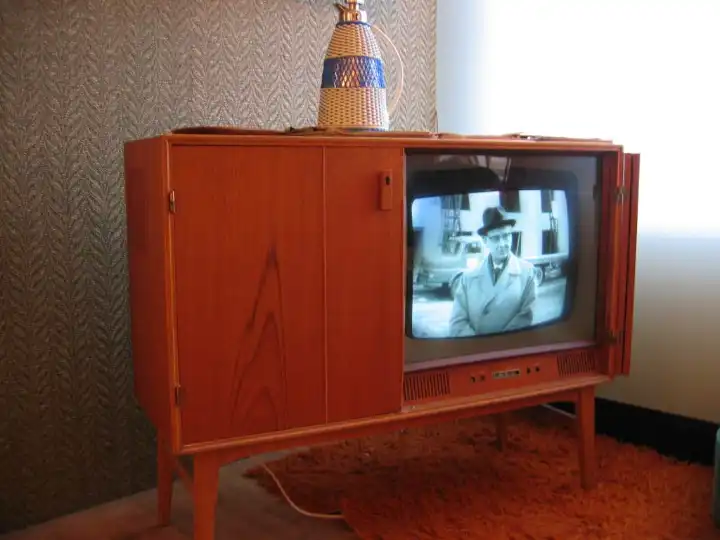
The workers tracked the noise down to one house, where the owner had a very old TV which was turned on every morning at 7 a.m. The TV (not the one above) created enough electrical noise to take out the internet for the rest of the village.
(Source: WikimediaCommons.org.)
The workers were soon able to track the noise down to one house, where the owner had a very old TV. Like clockwork, every morning at 7 a.m., the owner turned on the TV, which created enough electrical noise to take out the internet for the rest of the village.
The TV’s owner was very embarrassed to learn that their device was the source of the problem, and promised to never turn it on again.
Sourceswww.npr.org
www.smithsonianmag.com
en.wikipedia.org
www.nytimes.com
www.laht.com
www.bbc.com
arstechnica.com
www.bbc.com
www.news.com.au
Strong storms and heavy rains have caused terrible flooding in several countries in southern Asia, including Indonesia, Sri Lanka, and Thailand. In all, over 1,100 people have died, and millions have been forced to leave their homes.
Rare “New” Music by Bach Found and Performed
NFK Editors - Nov 27, 2025
Last week, two “new” pieces of music by the famous composer Johann Sebastian Bach were played for the first time in centuries. The discovery of the pieces is the result of 30 years of hard work by Peter Wollny, who studies Bach’s music.
Is Seeing Believing? AI Videos Look Extremely Real
NFK Editors - Nov 5, 2025
Over the last year or so, the quality of AI-generated videos has become so good that it’s extremely difficult to tell whether a video is real or not. An English TV channel recently ran a show about AI. At the end of the episode, the “woman” presenting the show announced that she wasn’t real.
advertisement