advertisement
Scientists Invent a Lickable “Taste Display”
Scientists Invent a Lickable “Taste Display”
NFK Editors - June 4, 2020Tokyo, Japan —(Map)
Scientists at Meiji University in Japan have come up with something they call a “taste display”. The device can create the taste of any chosen flavor when it is pressed against the tongue.
Humans are able to identify different flavors through the taste buds on their tongues. If you look at your tongue in a mirror, you’ll see lots of tiny bumps. These aren’t your taste buds, but most of the bumps contain taste buds – hundreds of them.

Humans are able to identify different flavors through the taste buds on their tongues. If you look at your tongue in a mirror, you’ll see lots of tiny bumps. Most of the bumps contain hundreds of taste buds.
(Source: Anthonylightening [CC BY-SA], via Wikimedia Commons.)
Taste buds have tiny openings that take in very small amounts of whatever we’re eating. Special “receptor cells” in the taste buds can then have a chemical reaction to the food, creating one of five basic tastes. The way these basic tastes combine creates the overall flavor of the food we’re eating.
The five basic tastes are sweet, sour (or acidic), salty, bitter, and umami. Bitter flavors are sharp, like coffee, unsweetened chocolate, or the peel of an orange or lemon.
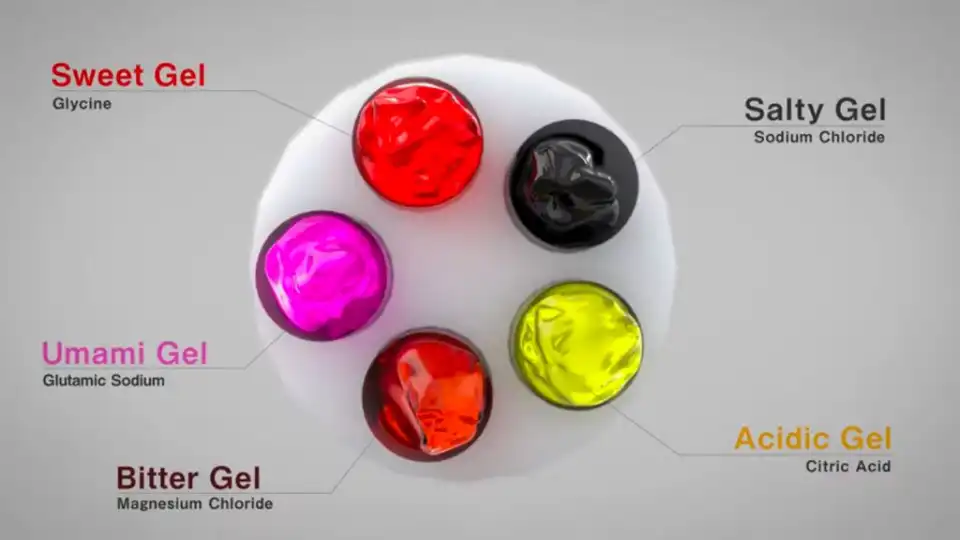
The five basic tastes are sweet, sour (or acidic), salty, bitter, and umami. Bitter flavors are sharp, like coffee, unsweetened chocolate, or the peel of an orange or lemon. Umami is sometimes called “savory”. Above, a labeled view of the end of the new “taste display”.
(Source: Homei Miyashita .)
The fifth taste may sound unusual. It wasn’t even given a name until 1908. Umami is sometimes called “savory”. It’s a rich taste, common in soups, gravies, cheeses, and soy sauce. Umami can help bring out other tastes.
Together, these five basic tastes create the flavors of everything we eat. Different amounts of these basic tastes create completely different flavors. That’s the main idea behind the “Norimaki Synthesizer” – the new taste display.
The five basic tastes create the flavors of everything we eat. Different amounts of these basic tastes create completely different flavors. That’s the main idea behind the “Norimaki Synthesizer” (above).
(Source: Homei Miyashita .)
The device’s creator, Homei Miyashita, got the idea for calling it a “taste display” from computer screens. Computer screens are made up of thousands of little pixels which are only able to show red, green, or blue. But the color purple, for example, can be displayed by mixing red and blue.
The “Norimaki Synthesizer” works roughly the same way, but with tastes. One part of the device is a tube that is held in the hand and touched to the tongue. Inside this tube are five smaller tubes. Each contains a gel with the chemicals needed to create one of the five basic tastes.
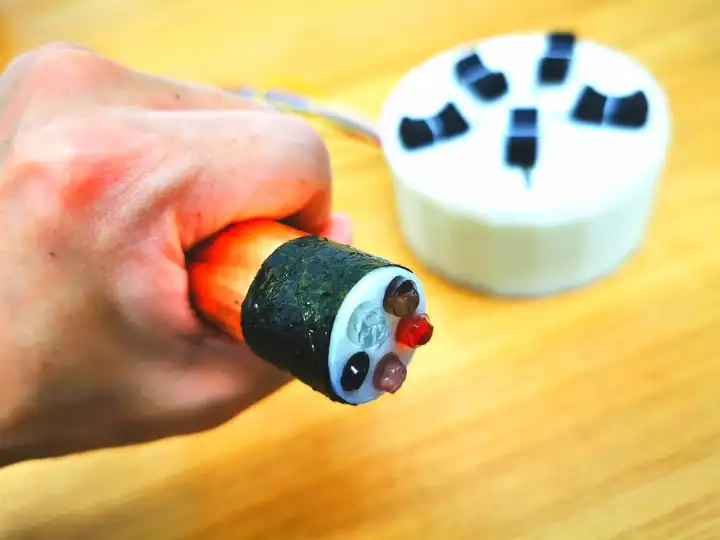
One part of the device is a tube that is held in the hand and touched to the tongue. Inside this tube are five smaller tubes. Each contains a gel with the chemicals needed to create one of the five basic tastes.
(Source: Homei Miyashita .)
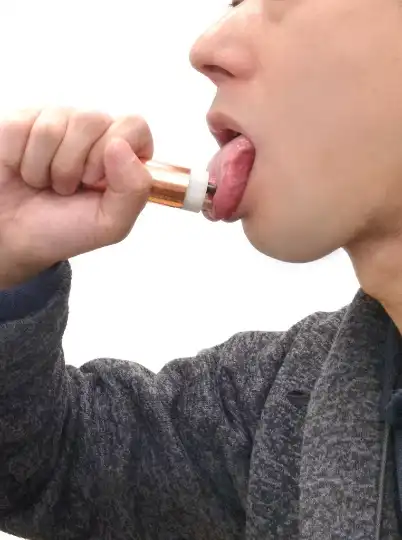
The tube is covered with copper. When the tip is touched to the tongue, an electric circuit is formed. That electric circuit begins to release tiny amounts of the gels to the taste buds.
When the tube touches the tongue with no added electricity, the user can taste all five tastes. But, by using a small box with sliding controls, the amount of different tastes can be lowered, creating different flavors.
The researchers have been able to create sweet flavors like a gummy candy and more salty and sour tastes like sushi, simply by moving the sliders around.
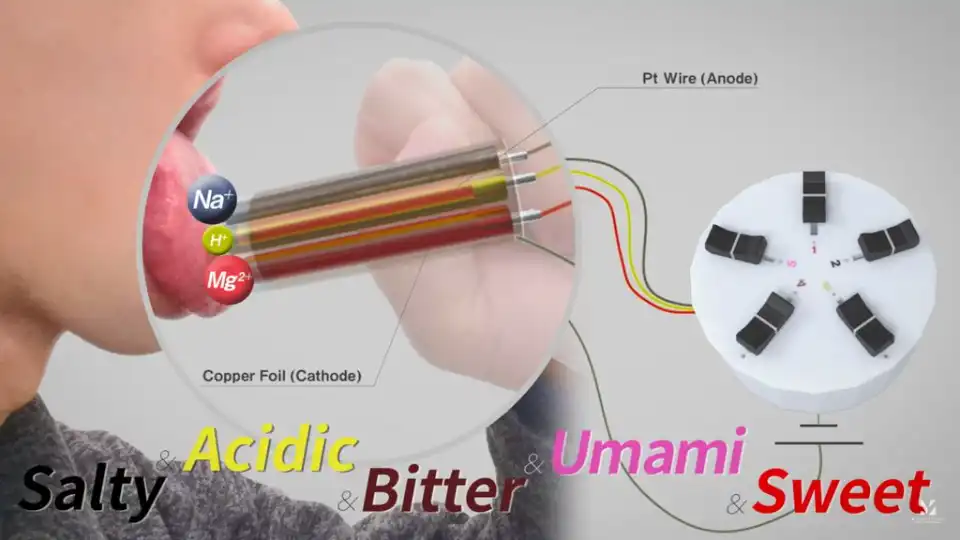
When the tube touches the tongue, the user can taste all five basic tastes. But, by using a small box with sliding controls, the amount of different tastes can be lowered, creating different flavors. The researchers have created flavors like gummy candy and sushi.
(Source: Homei Miyashita .)
The device doesn’t create anything you can smell, though. It also can’t produce the effect of spicy foods.
The current version of the Norimaki Synthesizer is just a prototype – a rough version to test the idea.
Mr. Miyashita believes that in the future, we may be able to share flavors over the internet. He says one day you may be able to see a meal on TV and actually be able to taste it.
Check Yourself
0/4
1. There are five basic tastes: sweet, sour, salty, bitter, and umami.
True False2. Different amounts of the five basic tastes combine together to create different _______________.
3. When the tip of the Norimaki Synthesizer is touched to the tongue, an _______________ circuit is formed.
4. Can the Norimaki Synthesizer allow you to smell flavors, too?
Yes NoDoes the Norimaki Synthesizer sound interesting to you? If you had one, what would you use it for?
ResetSourceswww.hackster.io
gizmodo.com
www.meiji.ac.jp
www.dezeen.com
www.digitaltrends.com
en.wikipedia.org
Tokyo, Japan
View Larger MapShare:
advertisement