advertisement
Microsoft’s Undersea Data Center Passes Test
Microsoft’s Undersea Data Center Passes Test
NFK Editors - September 17, 2020Orkney Islands, Scotland —(Map)
The computer company Microsoft recently ended an unusual experiment by pulling up a data center that has been serving internet requests from under the sea for the last two years. The company says the experiment was a success.
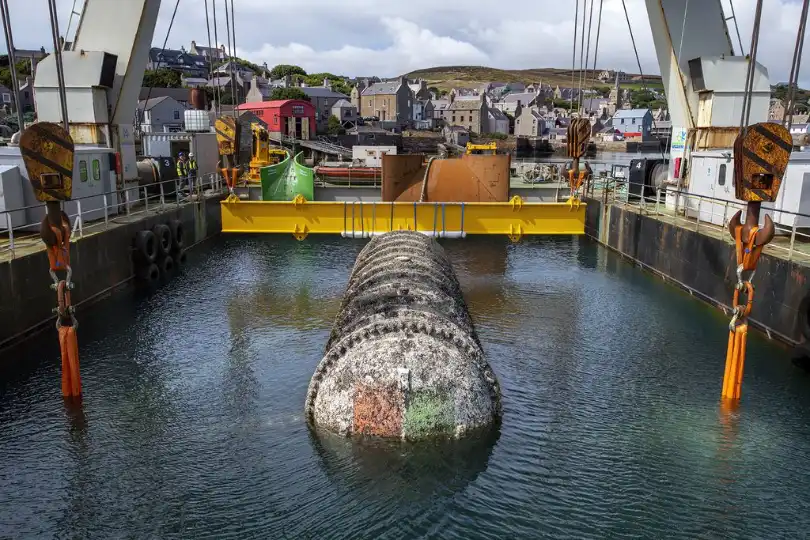
The computer company Microsoft recently ended an unusual experiment by pulling up a data center that has been serving internet requests from under the sea (above) for the last two years. The company says the experiment was a success.
(Source: Jonathan Banks, Microsoft.)
Data centers are usually large buildings full of hundreds or thousands of high-powered computers called servers. You may not think about data centers much, but they’re responsible for everything that we do on the Internet.
When we search for something, or load a webpage, our requests follow a bouncing path through the internet until they reach one or many servers, which give us back the information we asked for. As the internet has grown, the need for data centers has also grown.
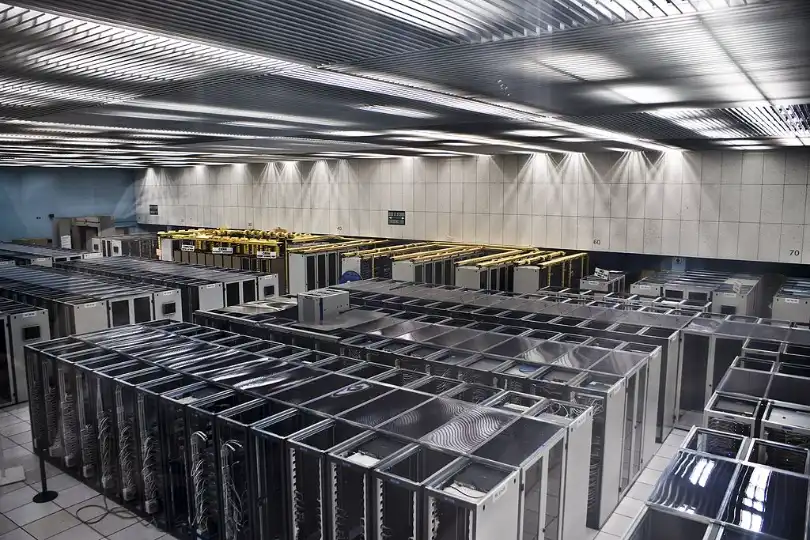
Data centers are usually large buildings full of hundreds or thousands of high-powered computers called servers. The servers use lots of energy. Some energy is needed to make the computers run, but much of the energy is used to keep the servers cool.
(Source: Florian Hirzinger – www.fh-ap.com [CC BY-SA], via Wikimedia Commons.)
Data centers have many problems. The servers use huge amounts of energy. Some of this is needed to make the computers run, but much of the energy is used to keep the servers cool. If computers overheat, they’re far more likely to break.
Microsoft wanted to try putting a data center under the sea, to see if the seawater could naturally cool the computers, saving energy and money.
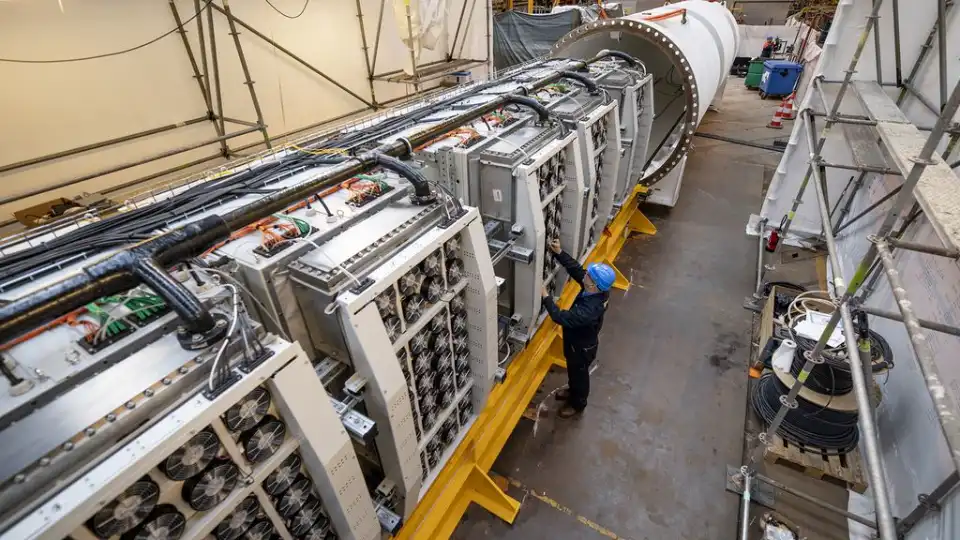
Microsoft wanted to try putting a data center under the sea, to see if the seawater could naturally cool the computers. So the company created a special data center (front) that could fit inside a large tank (rear).
(Source: Frank Betermin, Microsoft.)
So the company created a special data center that could fit inside a large tank. Microsoft hired a company that builds submarines to design the tank. They wanted the unit to be large enough to hold lots of computers, but small enough to move around on a truck.
In 2018, the company lowered their data center into the water near the Orkney Islands. The data center was called “Northern Isles”, since it was located in Scotland’s northern islands.
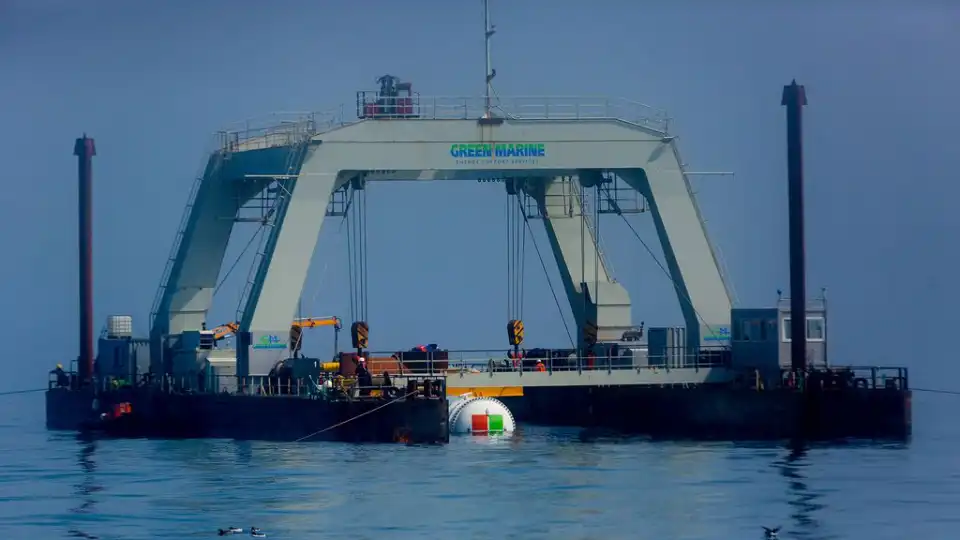
In 2018, the company lowered their data center into the water near the Orkney Islands. The air in the tank was replaced with a gas called nitrogen, to keep oxygen from damaging the computer parts.
(Source: Scott Eklund/Red Box Pictures, Microsoft.)
The air in the tank was replaced with a gas called nitrogen, to keep oxygen from damaging the computer parts. Special cables provided a high-speed internet connection and electricity. The electricity came from nearby wind and solar energy sources.
After a few tests, the Northern Isles data center was put to work. For the last two years, its 864 servers have been helping the internet run. Earlier this year, some of the servers were used to do research on the coronavirus.
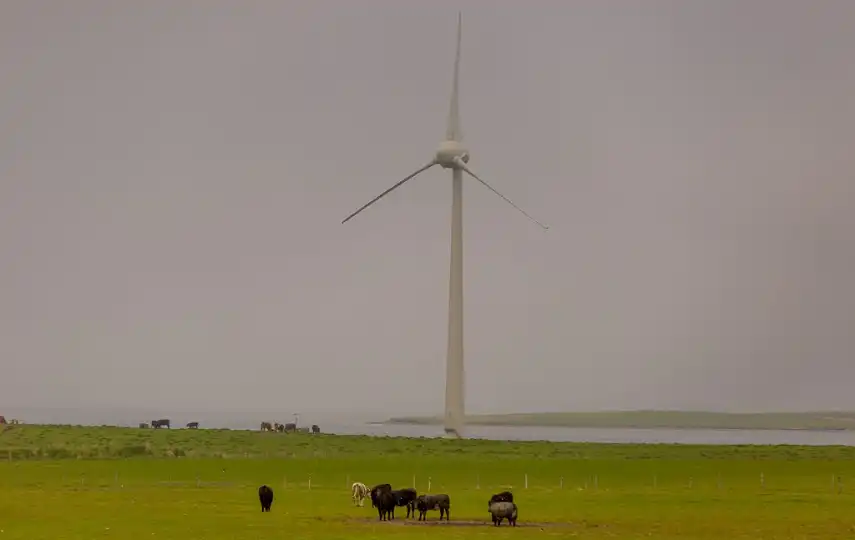
Special cables provided the data center with a high-speed internet connection and electricity. The electricity came from nearby wind and solar energy sources. Above a windmill in the Orkney Islands, near Microsoft’s Northern Isles datacenter.
(Source: Scott Eklund/Red Box Pictures, Microsoft.)
In July, the company pulled the data center back to the surface. It was covered with a thin coat of algae, and had some small sea animals clinging to it. But other than that, it was fine.
So how did the data center do? Very well, it turns out. Northern Isles used far less energy than a land-based data center would have used over the same amount of time.
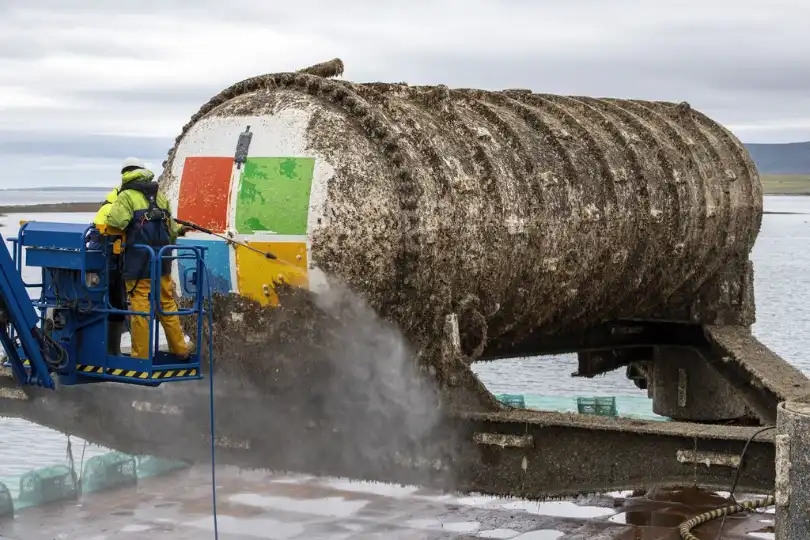
In July, the company pulled the data center back to the surface. It was covered with a thin coat of algae, and had some small sea animals clinging to it. But other than that, it was fine.
(Source: Jonathan Banks, Microsoft.)
The conditions were good for the computers, too. Microsoft says that the number of servers that normally have problems on land is eight times higher than the number of servers that broke underwater.
The company says that’s probably because there wasn’t any oxygen in the container. It also helped that there were no humans near the servers, so the machines and their cables never got bumped by accident.
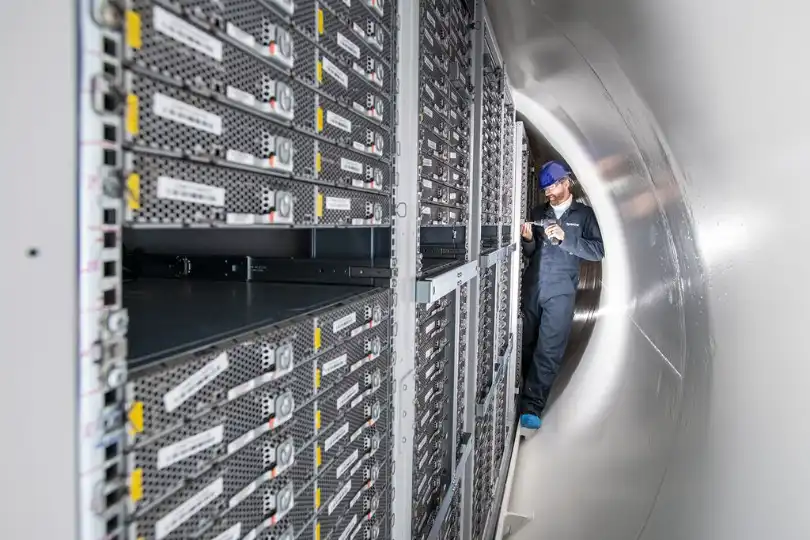
Microsoft says that the number of servers that normally have problems on land is eight times higher than the number of servers that broke underwater. Above, a Microsoft worker inspects a server from the data center.
(Source: Jonathan Banks, Microsoft.)
Microsoft is excited about the results produced by its underwater data center, and is eager to apply the lessons they learned to other data centers in the future.
Check Yourself
0/4
1. A special high-powered computer that serves internet information is called a _______________.
2. Normally data centers use lots of _______________ to run the servers and to cool them.
3. How many servers did Microsoft's undersea data center have?
4808641,0247684. Microsoft's undersea data center used less energy and was better for the computers than a land-based data center.
True FalseMicrosoft's experiment seemed to work well for one data center. Can you think of any problems that might come up if lots of companies suddenly started putting lots of data centers under the sea?
ResetSourceswww.bbc.com
arstechnica.com
www.theverge.com
gizmodo.com
www.zdnet.com
news.microsoft.com
news.microsoft.com
Orkney Islands, Scotland
View Larger MapShare:
This week marks 25 years of humans living in space. On November 2, 2000, three astronauts became the first full-time workers at the International Space Station. Since then, the ISS has never been empty.
Is Seeing Believing? AI Videos Look Extremely Real
NFK Editors - Nov 5, 2025
Over the last year or so, the quality of AI-generated videos has become so good that it’s extremely difficult to tell whether a video is real or not. An English TV channel recently ran a show about AI. At the end of the episode, the “woman” presenting the show announced that she wasn’t real.
advertisement